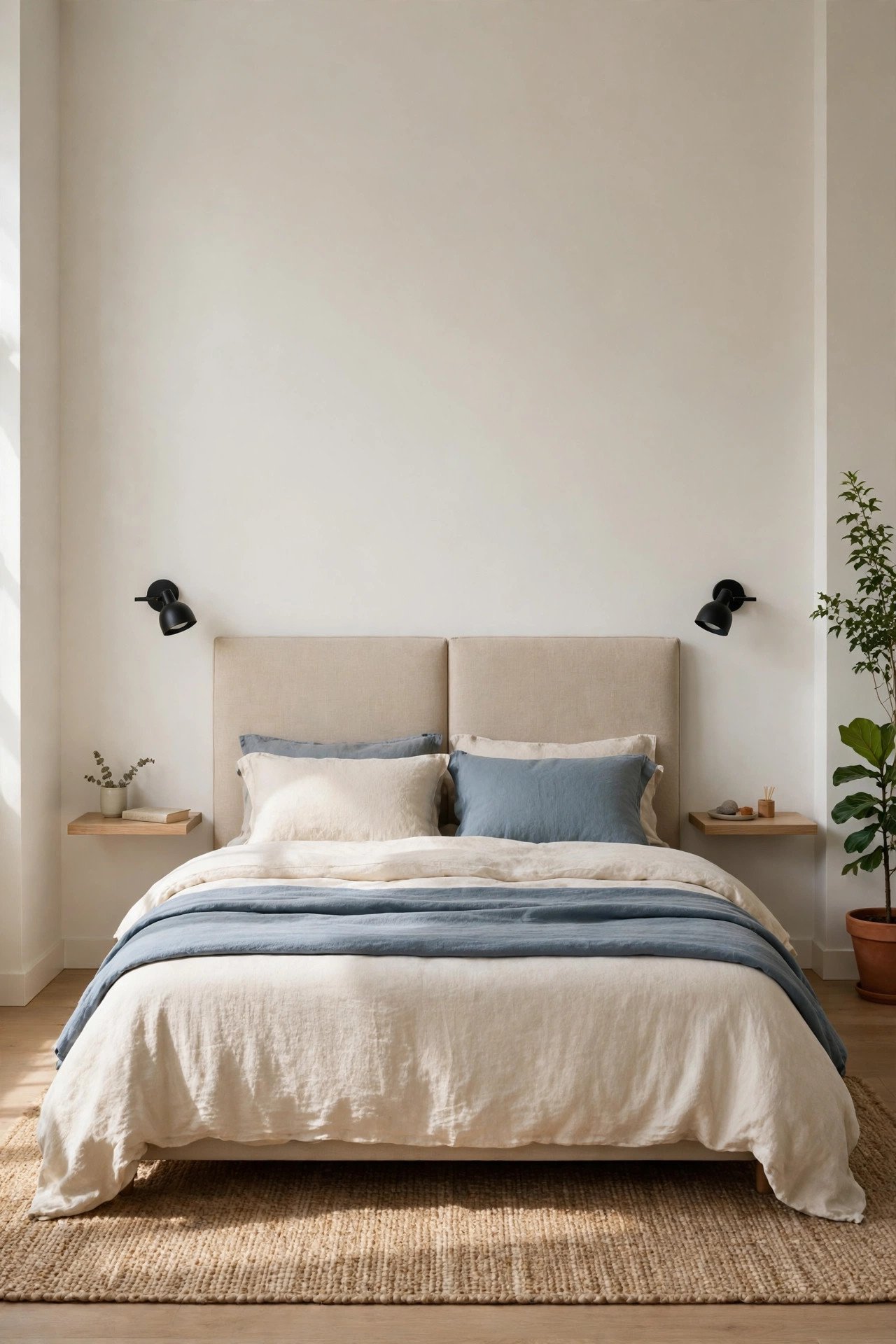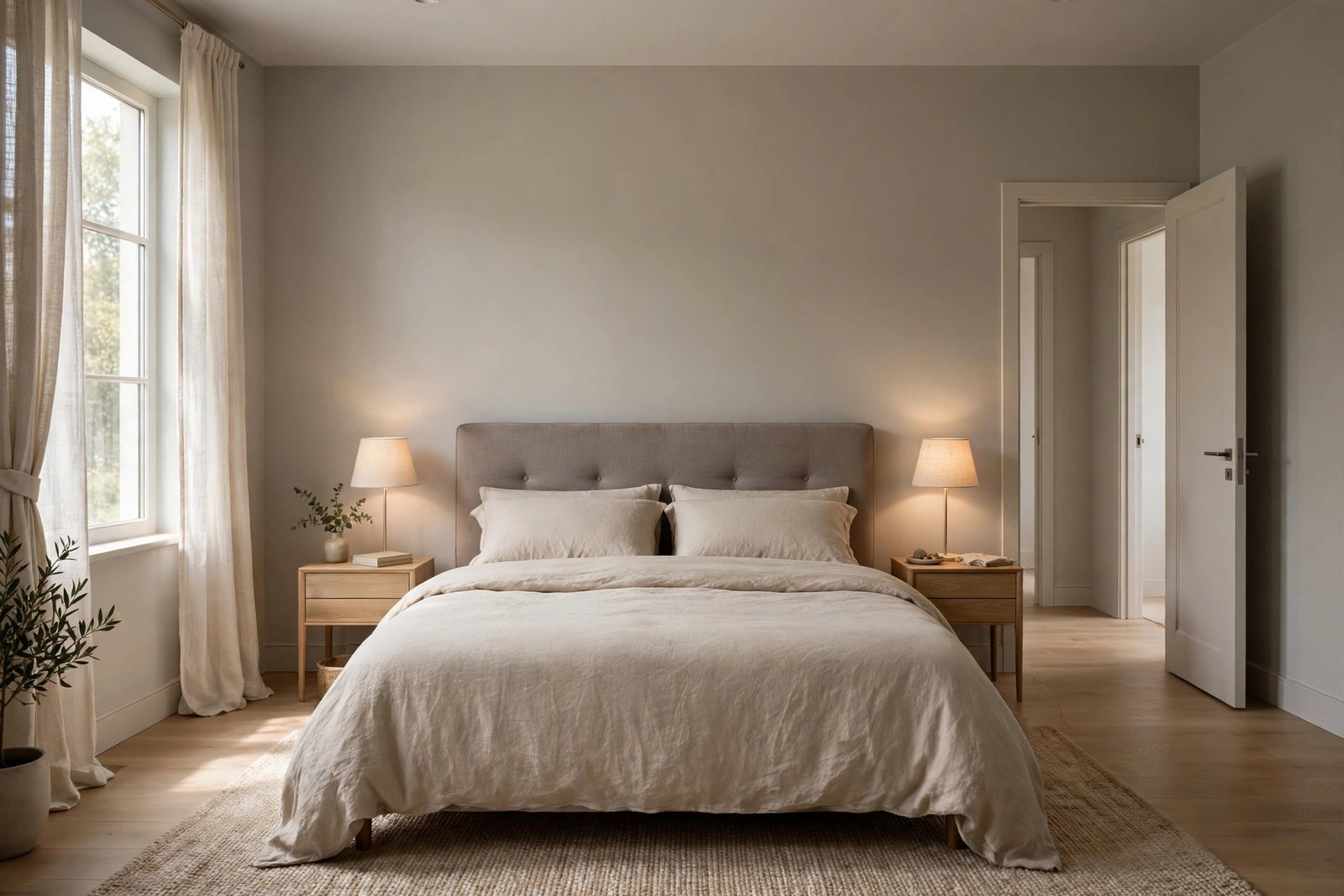
The bed is the largest object in any bedroom, which makes it the room’s anchor: where it goes decides where everything else can go, how you walk through the room, and whether the space feels calm or chaotic. Yet in most bedrooms the bed was placed in the first five minutes of moving in — against whichever wall the delivery men reached first — and never reconsidered. If your bedroom feels awkward in ways you cannot quite name, the bed’s wall is the first suspect.
A “wrong wall” is not about superstition or style rules. It is practical: a wall that puts the bed under a draughty window, across a door swing, blocking a wardrobe, far from any socket, or with one side sealed against a wall so one sleeper climbs over the other. Each of these mistakes is invisible on a floor plan and exhausting in daily life. This guide explains how to judge a bed wall properly, the five placement mistakes that cause the most trouble, and how to fix them without buying anything.
Quick Answer
The right wall for a bed is usually the longest solid wall with no door, window or wardrobe crossing it: the headboard sits centred against it, both sides of the bed stay reachable, and the door of the room is visible from the pillows without the bed sitting in the door’s swing. Avoid putting the bed under a window, tight against a side wall, blocking wardrobe doors, or at the far end of a long room where it severs the walkway. Before moving anything heavy, test the new position with the room’s real measurements — door swings, wardrobe swings and radiator positions included.

Step 1: Judge Every Wall With the Same Four Tests
Before looking at a single mistake, learn the tests a good bed wall passes. Test one — solidity: the headboard wall should be a real wall, long enough for the bed’s width plus at least a small surface each side. Test two — access: both sleepers need a way out of bed that does not involve climbing over the other person; aim for 55–60 cm clear on each side. Test three — clearance: no door, wardrobe or drawer should need to open into the bed’s footprint. Test four — comfort: the wall should not put pillows under a cold window, against a noisy party wall if a quieter option exists, or so far from sockets that charging cables trail across the bed.
Run each wall in the room through those four tests on paper first, with measurements. The same measurement-first approach that fixes a bedroom that feels cramped with a large bed applies here: most bedrooms have exactly one wall that passes all four tests, and it is frequently not the wall the bed is currently on.
Mistake 1: The Bed Under the Window
The window wall is the most tempting wrong choice — often the room’s longest clear wall, with the bed looking symmetrical beneath it. In daily life it delivers draughts on your neck in winter, early light straight onto the pillows in summer, a radiator blocked by the headboard (heating the bed instead of the room), and curtains that cannot be drawn without leaning across the mattress.
Sometimes the window wall genuinely is the only option — in very small or oddly shaped rooms it happens. If so, mitigate: choose a low headboard that sits below the sill, leave a gap of 10–15 cm between bed and wall so air and curtains can move, fit blackout blinds inside the frame rather than curtains behind the bed, and move the pillows’ position as far from the draughline as the bed allows. But treat it as a compromise to manage, not a first choice.
Mistake 2: One Side Sealed Against the Wall
Pushing a double bed into a corner feels like smart space-saving, and for a single sleeper it can be. For two people it means one partner climbs over the other to get out, the wall-side sleeper has no surface, no lamp and no air, and making the bed requires dragging it out and pushing it back. The room has not gained space — it has gained resentment, plus a damp risk where bedding pressed to a cold external wall traps moisture.
The fix is almost always to centre the bed and split the available width between the two sides, even if each side ends up narrower than ideal. Two 45 cm sides are more usable than one 90 cm side and one wall. If the room is a true single room, the same logic that governs bed placement in a studio apartment applies: a bed used by one person can sit along a wall happily; a bed used by two cannot.
Mistake 3: Blocking Doors, Wardrobes and the Walkway
A bed that overlaps a door swing, sits across wardrobe doors, or lands in the middle of the route from door to window creates a room you navigate instead of use. The classic version: the bed’s foot sits 40 cm from the wardrobe, so the doors open halfway and clothes come out sideways. Or the bed is placed on the long wall of a rectangular room so that the only path to the window crosses the bed itself. These placements fail test three, and no amount of tidiness repairs them.
Measure swing arcs and walkways in centimetres: doors need their full swing, wardrobes need their swing plus standing room in front of them (roughly 90 cm total), and a walkway past the bed’s foot needs 60 cm or more. If the current wall steals any of these, it is the wrong wall, however good the bed looks on it.
Mistake 4: Ignoring Light, Sockets and the Morning
Placement is also about what happens at the edges of sleep. A bed positioned so the door opens directly onto the pillows, with no view of who is entering, feels subtly exposed; a bed facing a bright east window with no blind control is an alarm clock you never set. Phone chargers, lamps and alarm clocks all need power — a bed wall with no nearby socket guarantees the ugly, unsafe trail of extension leads across bedding.
This is where bed placement meets lighting design. Lamplight at the right height on both sides, no glare onto pillows, and warm low light for the last hour of the evening are covered in our guide to calm, sleep-friendly bedroom lighting — but none of it works if the bed wall itself puts the lamps in the wrong place. Choose the wall with the sockets and the light in mind, not as an afterthought.
How to Move a Bed Properly (Without Regretting It by Bedtime)
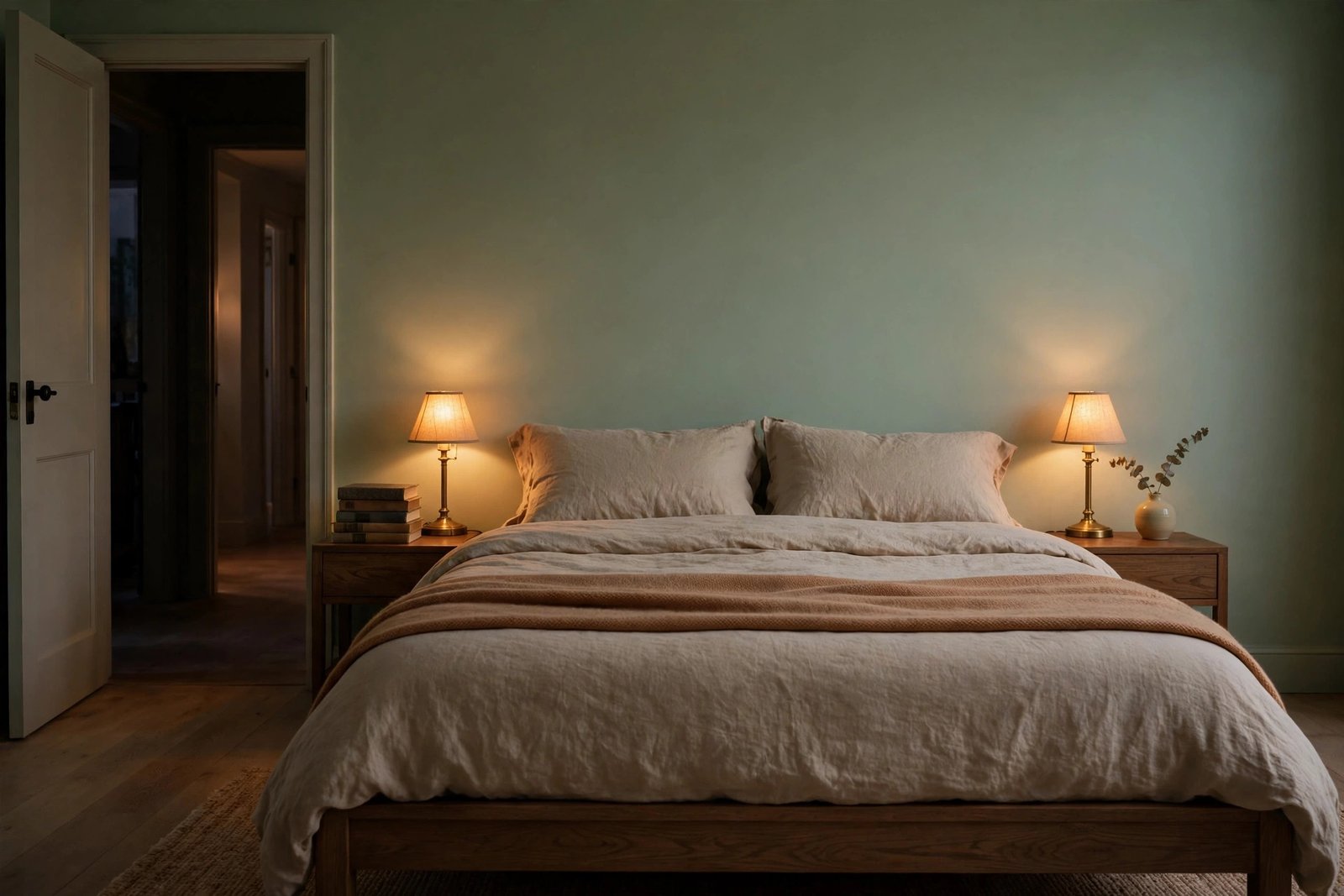
Convinced the bed is on the wrong wall? Test before you commit. Mark the bed’s footprint on the floor with painter’s tape and live with the outline for a day — walk the routes, open every door and wardrobe, mimic making the bed. Then move the bed (sliders under the legs make this a one-person job), sleep on the new arrangement for several nights, and only then move nightstands, art and lamps to match. Any new layout feels strange for two nights; judge on night four, not night one.
Mistakes to Avoid
- Choosing the wall by symmetry alone. A bed centred prettily under a window still delivers draughts and dawn light. Comfort tests beat photo tests.
- Forcing the bed onto the wall the furniture set assumes. Matching nightstands and a dresser do not outrank door swings and walkways. Move or slim the furniture, not the logic.
- Blocking a radiator. A headboard against a radiator heats the bed, not the room, and can be a safety issue with bedding. Keep radiators clear or choose another wall.
- Forgetting the door’s view and swing. A bed inside the door’s swing arc, or with pillows hidden completely from the doorway in a kids’ room where you check in at night, fails daily life in small ways that add up.
- Measuring the bed but not the room. Bed sizes are standard; rooms are not. Door positions, socket positions, window heights and slopes decide the right wall — measure them all.
- Judging the new position after one night. Any change feels odd initially. Give a new layout three or four nights before declaring it worse.
Frequently Asked Questions
Which wall should the bed go against?
The longest solid wall that keeps both sides of the bed reachable, stays clear of door and wardrobe swings, is not under a window, and has sockets nearby for lamps and chargers. In most rectangular bedrooms that is one of the long walls with the headboard centred. If two walls pass, prefer the one where the door is visible from the bed but the bed is not in the doorway’s direct line.
Is it really bad to put a bed under a window?
It is the weakest option, not a catastrophe. The real problems are draughts, light, blocked radiators and curtains you cannot reach — all manageable with a low headboard, a gap behind the bed, in-frame blackout blinds and care with heating. If a solid wall is free, use it; if the window wall is the only wall that fits, manage the compromises deliberately.
Should the bed face the door?
Most people sleep best when they can see the door from the pillows without the bed being directly in the doorway or in its swing. A diagonal or partial view is perfectly fine. What matters practically is that the door opens fully, nobody has to walk around the bed in the dark to reach the bathroom side, and the bed does not sit in the draught line between door and window.
What if every wall has a problem?
Rank the problems by how often they bite. A slightly tight side gap annoys you twice a day; a blocked wardrobe annoys you every morning; a draughty window affects all night. Fix the worst, mitigate the rest — low headboards, sliding wardrobe doors, rehung room doors and blackout blinds exist precisely for imperfect rooms. Almost every bedroom has a least-bad wall that works well once the compromises are chosen consciously.
The Bottom Line
The wrong wall turns a good bed into a daily friction; the right wall makes the whole room feel designed. Judge each wall by solidity, access on both sides, clear door and wardrobe swings, and the practical comforts of light, warmth and power. Avoid the window, the sealed corner and the blocked walkway, test a new position with tape before you move anything heavy, and judge it after a few nights. It costs nothing but an afternoon — and it is the highest-impact change most bedrooms will ever get.