In a studio apartment, the bed is the elephant in the room — literally the biggest piece of furniture you own, sitting in the middle of your living space. Put it in the wrong spot and the whole apartment suffers: the sofa gets squeezed against a wall, the walkway crosses your pillow, and every guest who visits is effectively visiting your bedroom. Put it in the right spot and something surprising happens — the room starts to work like a real home, with a place to sleep, a place to sit, and a path between them that does not involve climbing over anything.
Bed placement is the first decision in any studio layout, because every other piece of furniture has to fit around it. This guide explains where the bed should go, where it should never go, and how to arrange what is left so the room still works for living, eating, and working — not just sleeping.
Quick Answer
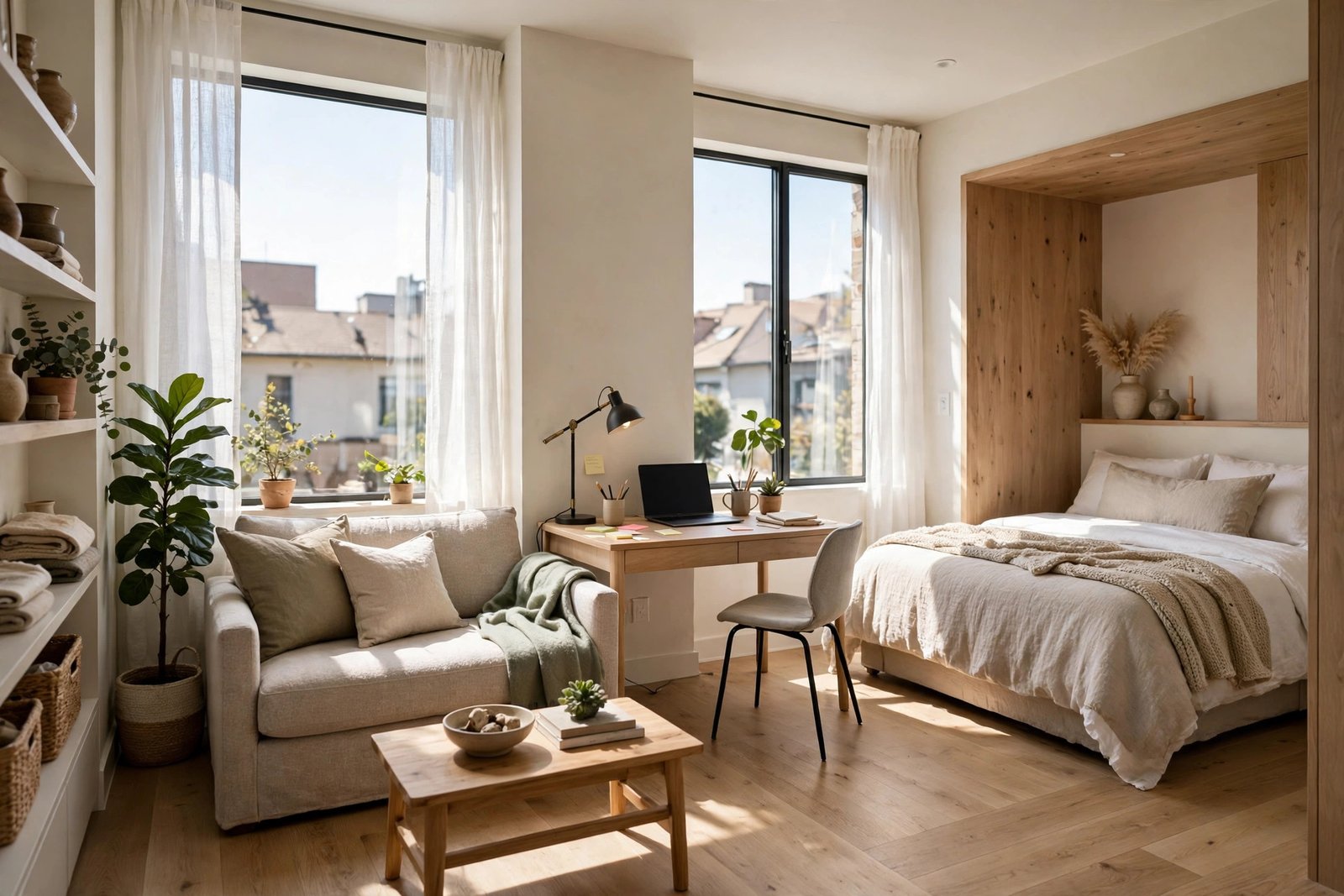
Put the bed in the corner farthest from the front door, with the headboard or the long side against a wall, and ideally away from the kitchen. The sleep zone should be the quietest, darkest, least walked-through part of the studio. Keep at least 60 cm of clear space on the side you get in and out of, never block the only window with the bed or its divider, and never place the bed where the path to the bathroom or kitchen runs beside it. Then separate the bed from the living area with a low, open divider — a bookshelf, the back of the sofa, or a curtain — so the rest of the room stops feeling like a bedroom.
Rule 1: The Bed Goes in the Quietest Corner, Farthest From the Door
Start with the entrance. The area near the front door is the busiest and most public part of a studio: coats come off there, deliveries land there, guests stand there. A bed in that zone gets disturbed by all of it, and privacy vanishes the moment someone knocks. The far corner — usually diagonally opposite the door — is the opposite: nobody walks through it to reach anything, so it stays calm.
The same logic applies to the kitchen, with its noise, cooking smells, and early-morning kettle sounds — keep the bed as far from that corner as the room allows. And do not confuse “far corner” with “in front of the window”; more on that below. Sketch the room as a simple rectangle, mark the door, kitchen, and window, and the right corner usually chooses itself. In a long, narrow studio the far short end almost always wins, and the remaining furniture works best on a one-wall plan that keeps paths open; our guide on arranging furniture in a narrow studio without blocking walkways covers those clearances in detail.
Rule 2: Push the Bed Against a Wall — and Choose the Right Wall
A bed floating in the middle of a studio wastes floor on both sides and looks temporary, like a camp. Pushing the headboard against a wall is the classic arrangement: you can get in from both sides if there is roughly 60 cm on each side, and the bed reads as a proper bedroom corner. If the corner is tight, push the long side against the wall instead, day-bed style. You lose easy access from one side, which matters for couples, but you gain a wide, clear strip of floor — and during the day, cushions along the wall turn the bed into extra seating.
Whichever wall you choose, leave the getting-out side genuinely clear. Sixty centimetres is the comfortable minimum; 45 cm is a squeeze you will feel every morning. Do not let a desk chair, laundry basket, or storage box colonise that strip — a blocked bed exit turns the whole zone into an obstacle course. Also avoid, if you can, a headboard wall shared with a noisy neighbour’s television or the bathroom plumbing; that costs sleep in ways no layout can fix.
Rule 3: Protect the Walkways and the Window
Two placements cause most studio problems. The first is a bed that sits across the only path through the room. If reaching the kitchen, the bathroom, or the door means squeezing past the foot of the bed, the bed is in the wrong place — move zones around until one clear path, about 75–90 cm wide, runs from the door through the room without touching the sleep zone. The second is a bed — or the tall divider hiding it — pushed in front of the only window. Blocking the window darkens the whole studio, not just the bed corner, and a small room that loses its light feels half its size.
There is one honest exception: in very small studios, a low bed under a high window can work, because the light passes over it — if the bed and headboard sit below the sill, the light survives. What never works is a tall bookcase or wardrobe against the window wall. Keep tall pieces on interior walls. These choices matter even more when there is no bedroom door to close, which our guide to privacy and layout fixes for an apartment with no separate bedroom explores from the privacy side.

Rule 4: Separate the Bed From the Living Area
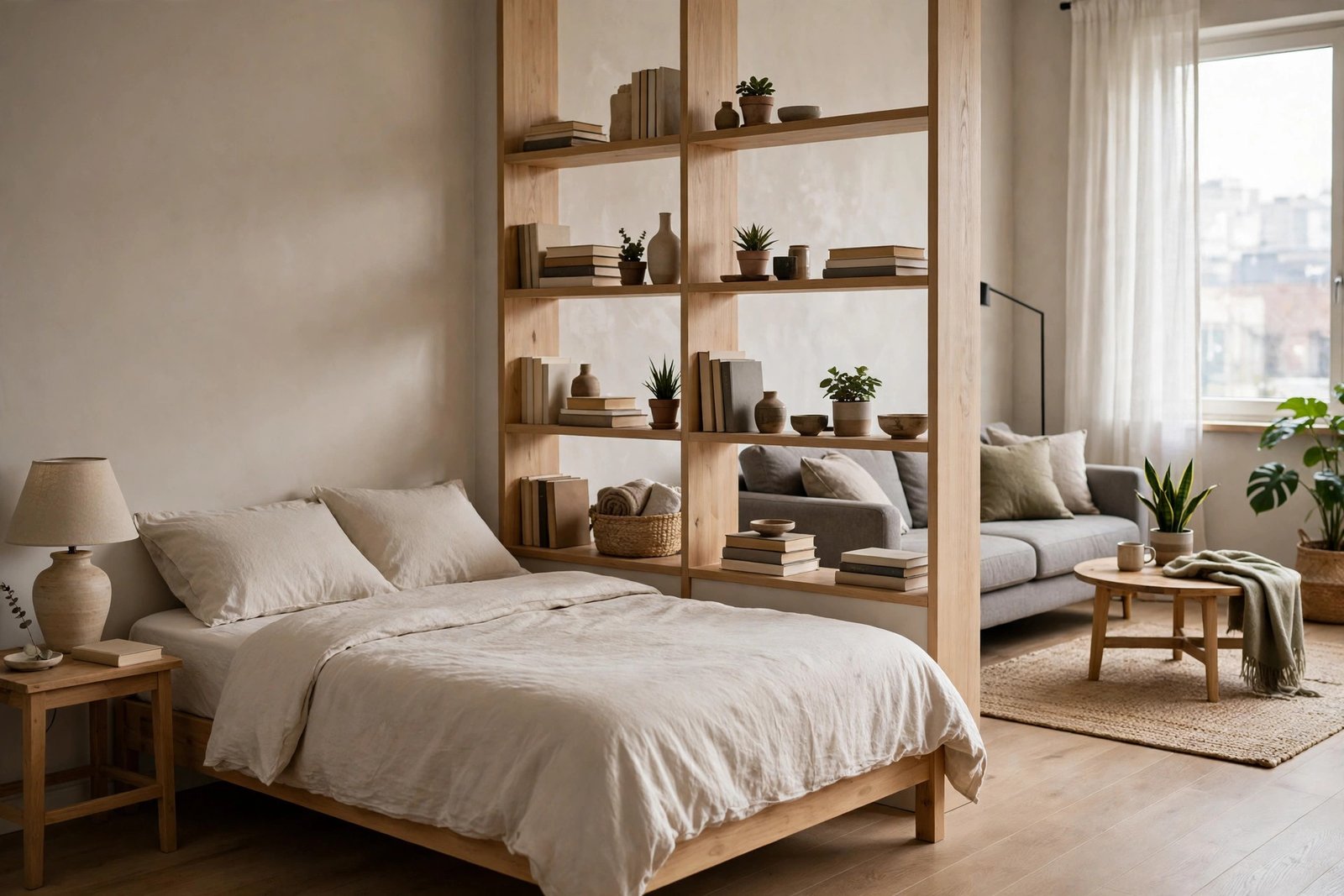
Good placement gets the bed out of the way; a divider makes it disappear from daily life. The most useful divider in a studio is a low, open bookshelf placed at the side or foot of the bed: it stores books and boxes, lets light and air pass, and works from both sides. The second-best divider is free — the back of the sofa. Turn the sofa so its back faces the bed and you have drawn a line the eye respects: sitting side here, sleeping side there.
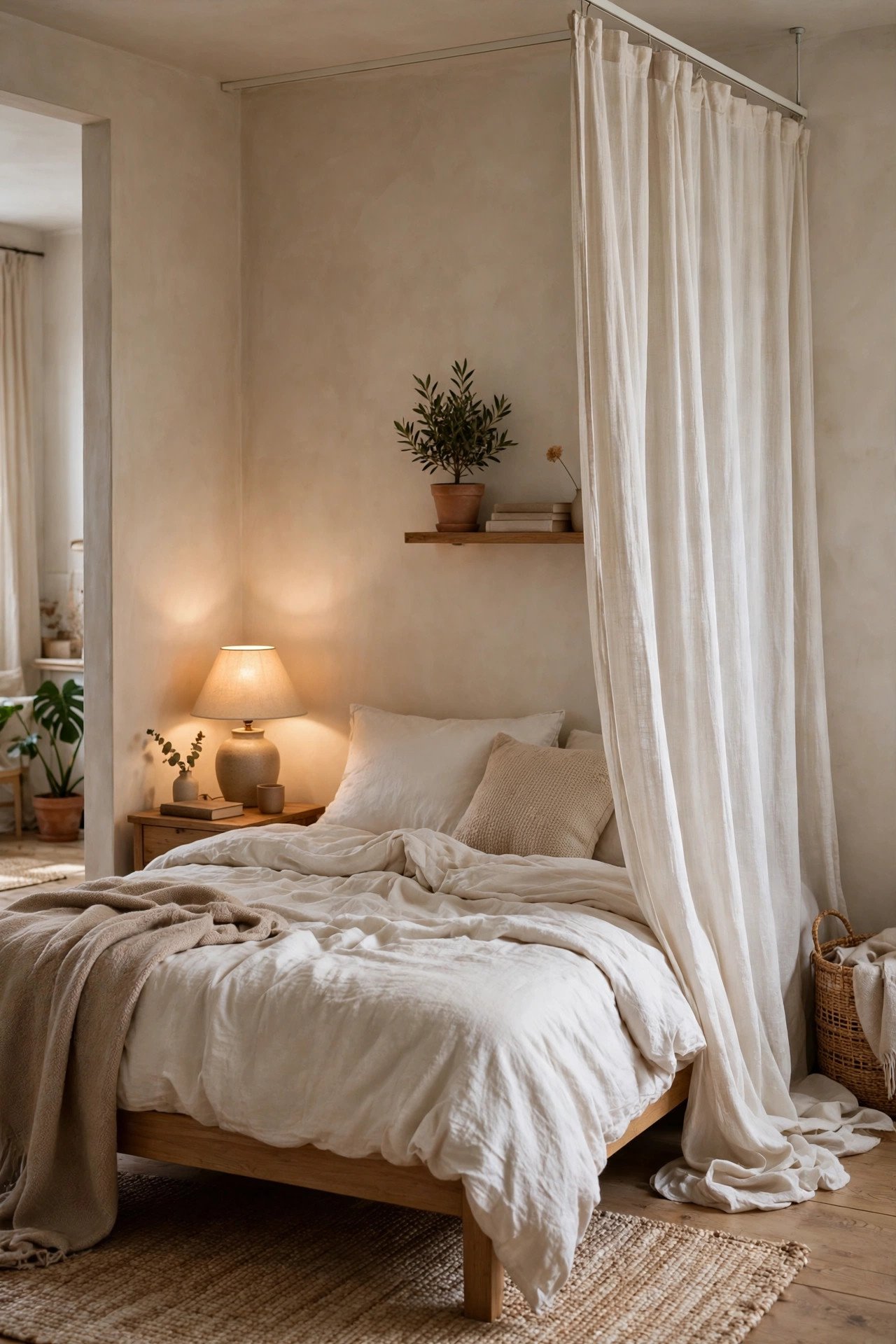
For real screening, a curtain on a ceiling track or tension rod hides the bed completely at night and opens fully in the morning, and a folding screen suits renters who want zero fixing. Keep dividers around 120–150 cm high: high enough to hide a messy duvet from the sofa, low enough to keep light and air moving. A tall, solid wardrobe usually backfires — it creates a dark, airless sleeping cave. Plan the dining corner on the living side too, so a table never ends up stranded in the sleep zone; our guide to fitting a dining table in a small apartment shows how the eating spot can share the living side without crowding it.
Rule 5: Finish the Sleep Zone, Then Arrange Everything Else
A bed in the right corner still reads as “a bed in a room” until you finish the zone. Add a small rug beside or partly under it so your feet land on something soft and the zone gains a border. Add a bedside surface — a narrow nightstand or small stool — for a phone, a book, and water. Add a warm, low lamp so the sleep zone has its own light instead of the harsh ceiling light that serves the whole room.
Only now arrange the rest. The living zone goes on the rug in the remaining open area, the desk takes the leftover wall near a window, and storage fills the gaps. This order — bed first, living second, desk and storage last — is the opposite of how most people furnish a studio, and it is exactly why most studios end up with the bed in the leftover corner instead of the best one. For most studios, honest small furniture in the right order beats clever furniture in the wrong order.
Mistakes to Avoid
- Placing the bed near the front door. It is the busiest, least private spot in the studio, and every arrival becomes an arrival in your bedroom.
- Letting the walkway run beside the bed. If the only path to the kitchen or bathroom crosses the sleep zone, the bed is in the wrong corner.
- Blocking the only window. A bed, headboard, or tall divider in front of the window darkens the entire room and makes it feel far smaller.
- Floating the bed in the middle. It wastes space on both sides and never looks settled. Walls exist to anchor big furniture.
- Using a tall, solid wardrobe as the divider. It cuts light and air and makes both sides gloomier. Open, low, or fabric dividers work better.
- Arranging the sofa and desk first. The bed is the biggest piece and the hardest to move. Place it first, in the best corner, and fit everything else around it.
Frequently Asked Questions
Where is the best place for a bed in a studio apartment?
In the corner farthest from the front door, away from the kitchen, with the headboard or long side against a wall. That corner is the quietest and least walked-through, so the sleep zone stays private and the rest of the room is free for living furniture.
How much space should I leave around a bed in a small studio?
Leave at least 60 cm on the side you get in and out of, and roughly 60 cm at the foot if people walk past it. In a very tight corner, a long-side-against-the-wall arrangement needs clearance on only one side, which is why it suits the smallest studios.
Should the bed face the window in a studio?
Facing the window is fine and many people enjoy the light in the morning, but the bed or its divider should not block the window itself. If the headboard sits below the sill, a bed under the window can work; tall furniture against the window wall cannot.
What if my studio is too small for a bed and a sofa?
Use the bed as the sofa during the day — long side against the wall, firm cushions along it — or choose a good-quality sofa bed in the living zone and give up the separate bed. What does not work is cramming both in full size; one piece doing two jobs honestly beats two pieces doing neither.
The Bottom Line
A studio works when the bed stops behaving like an obstacle and starts behaving like a bedroom. Far corner, against a wall, clear of the walkway and the window, screened by something low or soft — those five choices cost nothing and decide how every other piece of furniture will fit. Place the bed first, finish its little zone with a rug and a lamp, and only then arrange the living side. The room will not get bigger, but it will finally start working like a home instead of a storage space with a mattress in it.