A rental kitchen often feels like a room you are only borrowing: dated cabinets you cannot paint, a landlord’s beige tiles you cannot touch, lighting that flatters nothing, and a lease that forbids drilling almost anything. It is tempting to simply wait it out until you own a kitchen. But most of what makes a kitchen unpleasant is not the fixed shell — it is the surfaces, light, storage and layout layered on top, and nearly all of that can be changed in ways that reverse completely when you move out.
The rule is simple: nothing glued, nothing drilled into tile, nothing that cannot be undone in a weekend. Within that rule there is a surprising amount of freedom. This guide works through the highest-impact reversible changes, room zone by room zone, and flags the few things that look removable but are not.
Quick Answer
The most effective reversible rental-kitchen changes are: peel-and-stick splashback or worktop film over dated surfaces, new cabinet handles fitted to the existing holes, plug-in under-cabinet lighting, tension-rod and over-door storage instead of shelves, and a freestanding cart or shelving unit for extra counter and storage. Photograph everything before you start, keep every original fitting in a labelled box, and get written permission for anything beyond surface changes.
Start With Permission and Photographs
Before any change, take dated photographs of the whole kitchen — cabinets, walls, floor, appliances, every mark and stain. These protect your deposit twice: they prove the condition you received, and they give you a target to restore. Store the original handles, any shelf you temporarily move, and the landlord’s curtains or blinds in one labelled box, so move-out day is reassembly, not detective work.
Then read your lease for the exact wording on decoration and fixings. Many landlords happily allow changes that leave no trace, and a short polite email — “I would like to fit removable vinyl over the splashback tiles; it peels off without damage” — often gets a yes that covers you completely. Keep the reply. Changes a landlord agrees to in writing cannot come back as a deposit dispute.
If your wider rental layout also fights you, our guide to rental apartment layout mistakes that make small spaces feel even smaller covers the same no-damage thinking for the rest of the home.
Surfaces: Film, Vinyl and Covers
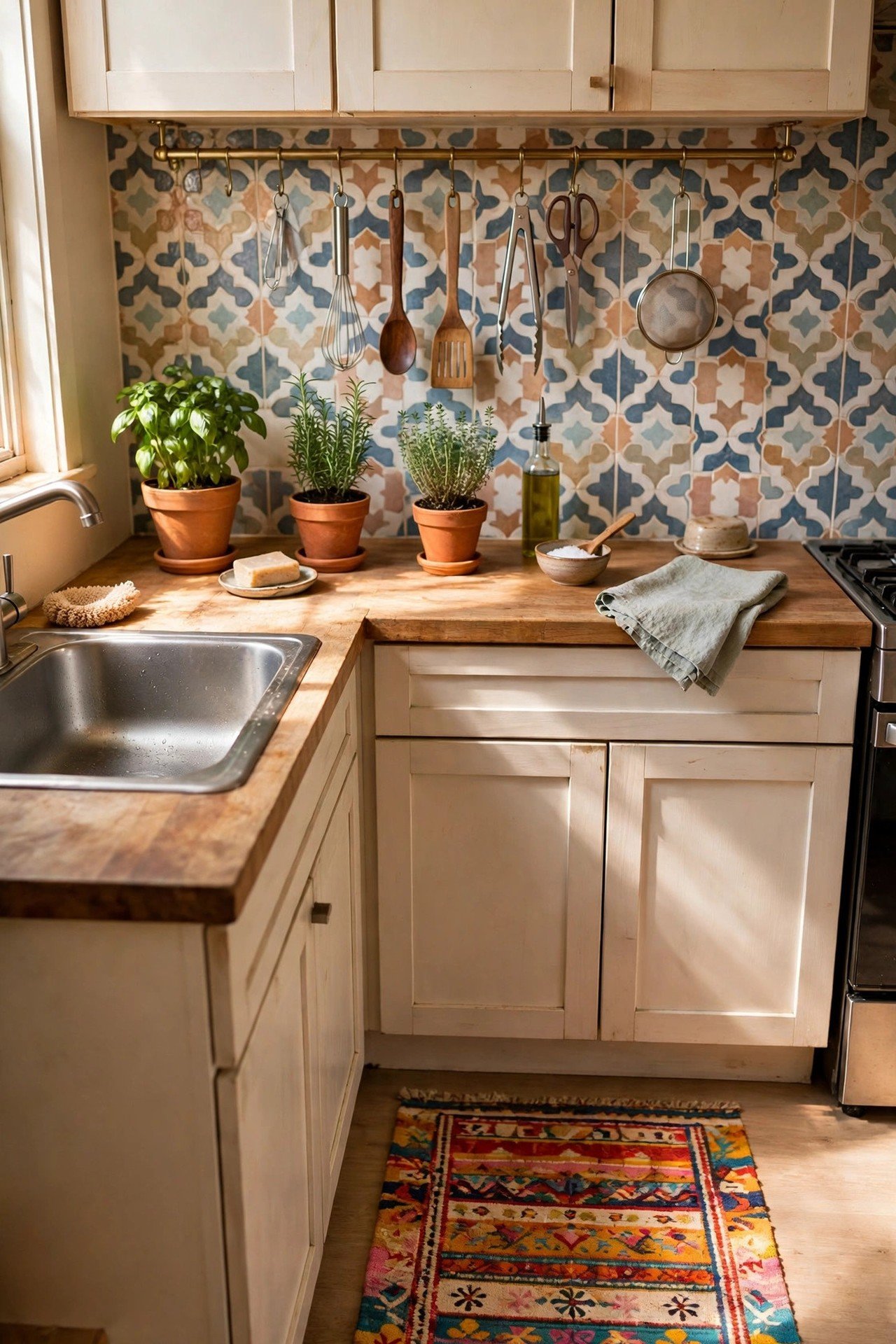
Peel-and-stick splashback panels and tile stickers are the single biggest rental upgrade. They cover dated or stained tiles with stone, metro-tile or plain matte finishes, apply with no adhesive beyond their own backing, and peel away with gentle heat from a hairdryer. Choose heat-resistant products behind the hob, and keep the box — you will want the brand name again at move-out to confirm the removal method.
Worktop wrap film transforms a scratched or yellowed counter into wood, marble or concrete effect. It is not indestructible — use boards for chopping and trivets for hot pans — but it lasts a tenancy comfortably and strips off cleanly. Apply it on a clean, dry surface and smooth out bubbles with a bank card wrapped in a cloth.
Flooring can be softened without touching the original: a large washable rug or runner covers most of an ugly floor, and loose-lay vinyl planks that click together and float — no glue — can be lifted and taken with you. Loose-lay is a bigger job and a bigger cost, so weigh it against how long you plan to stay.
Cabinets: Handles, Liners and Open Doors
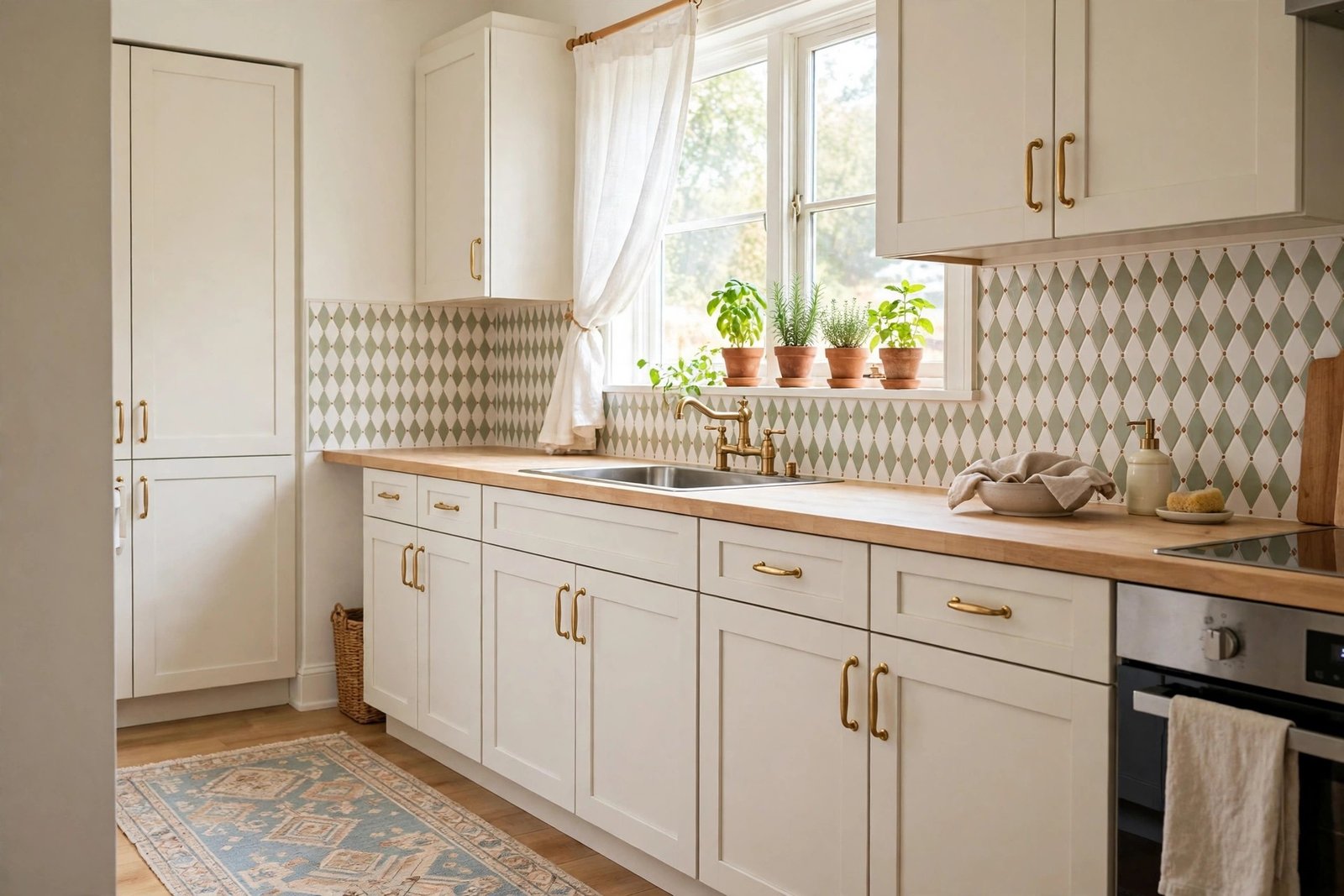
Cabinet doors usually cannot be painted in a rental, but they can be reframed. Swap the handles: measure the distance between the screw holes (the “centres” — 96 mm and 128 mm are common), buy new handles with the same centres, and fit them with the existing screws. This ten-minute change modernises a whole kitchen and reverses in the same ten minutes.
Inside, shelf liner paper makes worn cabinet interiors feel clean and protects them too. And if the doors themselves are the eyesore, consider removing one or two upper doors entirely and styling the shelves — crockery and glasses on show look deliberate. Keep the doors, hinges and screws stored safely; removing doors is reversible only if nothing is lost.
What you should not do: vinyl-wrapping the cabinet doors themselves is often sold as removable, but on old or painted doors the adhesive can lift the finish on removal. Test any film on the inside of one door first, or skip it.
Lighting: The Reversible Upgrade Landlords Never See
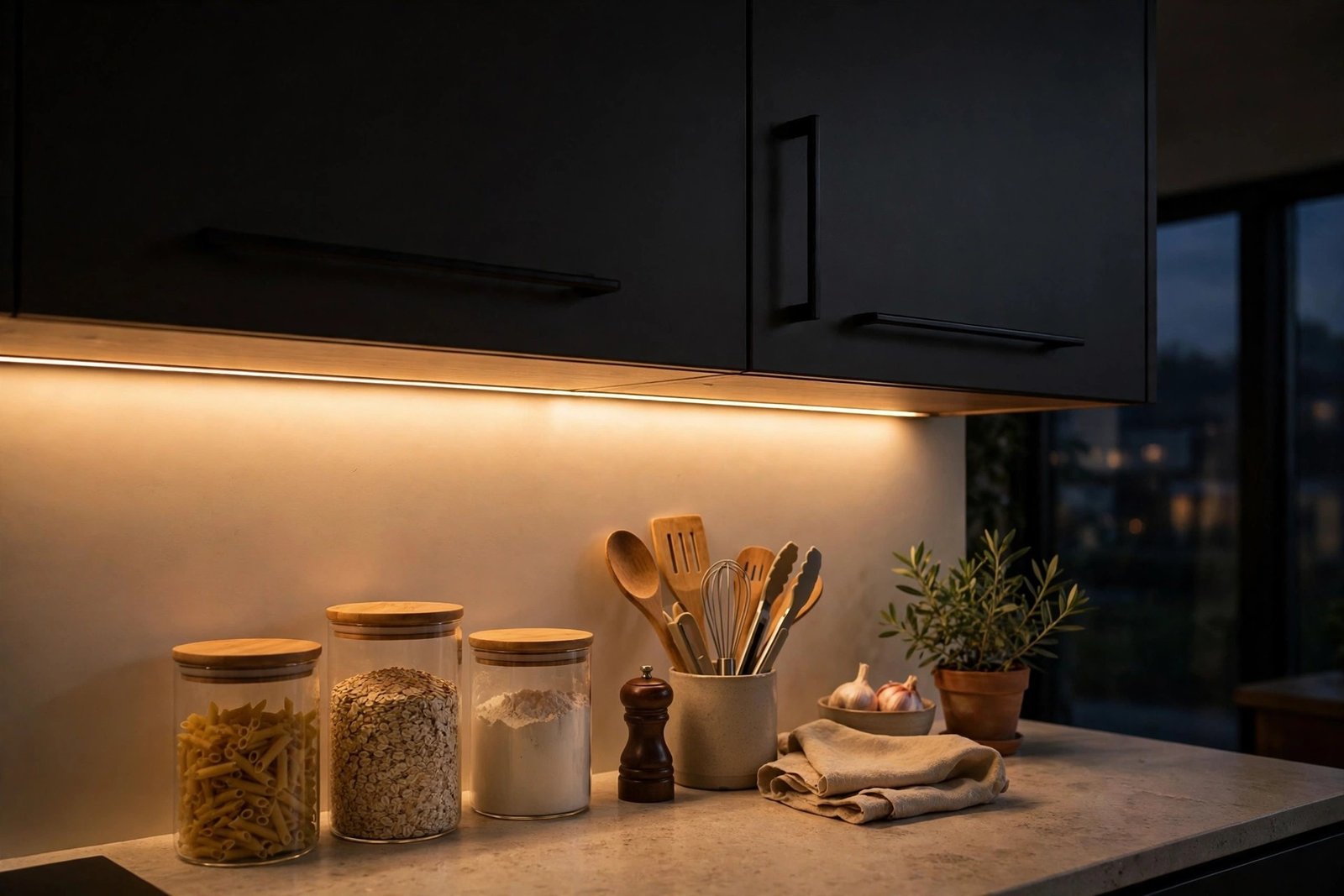
Rental kitchens usually have one harsh ceiling light. Layering better light needs no wiring. Battery or plug-in LED strips under the upper cabinets stick on with their own adhesive pads and light the worktop properly — they fix the shadow problem described in our guide to kitchen lighting shadows on the counter and task lighting fixes, and the strips leave with you.
Swap the main bulb for a warm-white one (2700–3000K) and, if the fitting allows, a higher-output bulb. Add a small plug-in lamp or a battery puck light inside a dark corner cabinet. None of this touches the wiring, and all of it makes cooking at night noticeably pleasanter.
Storage Without a Single Screw
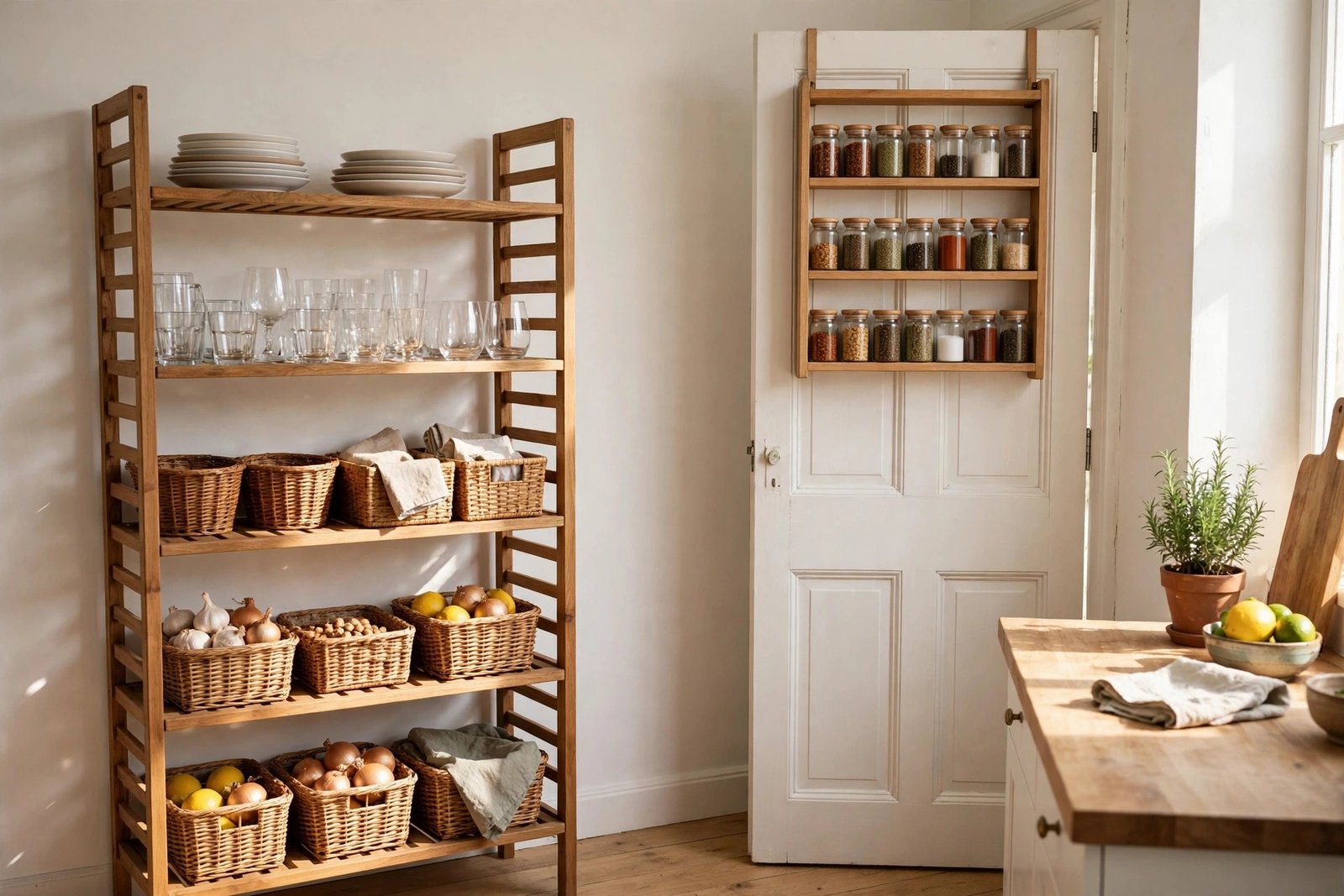
Rentals rarely come with enough storage, and the usual answer — shelves — needs drilling. Instead: tension rods inside cabinets create a second tier for mugs and bowls; over-door racks hold spices, wraps and cleaning bottles; hooks with adhesive pads rated for the weight carry utensils on the side of a cabinet rather than the tile. A magnetic knife strip with adhesive mounting on a cabinet side frees a drawer.
For bigger gaps, freestanding furniture is your friend. A slim open shelving unit, a rolling cart, or a second-hand dresser as a coffee station adds storage and counter without any fixing at all. If you are weighing a movable island as prep space, check the clearances in our article on kitchen islands that are too big for the room and when to skip one — a cart obeys the same rules, just with wheels.
Textiles and Finishing Touches
A washable runner warms cold floors and hides tired lino. New tea towels, a decent utensil pot and matching storage jars on the counter pull a colour scheme together for very little money. If there is a window, a tension rod lets you hang a café curtain with no fixings. Plants on the windowsill — herbs especially — make a rental kitchen feel claimed and cared for, which is half the battle. Choose one accent colour and repeat it three or four times; repetition is what makes reversible bits and pieces look like a design rather than a collection of compromises.
Mistakes to Avoid
Using “removable” products on fragile surfaces. Adhesive hooks and films can still lift old paint or a weak tile glaze. Test in a hidden spot and wait a day before committing.
Throwing away the originals. Every handle, shelf and fitting you remove must be stored and labelled. Replacing a lost landlord fitting costs far more than a storage box.
Painting anything. Even “just the cabinet doors” or “just one wall” is the classic deposit deduction. If you dream of painting, ask in writing first — some landlords agree, especially for a like-for-like refresh.
Ignoring steam and heat ratings. Splashback stickers behind a gas hob need genuine heat resistance, and film near the oven door can bubble. Check the product’s stated limits, not the marketing photo.
Spending renovation money on a rental. Cap your budget at things you can take with you or that cost little: lights, handles, textiles, storage. The film and stickers are consumables; everything else should move house with you.
Frequently Asked Questions
Will peel-and-stick products really come off without damage?
On sound tiles and sealed worktops, yes — especially if you warm them with a hairdryer and peel slowly. On old paint, weak grout or damaged surfaces they can lift material, which is why a hidden test patch matters. Keep the product packaging so you can follow the maker’s removal method exactly.
What should I do first with a tiny budget?
Handles, light bulbs and one roll of splashback film, in that order. Handles change how the cabinets look every time you open one, warm light fixes the evening feel, and the film covers the surface you stare at while cooking. Together they usually cost less than a single new appliance.
Can I change the kitchen taps or light fittings?
Not without written permission — both touch plumbing and wiring, and landlords’ insurance often forbids tenant work on them. Plug-in and battery lighting gives you most of the benefit with none of the liability.
How do I keep my deposit safe while making changes?
Photograph everything before and after, keep written permission for anything borderline, store every original part, and reverse the changes a week before the final inspection rather than the night before. If a product leaves residue, a little cooking oil or adhesive remover on a cloth usually clears it — test on a hidden corner first.
The Bottom Line
A rental kitchen is a shell plus layers, and the layers are yours. Film and stickers for the surfaces, handles for the cabinets, plug-in light where you actually work, storage that hangs, wedges or stands rather than screws — each change is small, but together they turn a borrowed room into your kitchen. And when the tenancy ends, a weekend of peeling, unscrewing and re-fitting hands it back exactly as you found it.