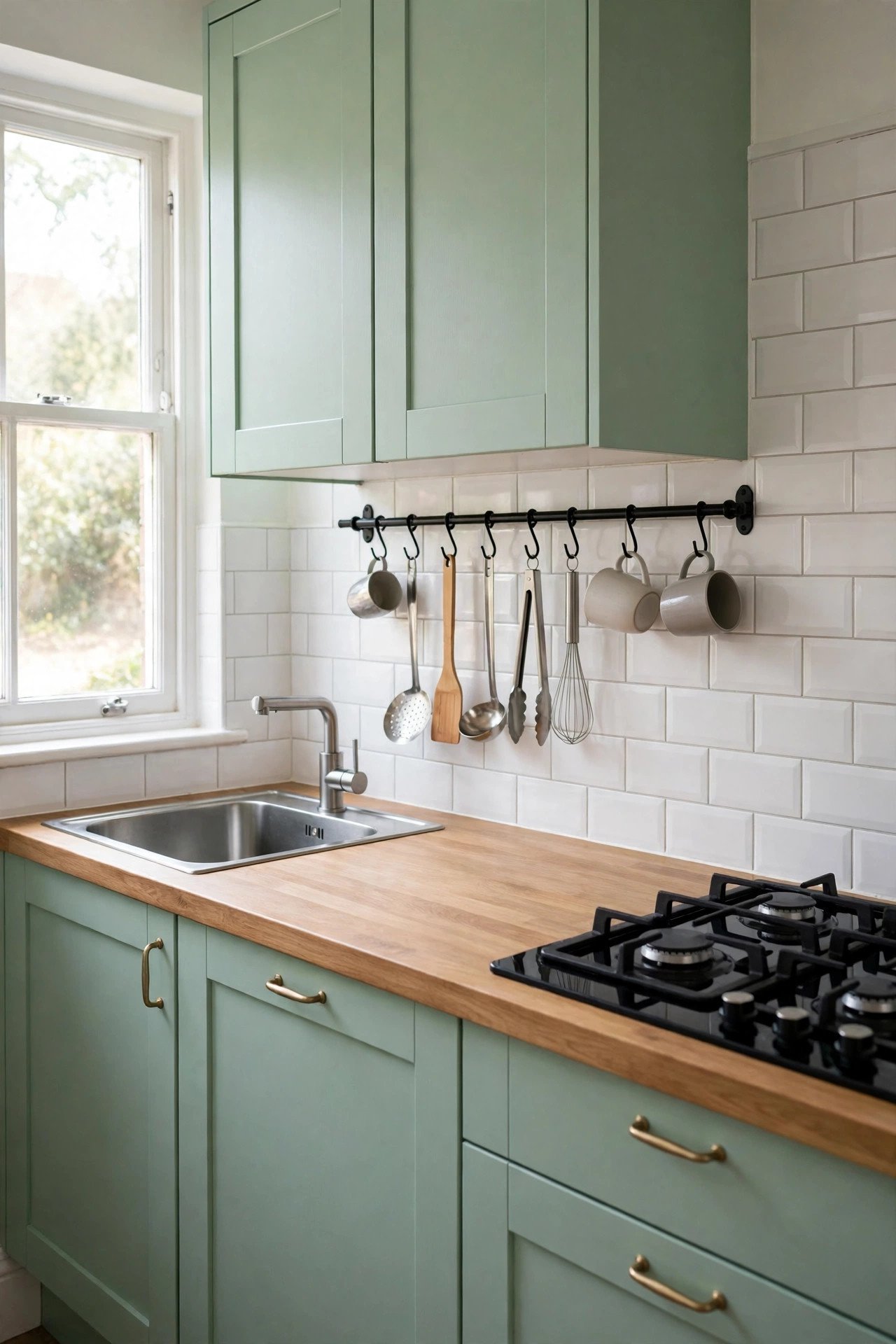
In a small kitchen, the counter is the whole factory floor — and in most small kitchens it is permanently covered. The fruit bowl, the toaster, the knife block, yesterday’s post, a charger, three mugs and a plant leave a workspace the size of a chopping board, so dinner prep happens in the gaps: vegetables chopped on a board balanced over the sink, the saucepan lid put down on the hob because there is nowhere else. It feels like a space problem. Mostly, it is a tenancy problem — too many things have been given permanent residence on the one surface that was meant to stay empty.
Counters do not get cluttered by accident; they get cluttered by default, because every object that lacks a home lands on the nearest flat surface and stays. The fix is not a bigger kitchen or a ruthless personality — it is a plan: audit what is living on the counter, protect one clear prep stretch, move the survivors up onto walls and into better storage, and evict the non-food invaders entirely. This guide works through it in that order.
Quick Answer
To win back work space in a small kitchen, empty the counter completely and let only daily-use items return — for most households that is the kettle, one cutting board and very little else. Protect one uninterrupted prep stretch of at least 60–90 cm, ideally between the sink and the hob, and treat it as permanently out of bounds for storage. Move everything else to walls (rails, magnetic strips, hooks), under-cabinet fittings, a cart or proper cabinet storage, and give paperwork, keys and chargers a station in another room. The counter is a workplace, not a shelf — the whole fix follows from that sentence.
Step 1: The Counter Audit — Empty It All
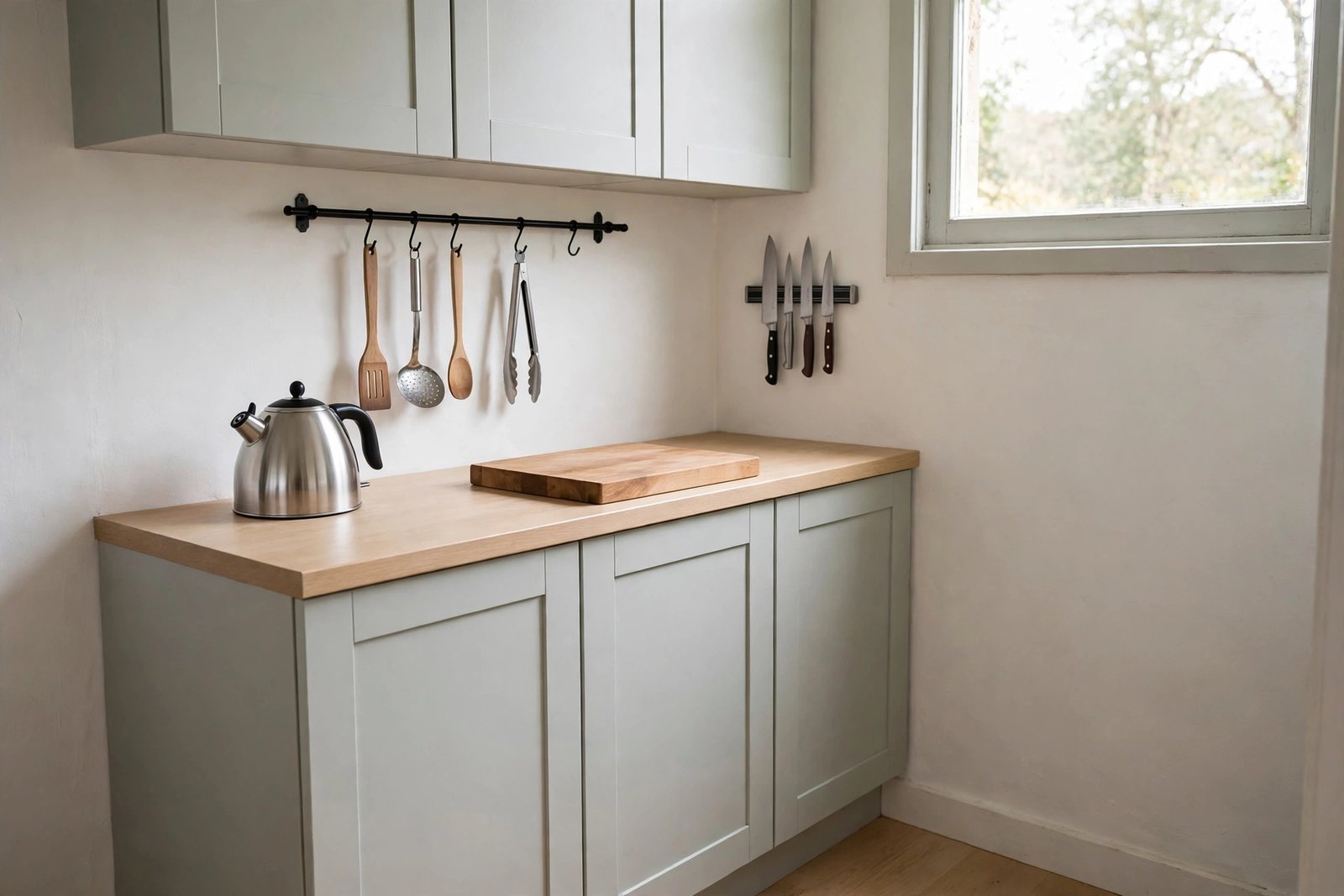
Take everything off the counter, clean the surface, and line the objects up where you can judge them honestly. Sort them into three groups. Daily: used every day or nearly — for most homes the kettle, a chopping board, perhaps the coffee maker. Weekly: the toaster, blender, stand mixer for weekend bakers. Rarely: the waffle maker, the juicer, the bread machine, the decorative oil collection. Be strict: an appliance used twice a month is not a counter tenant, it is a guest.
The weekly group goes into the most accessible cabinet or onto a cart; the rarely group goes to the hardest storage you have — a high shelf, another room, or out of the house. This is the same frequency logic that plans food storage in a small kitchen with no pantry: prime space is earned by frequency of use, and the counter is the most prime space in the room. When the audit ends, most small kitchens discover they had enough work space all along — it was just rented out to appliances.
Step 2: Protect One Landing and Prep Stretch
Decide where cooking actually happens — usually the run between the sink and the hob, because that is the heart of the kitchen work triangle — and declare one continuous stretch of it, 60–90 cm if you can manage it, a no-storage zone. Nothing lives there. Not the fruit bowl, not the utensil crock, not “just for tonight” shopping bags. This stretch is your chopping, assembling, plating and landing space, and its emptiness is what makes the kitchen feel twice its size.
Protecting it is a household rule, not a one-time tidy: anything placed in the zone gets moved within the day, no exceptions for “big” items that claim squatters’ rights. If the kitchen genuinely has only one short run of counter, the protected stretch may be 50 cm plus a large board placed over the sink or the (cool) hob when prepping — a board that bridges the sink is a classic small-kitchen move that manufactures worktop exactly where the washing happens.
Step 3: Move the Survivors Up, In and Off
The daily tools that lost their counter tenancy still need homes within reach, and the walls provide most of them. A magnetic knife strip replaces the bulky knife block. A wall rail with hooks takes utensils, mugs, scissors and the measuring cups. Under-cabinet fittings — hooks for mugs, a mounted paper-towel holder, small jars screwed under the cabinet — use the dead air beneath wall cabinets. A shelf riser or a narrow wall shelf above the backsplash holds daily spices and oils in one tidy row.
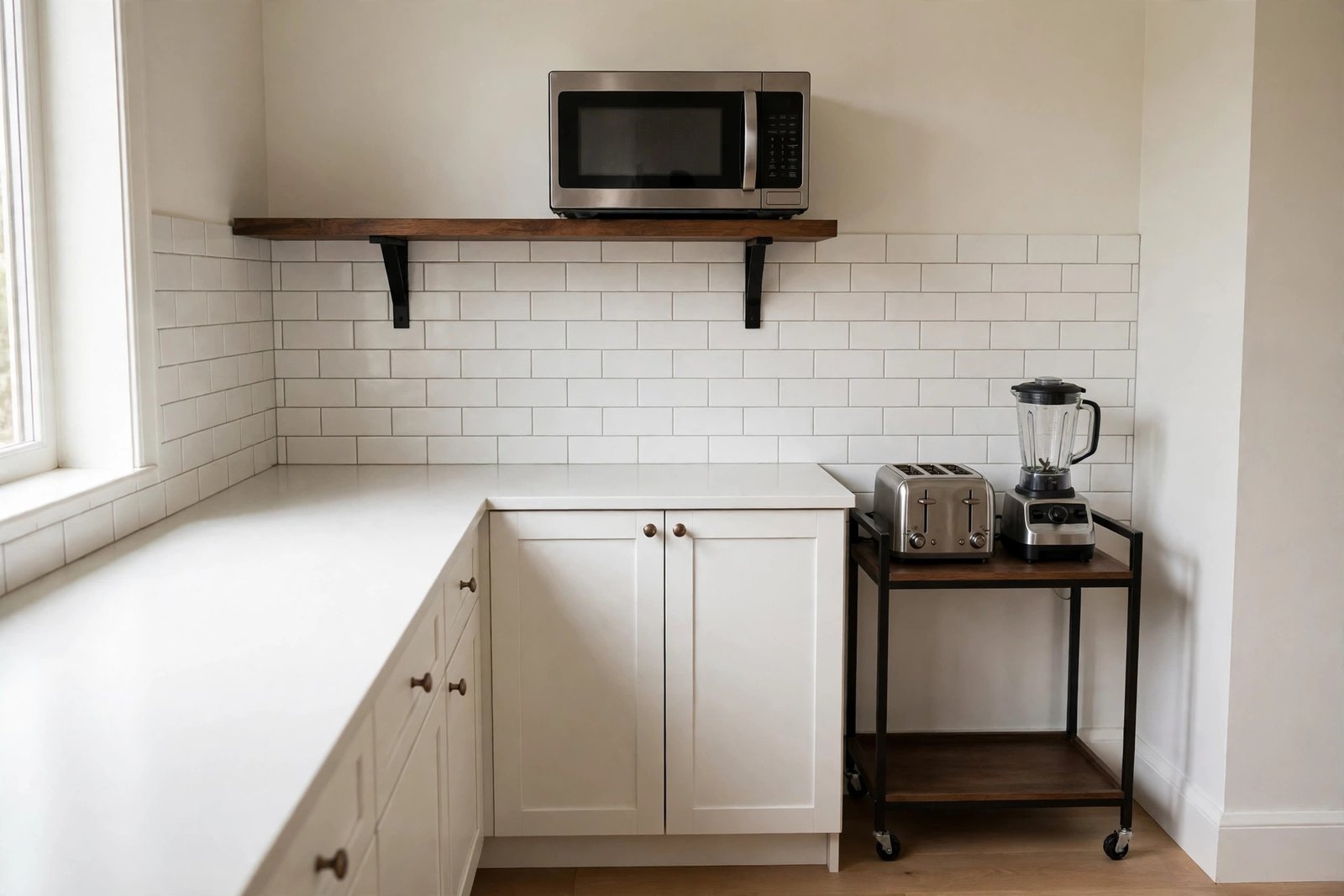
The microwave is the biggest single counter thief in most kitchens: move it onto a sturdy wall shelf, a cart, or a dedicated cabinet shelf and you can win back a quarter of a small kitchen’s worktop in one move. Whatever goes up, keep the prep stretch’s sightlines and light clear — a counter you can finally see across also needs light that reaches it, which is why the shadow fixes in our guide to kitchen lighting shadows on the counter pair so well with a declutter: under-cabinet light only works its magic on a surface that is clear enough to land on it.
Step 4: Evict the Non-Food Invaders
Half the clutter on many counters is not kitchen equipment at all: unopened post, school forms, keys, sunglasses, phone chargers, a handbag, the household’s general “put it there for now” pile. The kitchen counter becomes the home’s default landing strip because it is flat, central and lit. None of those things is defeated by kitchen storage — they are defeated by giving them a better home: a small tray or basket by the front door for keys and post, one charging point in the hallway or living room, a hook for the bag.
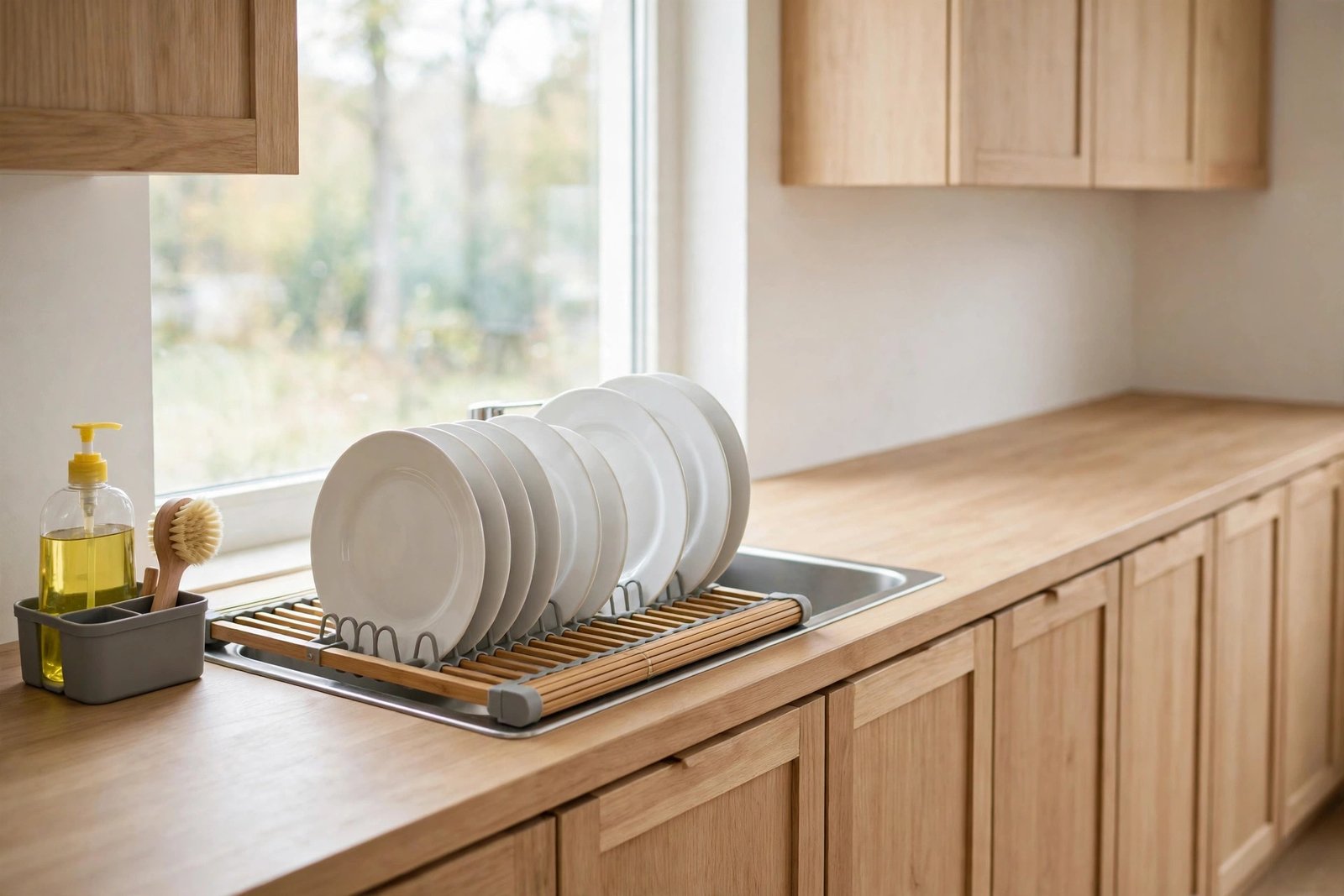
Dish clutter is the other invader with a kitchen address. A drying rack parked permanently beside the sink eats a full workspace; an over-sink roll-up rack or a rack that drains into the sink gives the space back when the washing is done. Washing-up liquid, brushes and cloths belong in a sink-side caddy or under the sink, not spread along the backsplash. Judge every object with one question — does it help cook, or does it just live here? Only the first group stays.
The Two-Minute Reset That Keeps It Clear
A cleared counter re-clutters at the speed of daily life unless a tiny ritual defends it. The working rule is a two-minute reset after the evening meal: everything on the counter either returns to its home, goes in the dishwasher or bin, or is dealt with — and the protected prep stretch ends the night empty. Small, daily and shared beats a heroic monthly clear-out, because clutter’s real advantage is that it arrives one innocent object at a time. A home for everything, a rule for the prep zone, and two minutes a day: that is the entire maintenance system.
Mistakes to Avoid
- Buying organisers before auditing. Trays, crocks and racks bought for clutter you are about to evict just become prettier clutter. Sort first, measure what survives, then buy its home.
- Keeping appliances out “for convenience” that you use monthly. Walking four steps to a cabinet twice a month costs seconds; the appliance’s rent is paid in workspace every single day.
- Decorating the worktop. Plants, cookbooks on stands and ornamental jars belong on a shelf or windowsill. The counter’s job is work; decoration that lives there is clutter with good PR.
- Letting the fruit bowl colonise the prep zone. Fruit bowls migrate to the centre of the best counter. Give it a home on the table, a shelf or a hanging basket — anywhere except the landing stretch.
- Storing things on the hob and in the oven. The hob is not bonus counter and the oven is not a cupboard; both habits are fire risks and signs the audit has not gone far enough.
- One heroic clear-out with no system after it. Without assigned homes and the nightly reset, a cleared counter is back to chaos within a fortnight. The system, not the effort, is the fix.
Frequently Asked Questions
How much clear counter space does a small kitchen actually need?
One continuous stretch of about 60–90 cm is the working target for comfortable prep — enough for a large board, a bowl and the ingredient you are working on. Less can work if you add a board over the sink and use the dining table for big assembly jobs, but scattered 20 cm gaps between appliances do not add up to workspace; continuity is what matters, not the total area.
Where should small appliances go in a kitchen with little cabinet space?
Rank them by frequency. Weekly appliances get the most reachable cabinet, a deep drawer or a rolling cart that parks in a corner or another room. Rarely used ones go high, deep or out. If cabinets are truly full, audit their contents with the same honesty — most hold duplicates and dead stock whose space the appliances deserve more.
Is it better to use open shelves or cabinets to clear the counter?
For counter-clearing, one shallow open shelf or rail near the prep zone is excellent for daily items — visible, reachable, and it forces tidiness because everything shows. Cabinets are better for the weekly group and anything dusty or greasy. The common best answer is mixed: rail and shelf for the daily handful, closed storage for the rest.
How do I stop the counter getting cluttered again?
Three defences: every object that lives in the kitchen has an assigned home that is not the counter; the prep stretch is a named no-storage zone everyone in the house respects; and a two-minute reset after the evening meal returns strays before they accumulate. Clutter returns through exceptions, so make the exceptions somebody’s two-minute job rather than a standing permission.
The Bottom Line
A cluttered counter is not a small kitchen’s destiny — it is the visible result of objects with no assigned homes. Empty the surface, let only the daily few back, protect one clear prep stretch beside the sink and hob, move the rest onto walls, rails and into honest storage, and defend it with a two-minute nightly reset. The counter you reveal will feel like a renovation, and it cost nothing but decisions.