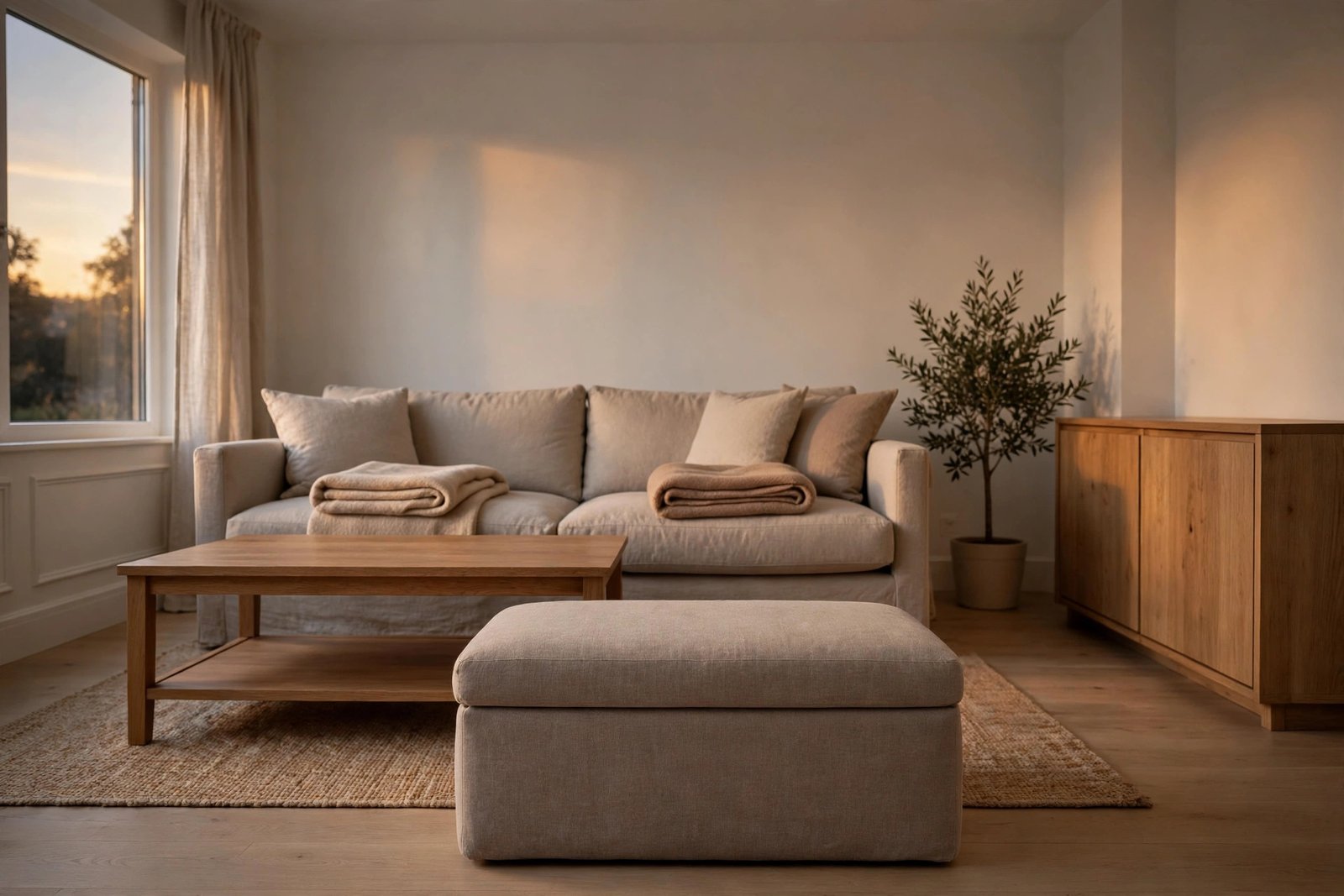
The living room has a storage problem no other room has: it is the room guests see. The kitchen can hide its clutter in cabinets and the bedroom can close its door, but the living room has to hold the blankets, remotes, chargers, board games, toys and paperwork of daily life while still looking like a calm place to sit down. Most attempts fail in one of two directions — either everything lives on open shelves and the room looks like a shop, or everything gets stuffed into one bulging unit and the room looks like it is waiting for a house move.
The way out is to stop thinking of storage as furniture you add, and start thinking of it as space you hide. The best living room storage is invisible: it sits inside furniture that has another job, inside dead corners nobody looks at, and behind closed fronts that match the room. This guide works through the plan in order — decide what truly needs to live in the room, build storage into the furniture, keep every front closed and consistent, and use the dead spaces last.
Quick Answer
Living room storage stops looking like storage when everything is behind a closed front and the storage is built into furniture that already has a job: a storage ottoman instead of a plain footstool, a sideboard instead of open shelves, a coffee table with a shelf or drawers, a bench under the window with boxes inside. Plan it by listing what actually lives in the room — blankets, media, toys, chargers, paperwork — and giving each category one hidden home near where it is used. Match the boxes and baskets so the insides stay calm too, and exile anything used less than monthly to storage in another room.
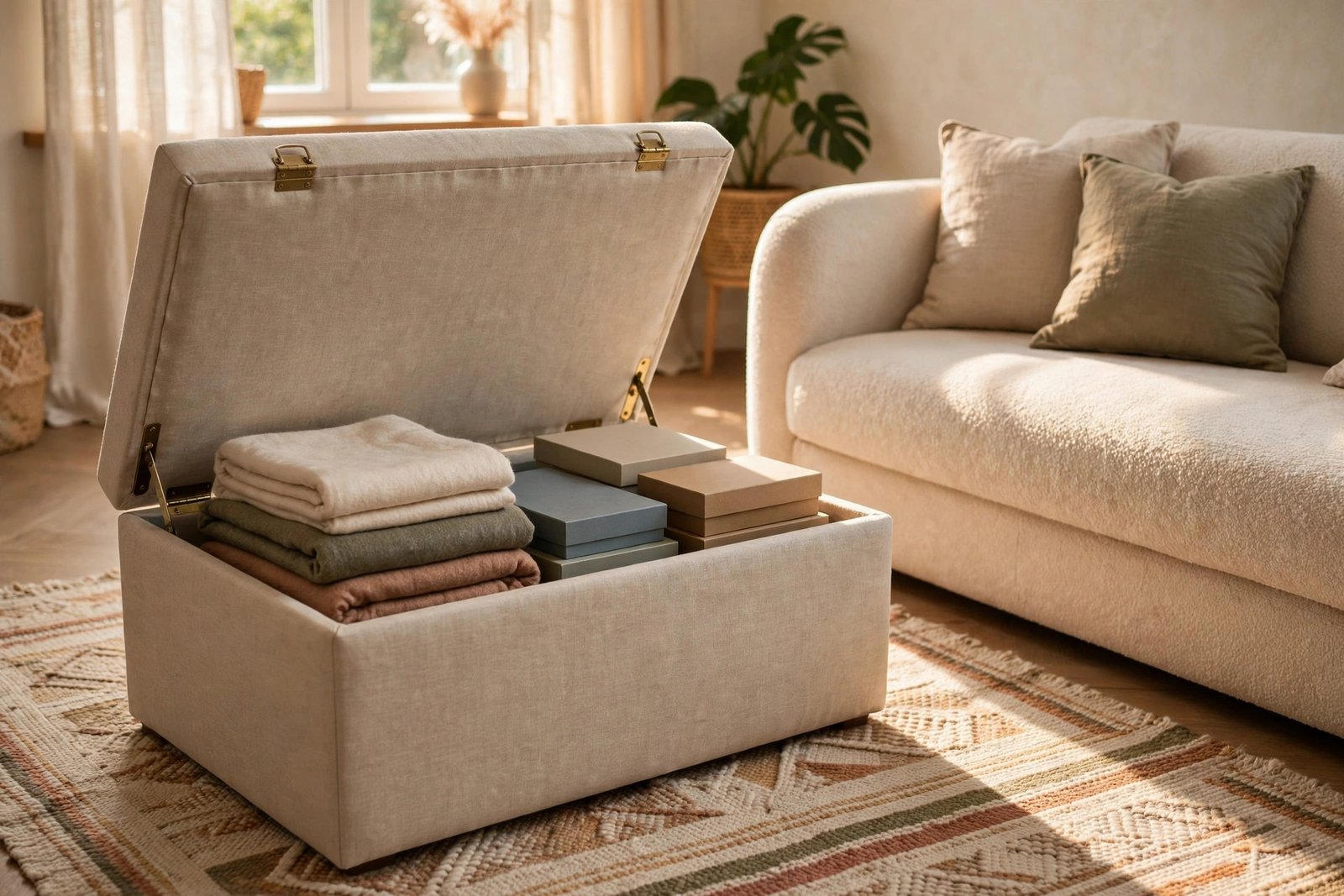
Step 1: Decide What Actually Needs to Live in the Room
Hidden storage fails when it is planned for everything the family owns. Start with an honest list of what genuinely gets used in the living room: throws and cushions, remotes and chargers, current books and magazines, the toys in daily rotation, board games, and the small tide of paperwork that lands on the coffee table. That list is usually shorter than expected — and everything not on it should leave the room entirely, not be hidden in it.
This is the same removal-first discipline as our guide to a small living room with too much furniture: hiding clutter is not the same as dealing with it, and a room stuffed with beautifully concealed things nobody uses is still a stuffed room. Sort first. What survives gets split by frequency — daily items need a home you can open with one hand from the sofa; weekly items can live behind a door across the room; anything rarer belongs in a bedroom cupboard or under a bed, not in the living room at all.
Step 2: Build the Storage Into the Furniture
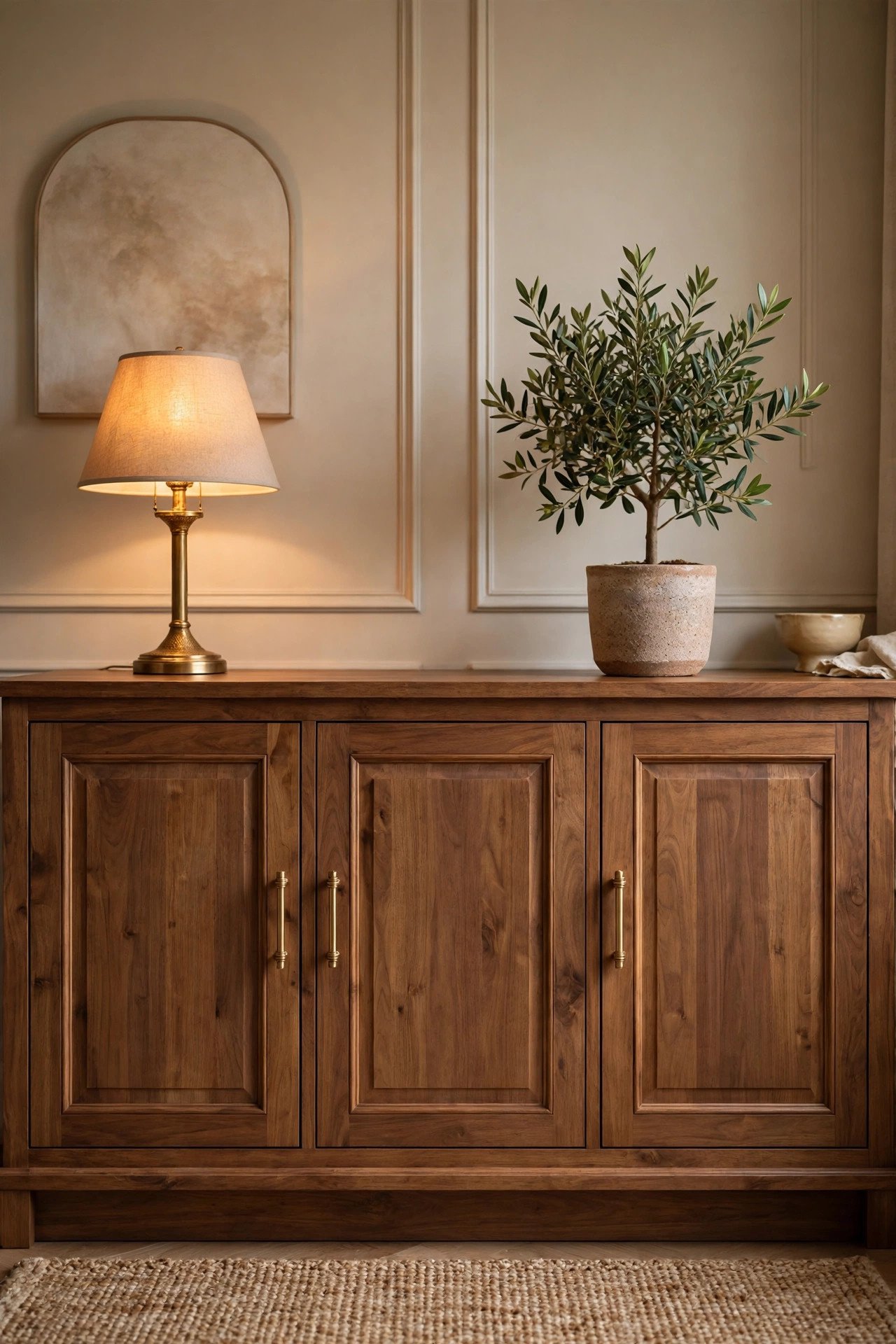
The hardest-working hidden storage in a living room never announces itself, because it arrives disguised as furniture you were going to have anyway. The storage ottoman is the classic: a footrest and extra seat on the outside, a blanket-and-games chest on the inside. A coffee table with a lower shelf or drawers swallows remotes, coasters and current reading without a single visible box. A sideboard or low cabinet along one wall takes the bigger, uglier categories — board games, toy overflow, the paperwork tray — behind doors that read as a normal piece of furniture.
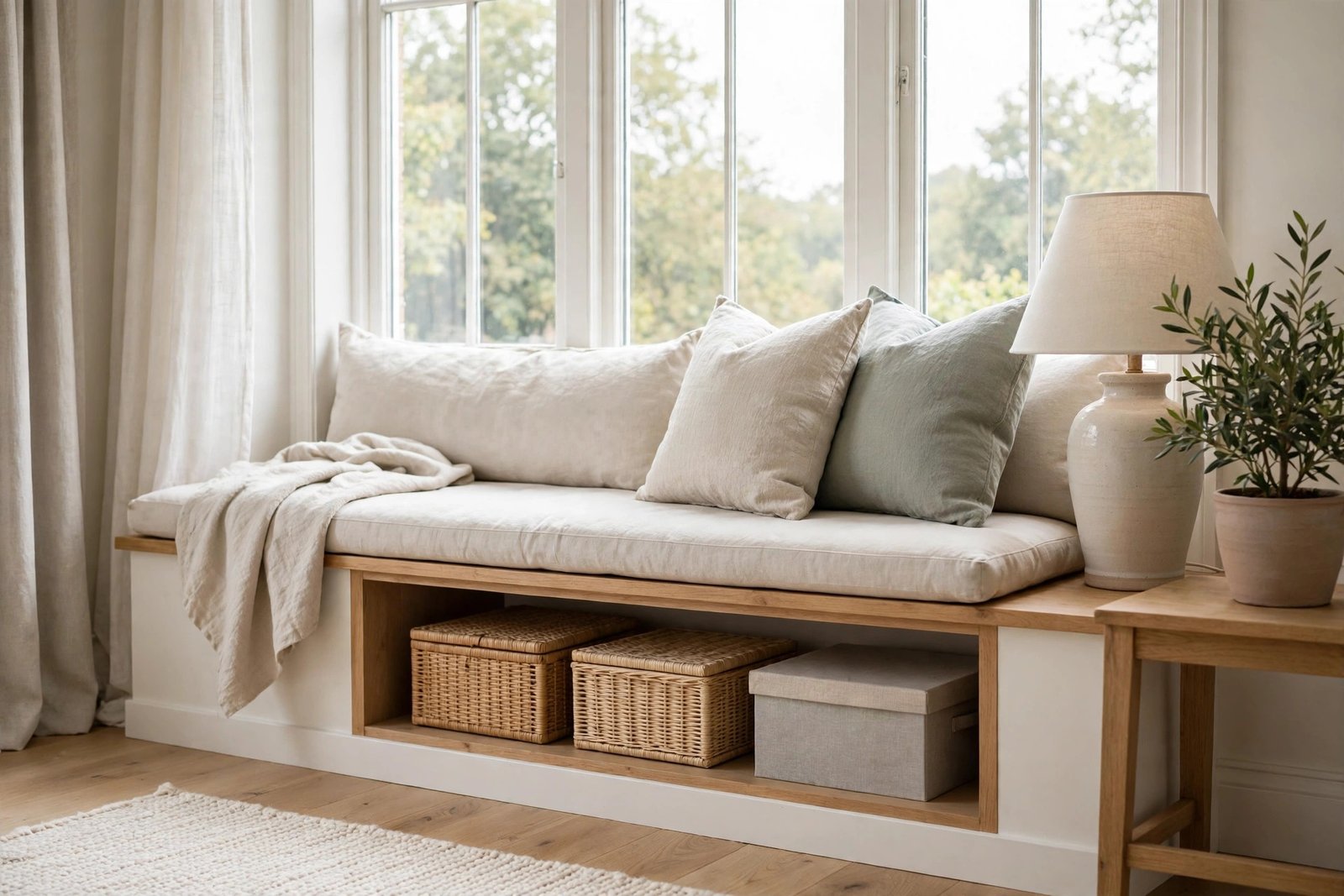
A window bench or a bench along a wall is the other quiet giant: a seat on top, and inside it, lidded boxes for seasonal cushions, spare bedding for the sofa bed, or the toy rotation waiting its turn. Even the sofa itself can work — some models lift to reveal storage, and almost any sofa has room behind it for a slim console shelf that hides chargers and a power strip, which kills the cable nest that otherwise lives on the floor. The rule for all of it: if a piece of furniture is coming into the room anyway, choose the version that stores.
Step 3: Closed Fronts, Matching Insides
What makes storage look like storage is visibility. Open shelving shows every spine, box and cable; glass fronts show almost as much. Closed fronts — doors, drawers, lids, fabric — are what let a room read as a room. If you do have open shelves, treat them as display with one storage trick: matching baskets or boxes in a single colour and material, so the eye reads a calm row of identical shapes instead of a crowd of individual objects.
The insides matter for a different reason: hidden storage only stays hidden if it stays usable. A sideboard crammed at random will be left open, overflowed and finally avoided. Give each interior one category, in its own box or section, the way our guide to planning wardrobe storage without a built-in closet zones a rail for weekly clothes and boxes for the rest. Frequency zoning works identically here: daily things at the front and at hand height, weekly things behind them, and nothing in the living room that is used less than monthly.
Step 4: Use the Dead Spaces
Every living room has volume nobody uses. The space under the stairs, where it opens off the living room or hall, can hold pull-out drawers, a small desk or a reading nook instead of a dusty void — our guide to planning under-stairs space for storage, work or reading works through the options by head height. The alcoves either side of a fireplace take fitted shelves or cupboards that look original to the house. The gap behind the sofa fits a narrow console. The wall above door height can carry a high shelf for matching boxes of rarely touched things.
Work through these spaces only after the furniture storage is planned, and give each dead space a single job. Dead spaces fail when they become general dumping grounds — the under-stairs cupboard that holds everything holds nothing findable. One space, one category, in boxes that fit the shape: that is what keeps hidden storage hidden in practice as well as in appearance.
Mistakes to Avoid
- Open shelves for everyday clutter. Open shelving displays objects; it does not hide them. Daily-life items on open shelves are the single biggest reason a room looks like storage.
- Hiding things you should have removed. Concealed clutter is still clutter. Sort and remove first; hide only what genuinely earns a place in the room.
- Mismatched boxes and baskets. Ten different containers read as visual noise even behind a door line. One colour, one material, repeated — that is what calm looks like.
- Storage furniture that is hard to open. A chest you have to move a plant and a lamp to reach will not be used, and its contents will migrate to the coffee table. Access decides everything.
- One giant unit for everything. A single wall of storage concentrates all the visual weight in one place and all the rummaging in one queue. Spread smaller hidden storage near where each category is used.
- Forgetting the cables. Chargers, power strips and router cables are living room clutter too. A console behind the sofa or a lidded box with holes for leads keeps them invisible.
Frequently Asked Questions
What furniture stores the most without looking like storage?
The storage ottoman and the sideboard, between them, cover most living rooms. The ottoman hides soft, bulky things — blankets, cushions, games — right where they are used, and the sideboard hides everything boxy behind proper doors. Add a coffee table with a shelf or drawers and most daily categories have a home that reads as ordinary furniture.
How do I hide kids’ toys in the living room?
Keep only the current rotation in the room, in one lidded home — a bench, a sideboard section or a large basket with a lid — and store the rest of the rotation elsewhere. One category, one container, closed top: at tidy-up time everything goes in and the room resets in two minutes. Toys in five different open baskets will never look hidden, however nice the baskets are.
Are built-in shelves better than freestanding storage?
Built-ins look the least like storage, because they read as part of the room — especially in alcoves and around a fireplace — and they use awkward volume freestanding pieces cannot fit. They cost more and stay when you move, so they suit owners more than renters. Renters get most of the same effect from a lidded bench, a sideboard and matching boxes.
Where do I put paperwork and chargers?
Paperwork gets one shallow home: a lidded tray or a single drawer in the sideboard, emptied weekly, not a growing stack on the coffee table. Chargers live at one charging point — ideally a slim console behind the sofa or a box with cable holes — so leads stop appearing on every surface. Both are small categories; they only become visual chaos when they have no single home.
The Bottom Line
Living room storage looks like storage only when it is visible. Decide what truly lives in the room, remove the rest, then hide what remains inside furniture that was coming anyway — ottomans, sideboards, benches and coffee tables — behind closed fronts, in matching containers, zoned by how often each thing is used. Finish with the dead spaces, one category each. The room ends up holding just as much as before; it simply stops showing it, and sitting down in the evening feels like entering a room, not a stockroom with a sofa in it.
1 thought on “Living Room Storage That Does Not Look Like Storage: Planning Hidden Space”