A low ceiling changes how a whole room feels, not just how tall it measures. Duck under 2.4 metres and even a generous floor plan starts to feel like the lid is on — furniture looks taller, light pools at head height, and visitors instinctively glance up. Owners often blame the room’s size, but perception is doing most of the damage, and perception can be redecorated even when the ceiling cannot be raised.
The trick is to stop drawing attention to where the ceiling is. Colour can blur the boundary between wall and ceiling, lighting can push the visual weight upward, and furniture choices can stretch the eye’s vertical journey. This guide gathers the colour and lighting tricks that reliably make a low-ceilinged room feel higher, and the common choices that quietly press it down further.
Quick Answer
A low ceiling feels higher when nothing marks the line where wall meets ceiling and light travels upward. Paint the ceiling the lightest colour in the room — ideally the same colour as the walls or one step lighter, with trim matched so no outline appears. Use uplighters and wall washers that throw light up the walls and across the ceiling, avoid hanging pendants and dark ceiling beams, choose low-profile furniture, and hang curtains from ceiling to floor to stretch the wall’s apparent height. Every horizontal line at ceiling level is the enemy; every vertical line and upward glow is a friend.
Colour: Erase the Line Where the Ceiling Starts
Your eye finds a room’s height by finding its edges. A bright white ceiling over coloured walls, finished with contrasting coving or a picture rail, hands the eye a perfectly drawn line at exactly the wrong height — the room’s limits measured and underlined. The classic low-ceiling fix is to take that line away: paint the ceiling the same colour as the walls, or at most one step lighter, and paint any coving, cornice and trim in the same colour too. With no boundary to measure, the walls seem to curve up and away, and the ceiling’s true height becomes genuinely hard to judge.
Keep the ceiling the lightest or equal-lightest surface in the scheme. A ceiling darker than the walls presses down visually no matter what else you do. Matte finishes help — a flat ceiling scatters light and recedes, while a glossy one reflects the room back and announces itself. This is the same low-contrast logic that enlarges small rooms in our guide to paint colours that make a room feel smaller: blur the edges and the box feels bigger, in height as much as in width.
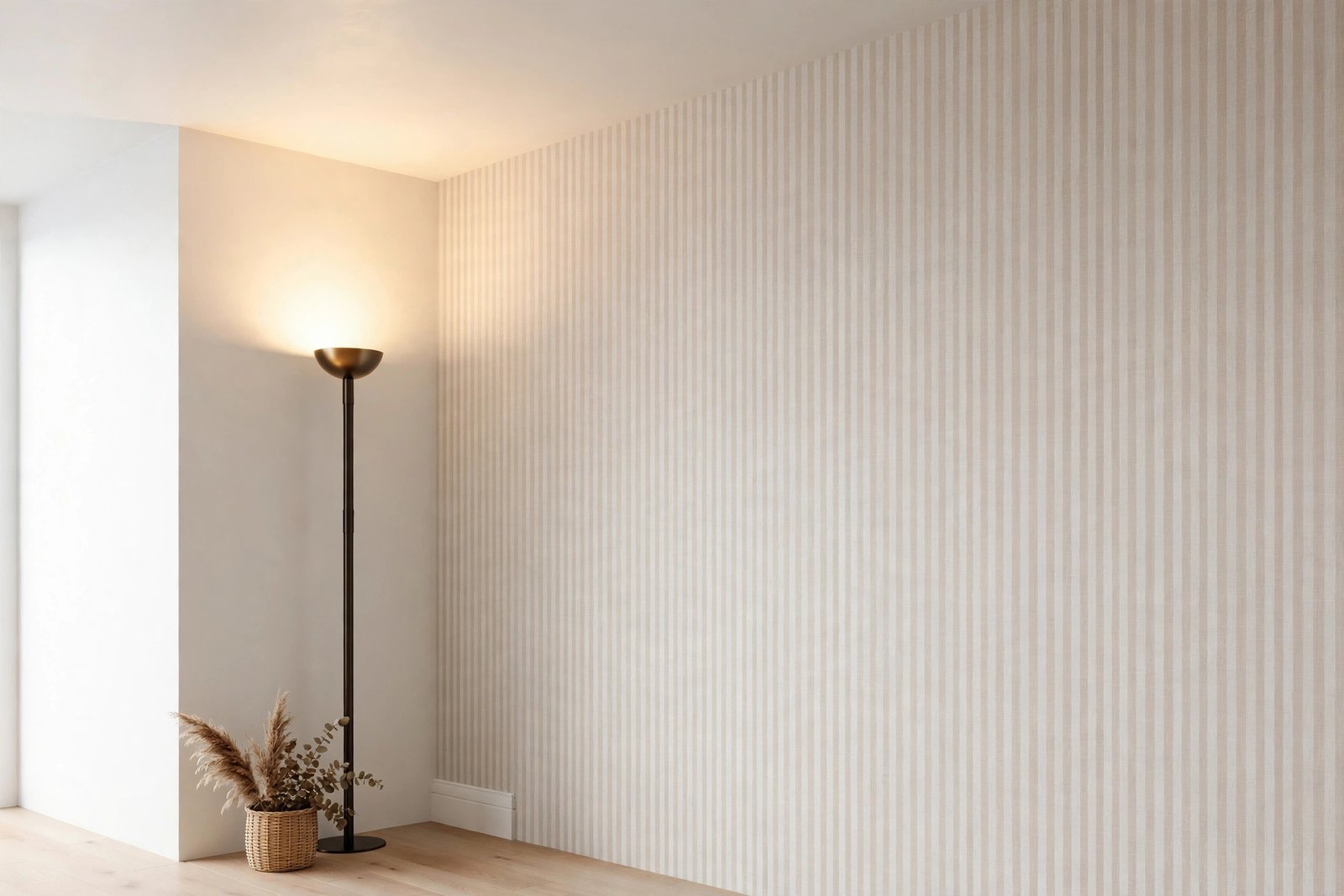
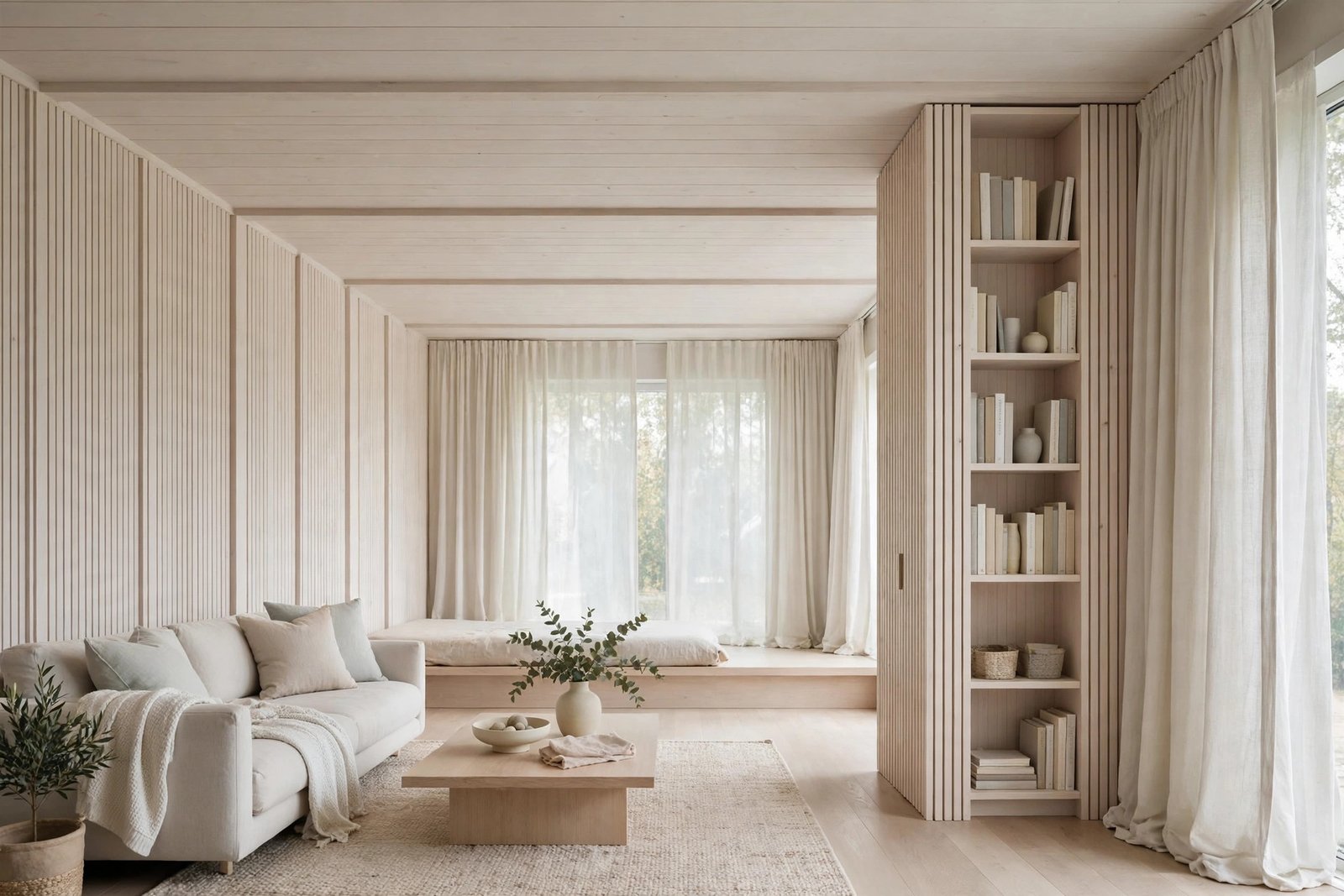
Then give the walls a vertical bias. Slim vertical stripes — painted, or in a subtle striped wallpaper — pull the eye upward. Tall, narrow elements do the same job without pattern: a floor-to-ceiling bookcase, long artwork hung vertically, tall plants. What you are building is a room whose lines mostly run up and down, so the eye travels in the direction you want it to feel space.
Lighting: Push the Light Up, Keep Fittings Flat
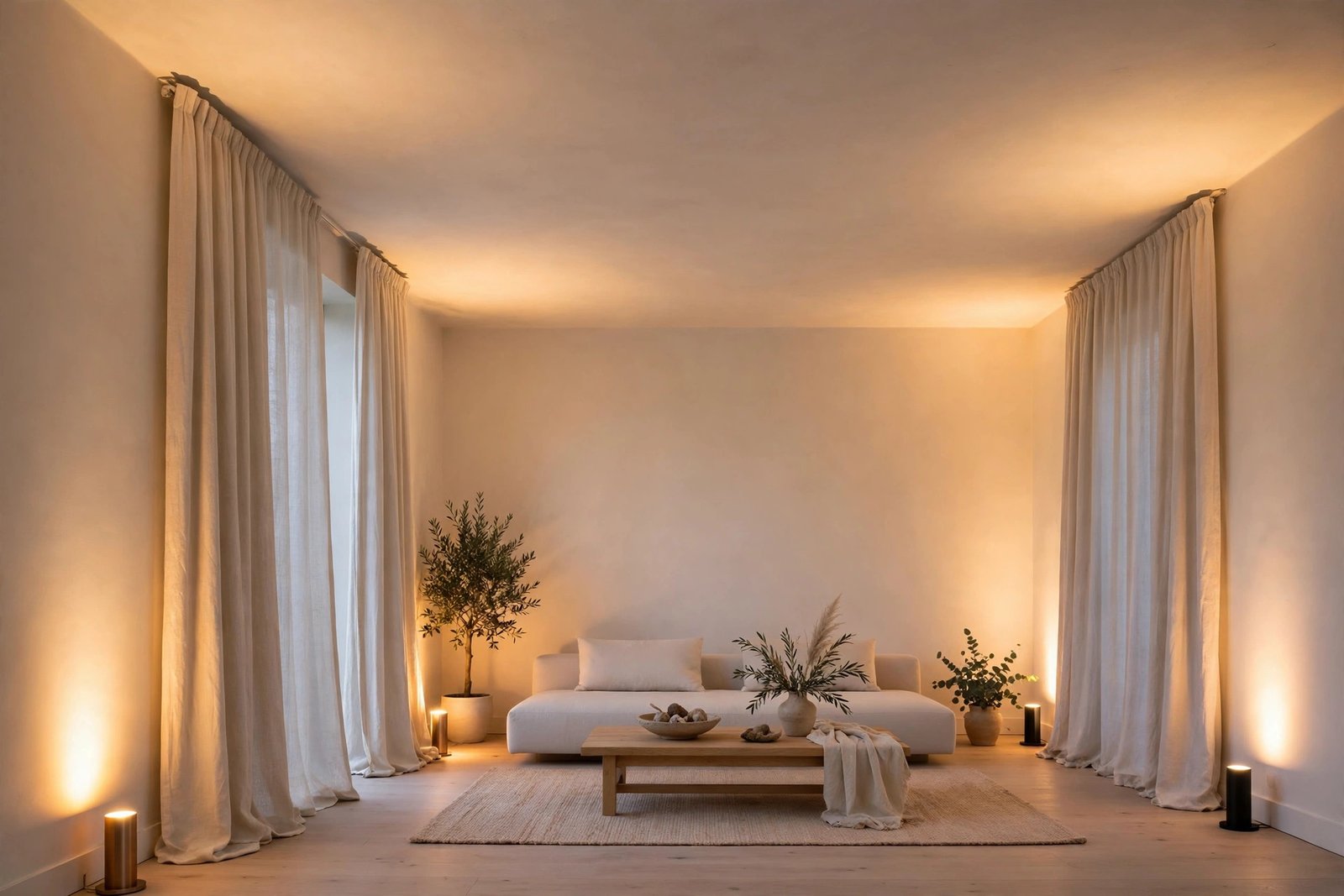
Light tells the eye where the volume is. In a low room, light pooled at table height or blazing from a central pendant makes the ceiling a dark lid above the lit zone. Reverse it: send light upward. Uplighting floor lamps, wall washers and picture lights that graze the upper walls make the ceiling glow softly, and a glowing ceiling reads as a higher ceiling — the eye assumes the light is travelling a long way. This is the same wall-and-ceiling washing that brightens dark rooms in our guide to a room that feels dark even with the lights on; in a low room it does double duty, adding perceived height as well as brightness.
Fittings themselves need discipline. Hanging pendants are the main offender: every centimetre of drop cord is a measuring stick announcing the ceiling height, and a low shade at head height closes the room in. Choose flush or semi-flush ceiling fittings, or skip the central fitting entirely in favour of uplighters and lamps. If you use recessed downlights, they at least add no visual weight — but aim some light at walls rather than only down, or the ceiling plane still reads dark at the edges. Avoid track systems and exposed beams painted dark; a beam across a low ceiling is a horizontal line doing the exact opposite of everything above.
Furniture and Curtains: Lower the Horizon, Lengthen the Wall
The lower the furniture, the taller the room feels by comparison — the gap between sofa back and ceiling is what the eye actually measures. Choose low-profile sofas and chairs, beds with low headboards, and storage that runs long and low rather than tall and looming. Keep the tops of tall pieces (wardrobes, bookcases) either genuinely floor-to-ceiling, which reads as architecture, or clearly below the ceiling line; a bookcase that stops 20 cm short leaves an awkward shadow gap that measures the ceiling for you.
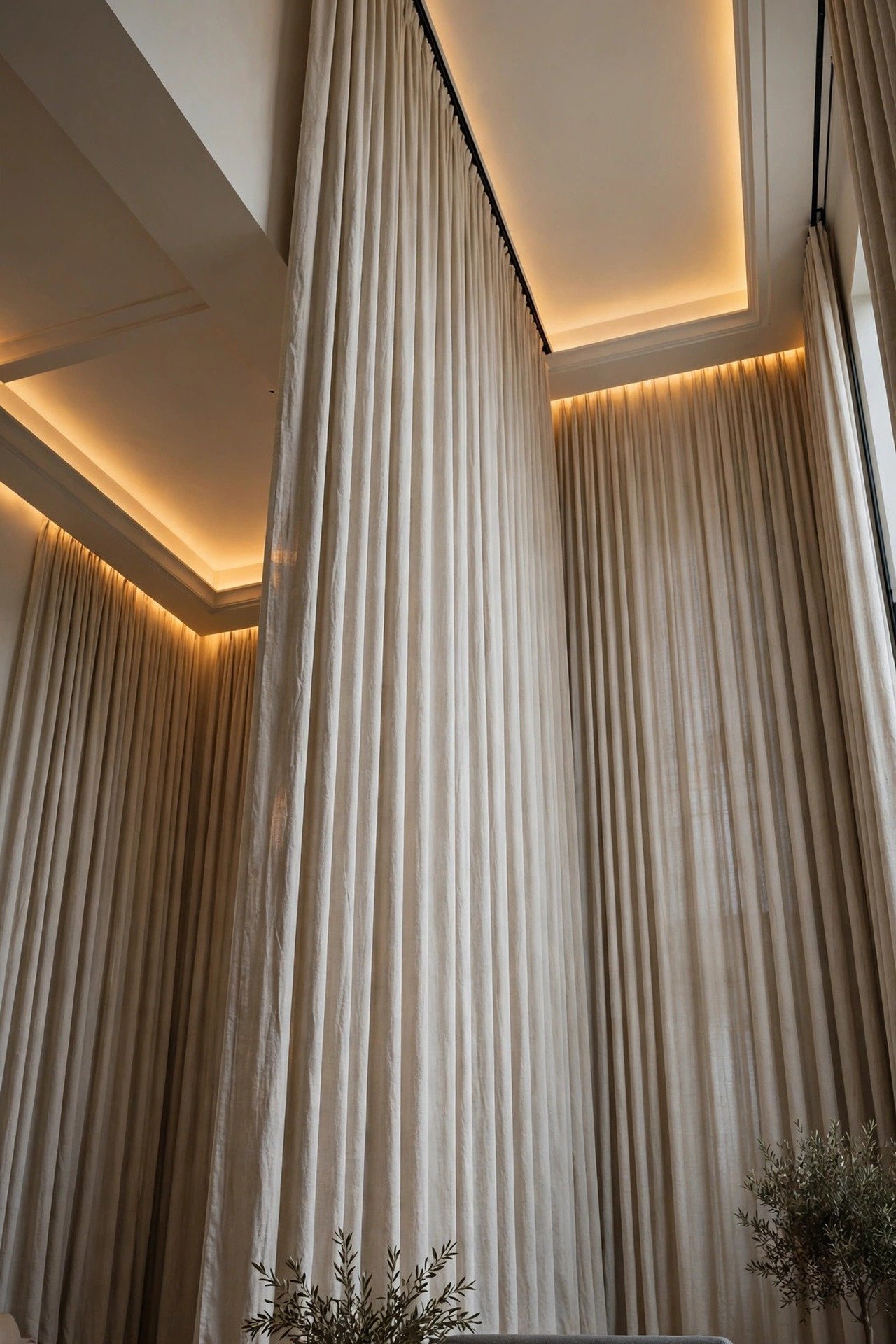
Curtains are the cheapest height trick in the room. Hang the rail or track at the ceiling, not at the window frame, and let the curtains fall the full height to the floor. The window may start lower, but nobody can tell — the eye reads one long vertical sweep and assigns the height to the whole wall. The same principle helps cold rooms too: in our guide to a north-facing room that feels cold and grey, full-height warm curtains both soften the light and dress the wall from top to bottom.
Floor and Finishing Touches
The floor participates quietly. A darker floor under light walls grounds the room and increases the sense of space above it — the eye contrasts the deep base with the airy top. Large rugs that run close to the walls keep the floor plane unified; small rugs floating in the middle break the plane into measured pieces. Keep the floor as clear as possible: visual clutter at floor level raises the room’s apparent “fill line” and shrinks the empty volume above it.
Finally, watch the small horizontal lines: picture rails, dado rails, shelf lines and the tops of doors all slice the wall’s height into segments. In a low room, remove or paint out rails you do not need, hang art in vertical pairs or single tall pieces rather than wide low galleries, and let one or two tall, slim objects — a floor lamp with an upward shade is perfect, since it is vertical line and uplight in one — carry the eye up. None of these changes moves the ceiling a millimetre. Together, they change every measurement your eye makes of it.
Mistakes to Avoid
- A dark ceiling, or one darker than the walls. It presses down visually and no lighting trick fully compensates. The ceiling is the lightest surface, always.
- Contrasting coving and trim. A white ceiling, coloured walls and a bright outline between them draws the exact line you are trying to hide. Match them.
- Low-hanging pendants and chandeliers. Every drop is a height measurement at eye level. Flush fittings or uplighters instead.
- Tall, bulky furniture that nearly touches the ceiling. The small shadow gap above it advertises the ceiling height. Go floor-to-ceiling or clearly low.
- Curtains hung at the window frame. They crop the wall to the window’s height. Ceiling-mounted, floor-length, always.
- Wide horizontal artwork and shelving at high level. Horizontal lines at the top of the wall slice the height. Think vertical: tall pieces, slim stripes, long drops.
Frequently Asked Questions
What colour should I paint a low ceiling?
The same colour as the walls, or one step lighter — and never darker than the walls. Matching or near-matching removes the visible boundary where the ceiling starts, which is the single most effective colour trick for height. Use a matte finish so the ceiling scatters light and recedes instead of reflecting the room back at you.
Do uplighters really make a ceiling feel higher?
Yes. A ceiling washed with soft light looks further away, partly because brightness reads as distance and partly because the eye can no longer find the ceiling’s edge in shadow. Uplighting floor lamps and wall washers are the easiest way to get the effect without rewiring; even two uplighters in opposite corners change how the room’s height feels in the evening.
Can I use pendant lights in a low-ceiling room at all?
Over a dining table or kitchen island, a pendant can work because the table gives it a reason to hang and nobody walks beneath it — keep the drop as short as the fitting allows. Over open floor, seating or walkways, no: hang nothing. A flush fitting or lamp light will always feel taller and safer.
How low is too low for these tricks to matter?
They matter most between about 2.3 and 2.5 metres, where the ceiling is noticeably low but the room is otherwise normal — exactly the range where perception dominates. Below that, the same tricks still help but expectations should be modest. Above 2.6 metres, most people stop perceiving the ceiling as low at all, and standard decorating rules apply again.
The Bottom Line
You cannot raise the ceiling, but you can stop measuring it. Blur its boundary with matched, light colour; push light up its walls until it glows; keep furniture low, curtains full-length and lines vertical; and remove every pendant, beam and rail that underlines the ceiling’s height. The room’s dimensions will not change by a centimetre — and nobody sitting in it will believe that.