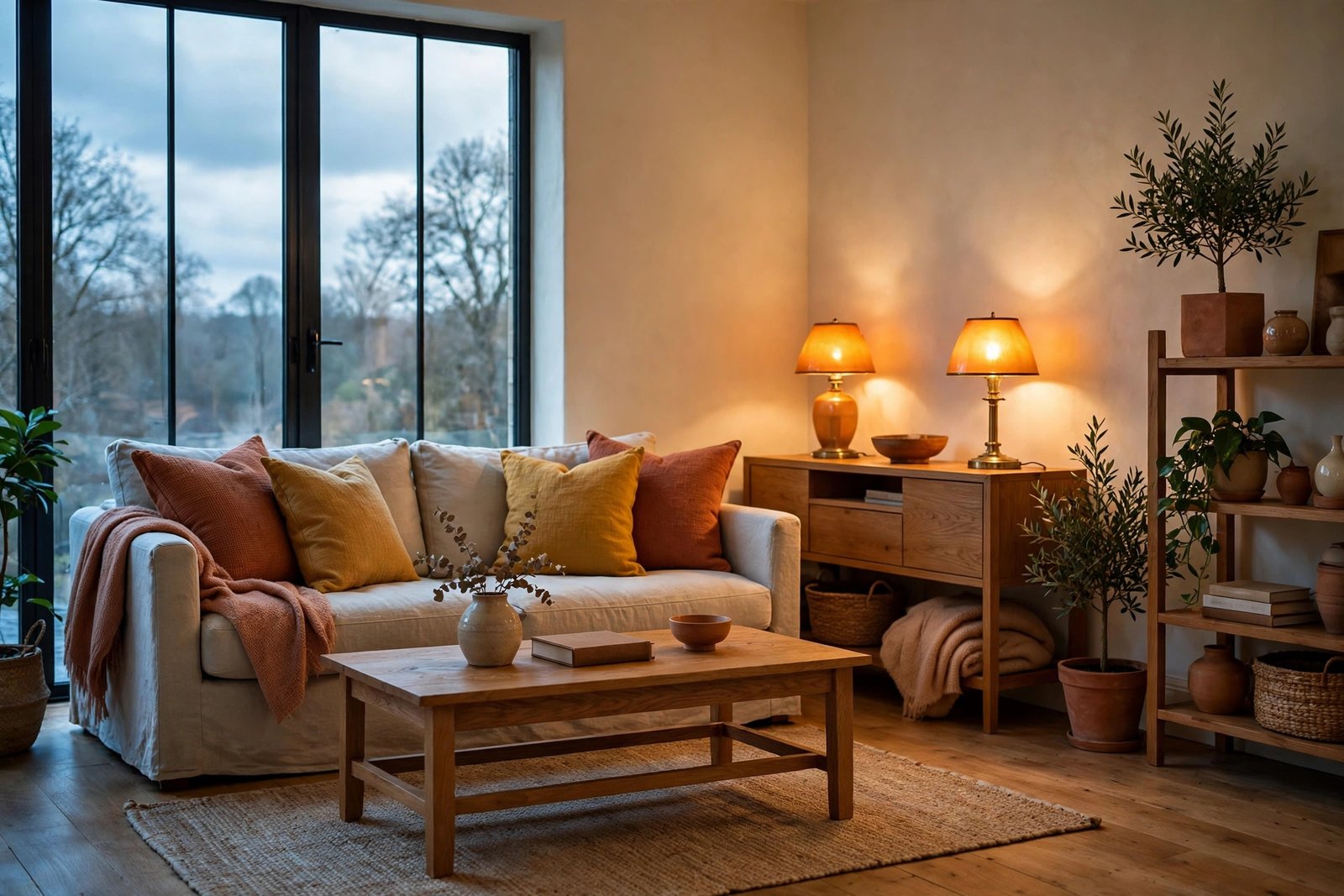
Some rooms never get their moment. The sun rises on the other side of the house, crosses the sky all day, and sets without once shining through your window. What a north-facing room receives instead is flat, blue-grey light reflected off the sky itself — steady, shadowless and cold. Paint looks greyer than the swatch promised, white turns faintly blue, and even on a bright day the room feels like it is permanently early in the morning.
You cannot move the window, but you can stop cooperating with the light. North light is a fixed condition, like a low ceiling or a small footprint: once you understand exactly what it does to colour, you can choose paint, bulbs and materials that push back. This guide explains why north-facing rooms read cold, and the colour and lighting changes that reliably warm them up.
Quick Answer
A north-facing room feels cold because its only daylight is indirect, blue-toned sky light that greys out colours and flattens shadows. Warm it by choosing paint with warm undertones (creamy whites, warm greiges, soft peach, sage and muted terracotta) and avoiding blue-based greys and cool whites; by using 2700K bulbs in several layered sources, including at least one lamp that washes a wall with warm light; and by adding warm materials — wood, brass, wool, linen — in the middle of the room, where the cold light lands. Test every colour in the room itself, at the times you actually use it.
Why North Light Makes Everything Look Grey
Direct sunlight is warm — it leans yellow, and it changes through the day. A north-facing window (a south-facing one in the southern hemisphere) never receives it. The light that enters is bounced off the blue sky, so it arrives with a cool colour bias and almost no direction: no sun patches, no warm highlights, no strong shadows to give the room depth. Colours are judged by the light that hits them, so everything in the room is effectively being viewed through a pale blue filter, all day, every day.
That filter explains the classic north-room disappointments. Grey paint — most of which is mixed with blue pigment — turns noticeably bluer and colder. Crisp blue-whites go icy. Colours that looked balanced in the shop, under neutral lighting, lose their warm half and show only their cool skeleton. And because the light is flat, the room also loses contrast: nothing sparkles, nothing glows, and the eye reads the whole space as dull. The fixes below work on both problems — adding warmth to the palette, and adding the direction and glow the sky refuses to provide.
Paint: Choose Undertones That Fight the Blue
In a north-facing room, the undertone is the colour. Your shortlist should lean warm on purpose: creamy off-whites with a yellow or peach base instead of blue-white; warm greiges (grey-beiges) that lean beige rather than grey; soft, muted warm colours such as pale terracotta, blush, warm sage and dusty gold. These colours have warmth to spare, so after the blue light takes its share, what remains still reads balanced and alive.
Avoid the traps: blue-based greys, green-greys, lilac-greys and stark brilliant whites all surrender to the light and turn cold, flat or faintly dirty. This is precisely the failure covered in our guide to small room paint colours that make it feel smaller, where blue-grey shades in north-facing light are called out for turning cave-like — in a north room the same shades also turn chilly. Depth is fine, too: a north room can carry a richer mid-tone warm colour better than a washed-out pale one, because the flat light softens everything. Pale and cool is the only genuinely dangerous combination.
Whatever you choose, test at full scale in the room: a big painted board moved around through the day, judged in the morning and again under evening lamps. North light is consistent, which is one advantage — the colour you approve at 10 am will not betray you at 3 pm the way sun-struck rooms do.
Lighting: Replace the Sun the Room Never Gets
Artificial light has to do double duty in a north-facing room: it provides the brightness and it provides all the warmth and direction the daylight lacks. Standardise on 2700K bulbs everywhere — their amber lean is the direct antidote to blue daylight — and spread the light across three or more sources rather than one ceiling fitting. A single overhead light in a north room simply doubles the flatness.
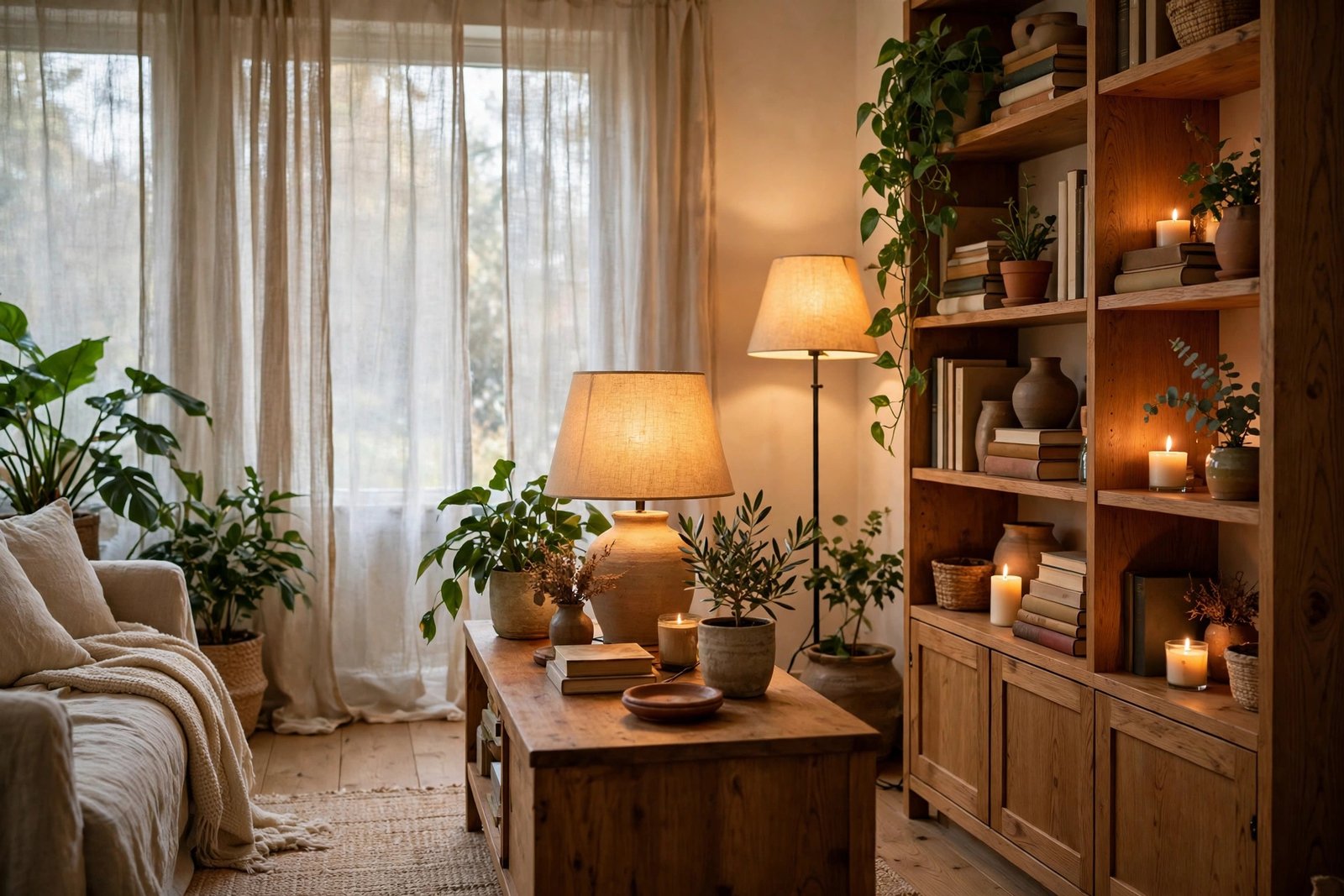
The most valuable addition is a source that throws warm light onto a wall: an uplighter bouncing light off the ceiling, or a shaded lamp close to a warm-painted wall. Lit walls are what the eye reads as “glow”, and glow is exactly what sky light never delivers. In the evening, lamps should take over completely — draw the curtains against the grey and let the room run on its own warm light. If the room is also short on brightness in general, work through the surface and reflectivity fixes in our guide to a room that feels dark even with the lights on as well; north rooms are very often dark rooms too, and the two fixes reinforce each other.
Materials and Textiles: Put Warmth Where the Light Lands
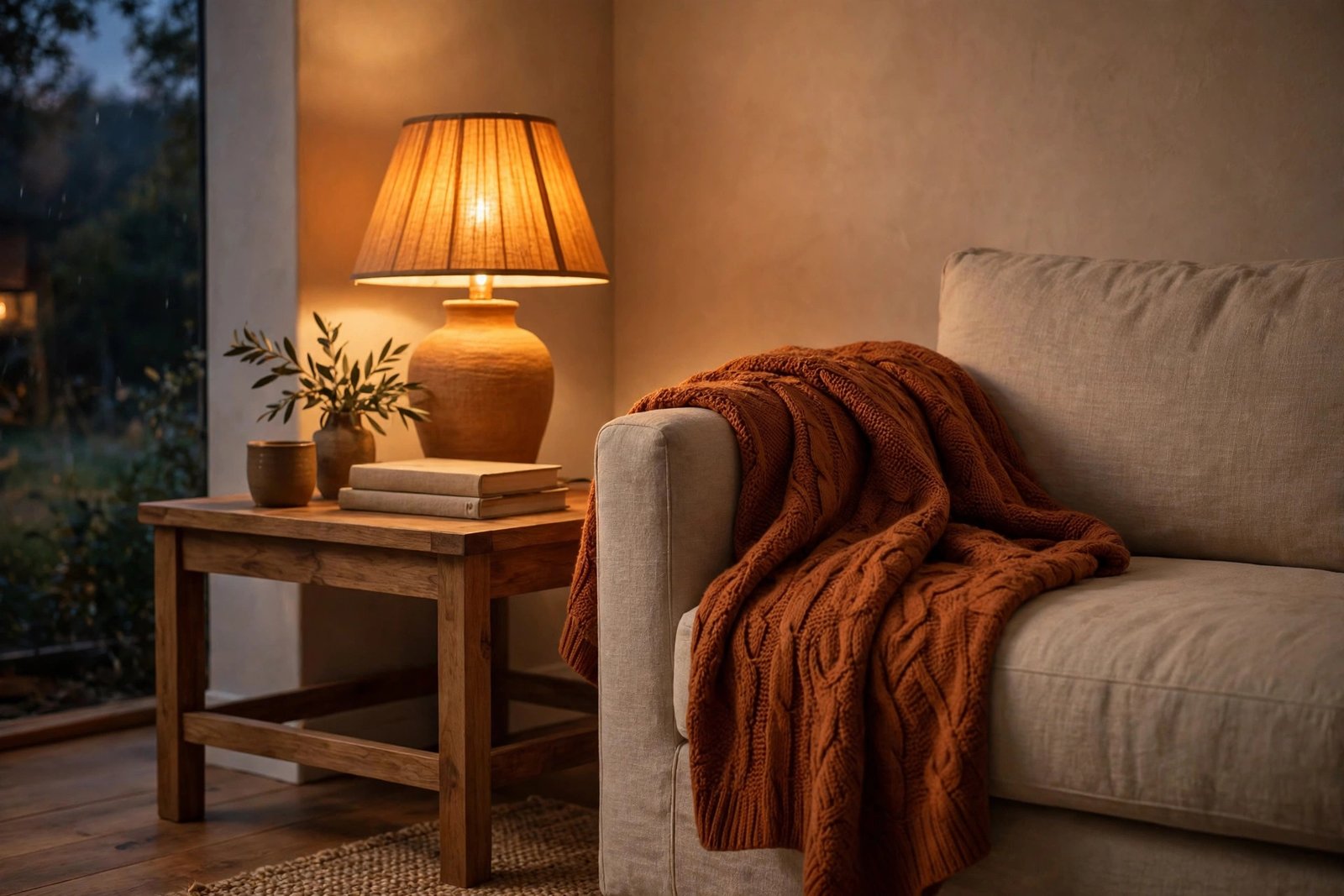
Cold light is worst on cold materials: chrome, glass, grey stone, blue-grey fabric and high-gloss white all amplify the chill. Warm materials absorb the blue and return something friendlier. Prioritise natural wood in mid and warm tones (oak, walnut, teak rather than pale grey-washed finishes), warm metals such as brass, bronze and copper in small doses, and textiles with visible texture — wool throws, linen curtains, a woven rug — which catch lamplight and break up the flatness with tiny shadows of their own.
Colour in the soft furnishings can be braver than the walls: cushions, throws and art in rust, mustard, olive, warm reds and deep golds act like small fires around the room. A large rug in a warm tone also covers the floor — often the coldest-looking surface of all, especially if it is grey laminate or pale tile. Plants earn their place here too: saturated green is one of the few cool-family colours that reads as life rather than cold, and it contrasts warmly against cream walls.
Ceiling and Window: Two Quiet Adjustments
Keep the ceiling a warm, bright white so the light from your uplighters bounces back warm rather than blue. If the ceiling is low as well, the uplighting habit does double duty — the tricks in our guide to a ceiling that feels too low use exactly this kind of upward light wash to lift a room, and north rooms benefit from the same brightness at the top.
At the window, choose curtains that filter rather than fight: warm-white or natural linen sheers soften the grey light without blocking it, and in the evening, heavier curtains in a warm colour close the room in like a blanket. Avoid blue-grey or stark white drapes — they frame the window with more cold.
Mistakes to Avoid
- Painting it blue-grey or cool white “to match the light”. Matching the light doubles the cold. North rooms need the opposite of their light, not more of it.
- Testing paint in the shop or a sunny room. North light is unique to the room. A colour approved anywhere else is a guess.
- One ceiling light and daylight bulbs. A single flat source plus 4000K+ bulbs recreates an office. Warm, layered and lower wins every time.
- Grey flooring and grey furniture together. Grey on grey under blue light is the coldest combination there is. Break it with a warm rug and wood.
- Going pale everywhere to “brighten” it. Pale cool colours just go paler and colder. A warm mid-tone wall often feels brighter than a cold near-white one.
- Blocking the window to stop the grey. The room needs every lumen it gets. Filter the light with warm sheers; never sacrifice it.
Frequently Asked Questions
What is the best paint colour for a north-facing room?
A warm off-white or warm greige with a light reflectance value around 60–75 is the safest all-round answer — creamy whites, soft warm beiges and pale warm sages all counteract the blue light. If you want real colour, muted terracotta, dusty gold and warm olive all hold up well. The key test is the undertone: hold the swatch against pure white paper and reject anything that leans blue or lilac.
Why does my white paint look blue in this room?
Because most whites contain a trace of blue or grey pigment, and north light — itself blue — amplifies exactly that trace while suppressing any warmth. The paint has not changed; the light has edited it. A white with a cream or yellow base will look like true white in a north room, while a “brilliant” blue-white will look like pale ice.
Should I use warm or cool bulbs in a north-facing room?
Warm — 2700K — without hesitation. Cool bulbs stack more blue on top of blue daylight and make evenings feel clinical. Warm bulbs supply the golden tone the room never receives from the sun, and mixed with the daylight they bring the overall balance back toward neutral-warm, which is where colours look honest.
Can a north-facing room ever feel sunny?
Not literally — but it can feel warm, glowing and comfortable, which is what people actually miss. Warm undertones, layered lamplight, wood and textiles, plus warm lamplight taking over fully in the evening, get you a room that feels like late afternoon in a sheltered garden rather than a grey morning. Most visitors will simply call it cosy, which is the real goal.
The Bottom Line
A north-facing room is not badly decorated; it is lit by a blue filter you cannot remove. So filter back: warm-undertone paint tested in the room itself, 2700K light layered across several sources with at least one wall-washing glow, and warm wood, metals and textiles where the cold light lands. Do those three things and the greyness loses — the room keeps its calm, even light, and gains the warmth it was missing.