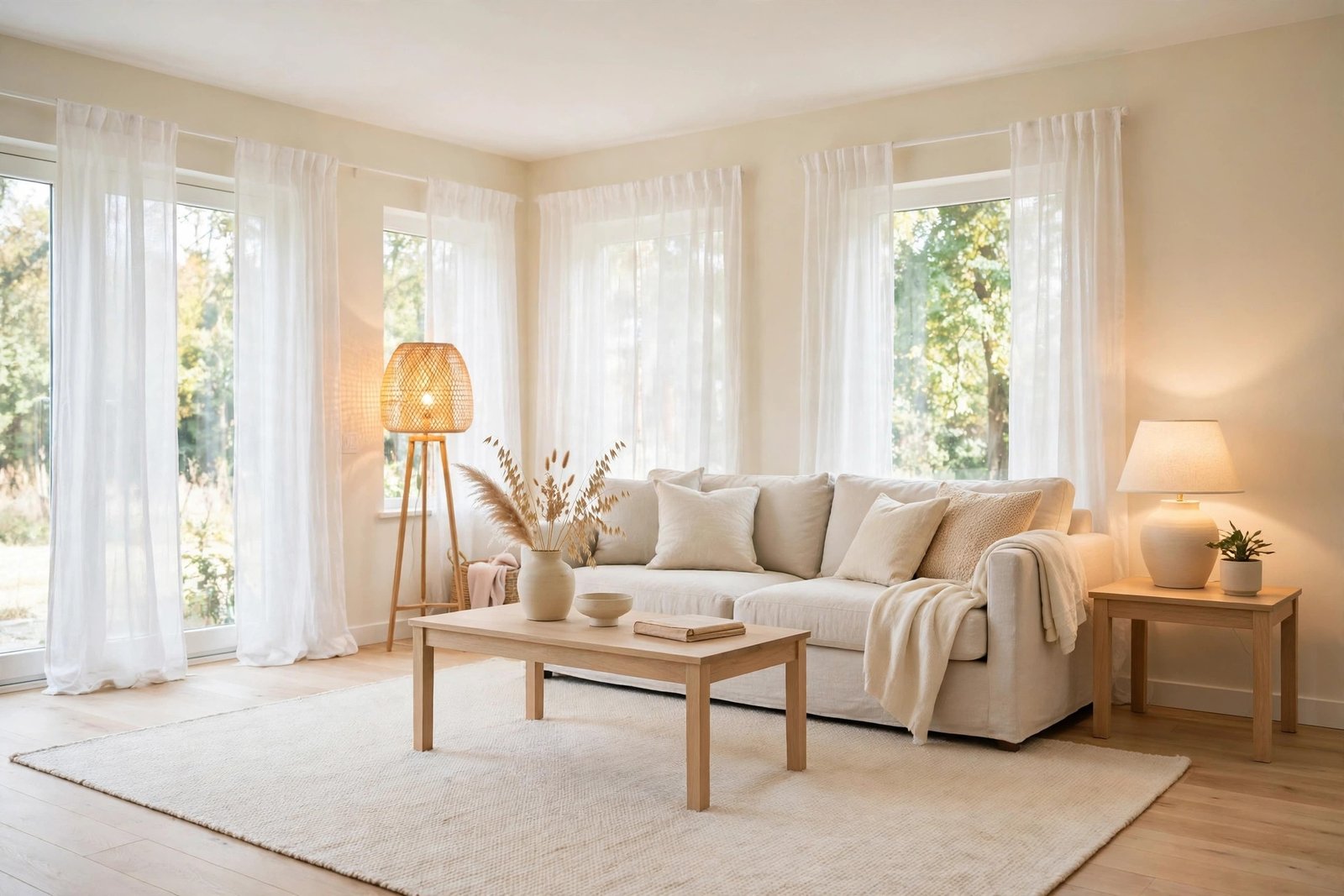
Every light in the room is on, the bulbs are new, and yet the space still feels like early evening in the middle of the day. Corners stay gloomy, colours look muddy, and the room never quite wakes up. It is one of the most frustrating problems in home design, because it feels like the obvious fix — more light — has already been tried and has already failed.
The good news is that a dark room is rarely suffering from a shortage of bulbs. It is suffering from light that gets absorbed instead of reflected, and from fittings that throw their light in one direction while the rest of the room stays in shadow. Fix the surfaces and the direction of the light, and most “dark” rooms brighten dramatically without a single new ceiling fitting.
Quick Answer
A room stays dark when its walls, ceiling and floor absorb light instead of bouncing it around, and when all the light points down from one central fitting. The fixes that work: use light, matte paint with a high light-reflectance value on walls and ceiling, cover dark floors with a lighter rug, add at least one light source that washes the walls or ceiling rather than the floor, choose bulbs around 2700–3000K with enough total lumens spread across several sources, and stop blocking the window light you already have. Colour first, direction second, brightness third — in that order.
Why the Room Stays Dark: Light Is Being Absorbed, Not Missing
Light behaves like a ball thrown around the room. Every surface it hits either reflects most of it onward or swallows it. A white ceiling reflects around 80–90 percent of the light that reaches it; a deep navy wall reflects as little as 5–10 percent. That difference is why two rooms with identical bulbs can feel completely different: in one, every surface passes the light along several times; in the other, the walls and floor eat it on the first bounce.
Paint tins and swatch cards quietly tell you this. Most list an LRV — light reflectance value — from 0 (black) to 100 (pure white). For a room that feels dark, walls in the LRV 60–80 range make an enormous difference compared with fashionable mid-tones at LRV 30–40, even though both might be described as “light colours” in the shop. Floors matter just as much: a dark-stained floor under a white ceiling still drags the whole room down, because the floor is the largest surface the light hits after leaving the fitting.
The ceiling deserves special attention. Ceiling lights throw most of their light downward and outward, and a surprising amount lands on walls and ceiling before it ever reaches you. A warm-grey or cream ceiling that looks “nearly white” on the swatch can absorb a third more light than a true bright ceiling white — and it does so exactly where the light starts its journey.
Colour Fixes: Raise the Reflectivity of the Big Surfaces
Start with the largest surfaces, in size order: ceiling, walls, floor. Repaint the ceiling a clean, bright matte white — this single change lifts the whole room because every light source reflects off it. On the walls, choose light colours with a warm or neutral undertone rather than blue-grey ones, which read darker than they are in weak light. Matte or eggshell finishes spread light softly in all directions; high-gloss does the opposite, throwing it into a few bright reflections and leaving the rest flat.
You do not have to repaint to get most of the benefit. A large, light rug over a dark floor, pale throws over a dark sofa, and light curtains instead of dark ones all raise the room’s average reflectivity in exactly the places light lands. It is the same principle that makes a small space feel larger: our guide to making a small apartment feel bigger without buying new furniture leans on light surfaces for the same reason — bright surroundings bounce both light and sightlines further. Be careful with the fashionable end of the palette, though: as our guide to small room paint colours that make it feel smaller explains, deep saturated colours on every wall absorb so much light that even a bright room starts to feel like a cave.
Lighting Fixes: Change the Direction Before You Add Power
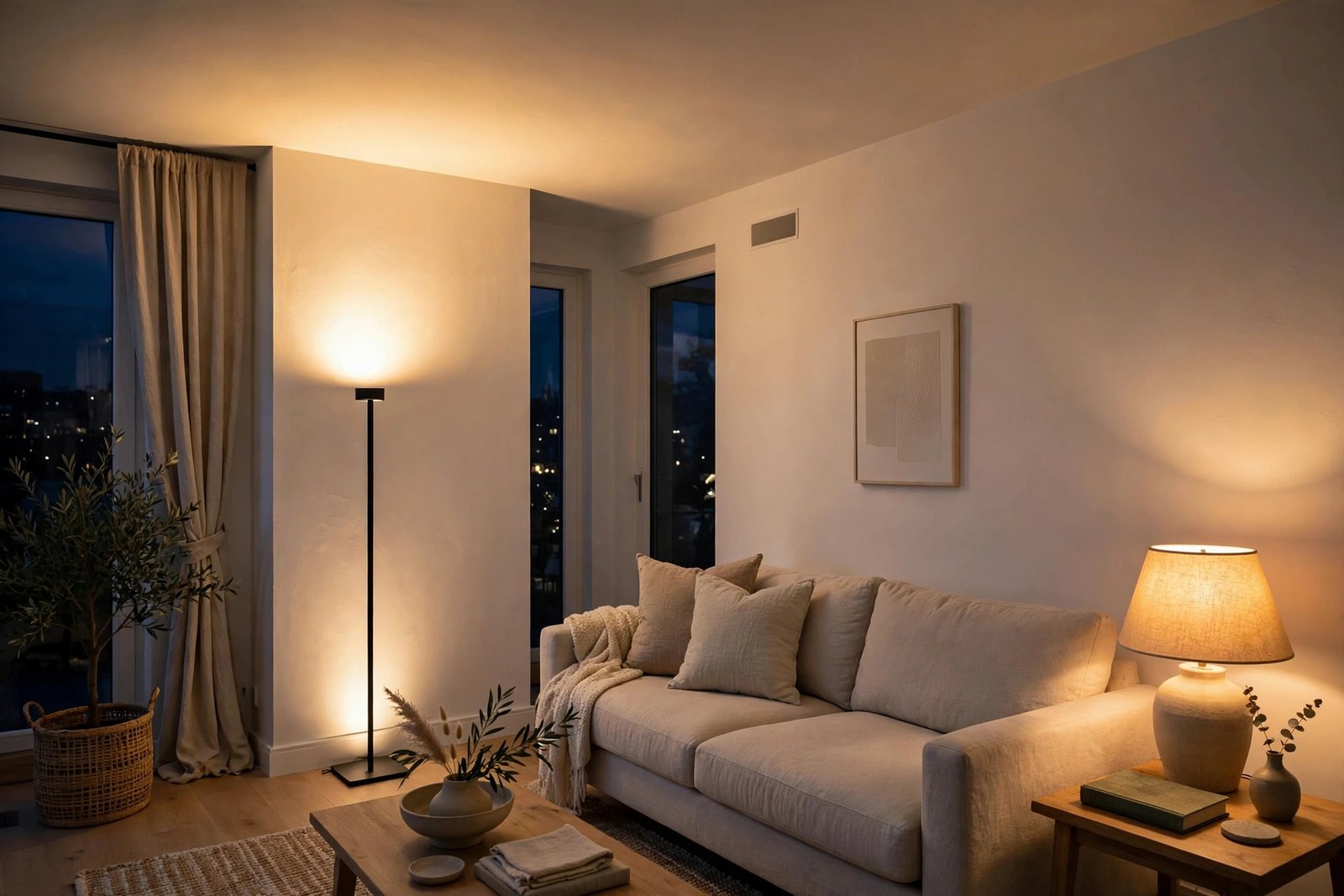
Walk into the room and look at where the light goes. In most dark rooms, one central pendant or a grid of downlights fires everything at the floor, lighting the carpet beautifully while faces, walls and corners stay dim. Human eyes judge brightness mostly by what they see on vertical surfaces — walls — at eye level. Light the walls and the room feels bright; light only the floor and it feels like a cave with a spotlight.
Add at least one source that throws light up or sideways: a floor lamp with an upward-facing shade that bounces light off the ceiling, a table lamp whose shade glows at seated eye level, or a simple picture light or wall washer. Then spread the total light across three or more sources instead of one strong one. As a rough guide, a living room wants around 1,500–3,000 lumens in total, but those lumens feel far brighter divided between a ceiling light, a floor lamp and a table lamp than poured out of a single fitting. If you are rebuilding the room’s lighting from scratch, our guide to layering light for a softer feel walks through exactly how to combine the layers.
Finally, check the bulbs themselves. Colour temperature around 2700–3000K gives a warm light that flatters a dim room; cheap cool-white bulbs at 5000K and above make weak daylight look grey and clinical. Look for a CRI (colour rendering index) of 90 or above where you can — high-CRI bulbs make colours look richer, and a room whose colours look alive reads as brighter even at the same measured light level.
Windows, Mirrors and Finishing Touches
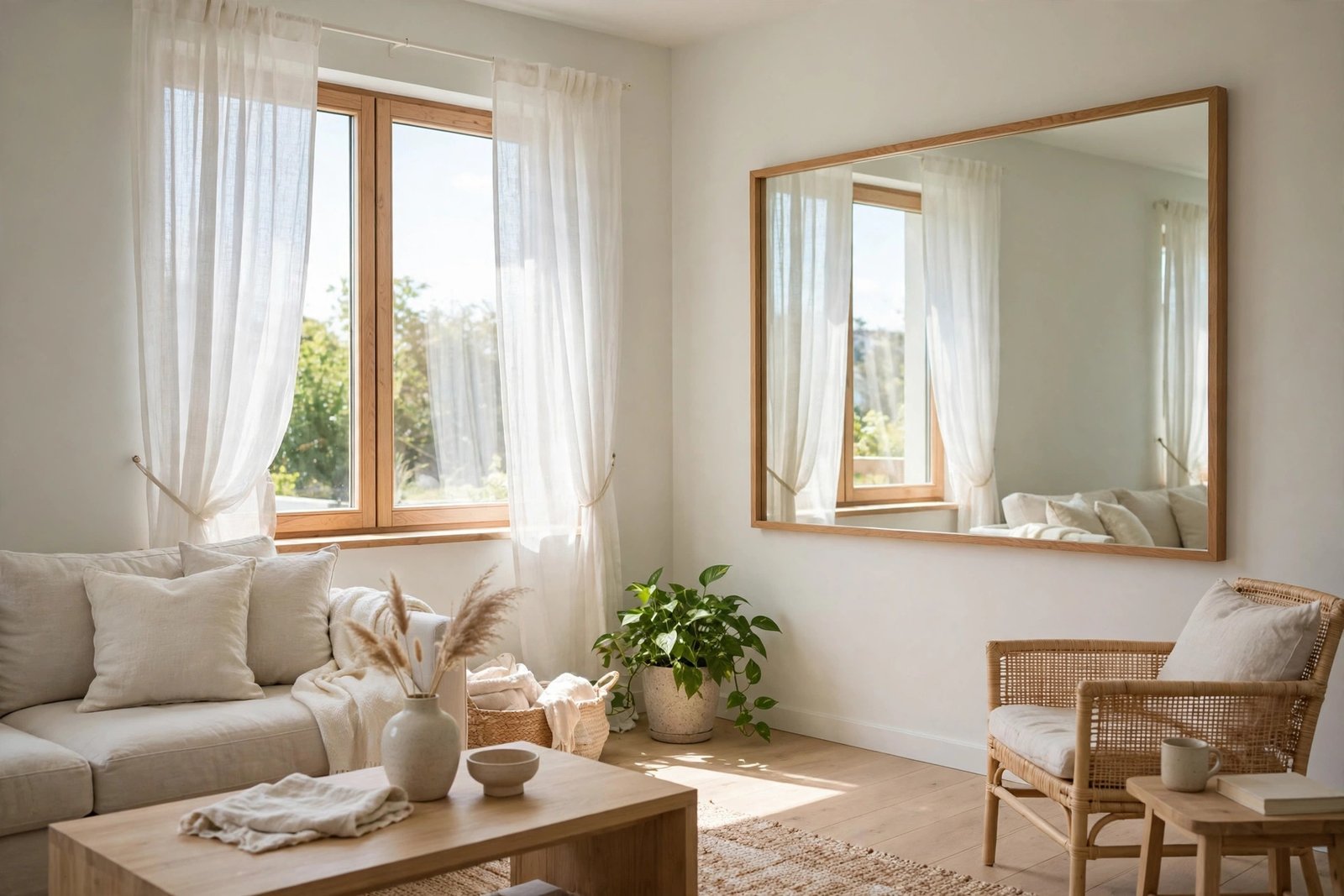
Before spending anything, reclaim the daylight you already own. Heavy, dark curtains that cover a third of the glass when “open”, a tall bookcase parked against the window wall, and six months of grime on the panes can together halve the daylight entering the room. Sheer or light-coloured curtains drawn fully clear of the glass, cleaned windows, and plants trimmed below sill height cost little and pay back immediately.
A mirror placed opposite or at right angles to the window genuinely doubles the daylight’s reach by throwing it into the darker half of the room — on the wall facing the window it does almost nothing, because the light never reaches it. Small glossy accents help at the margins too: glass, polished metal and light wood all return little sparks of reflection that dark matte surfaces swallow.
Mistakes to Avoid
- Putting a stronger bulb in the same single ceiling light. You get more glare on the floor and the same gloomy walls. Direction beats wattage every time.
- Painting the walls white but leaving a dark ceiling or floor. Light bounces between all the big surfaces; one dark one keeps absorbing its share.
- Choosing daylight bulbs (5000K+) to “brighten” the room. In a dim room they read blue-grey and make everything look colder and darker, not brighter.
- Blocking the window with furniture or heavy curtains. The cheapest light in the room is the daylight you are standing in front of.
- Adding an accent wall in a deep colour. In an already dark room it becomes one more light-absorbing surface. Save deep colours for rooms with light to spare.
- Judging the room at night only. A room can be fine by day and cave-like at 8 pm, or the reverse. Check both before you spend money.
Frequently Asked Questions
How many lumens does a dark room actually need?
For a living room, roughly 150–300 lumens per square metre in total, spread across several sources, is a comfortable range — so a 15 m² room wants about 2,500–4,000 lumens all-in. But distribution matters more than the total: 2,500 lumens split between ceiling, floor lamp and table lamp feels far brighter than 3,500 lumens from one central fitting.
Will painting everything pure white fix a dark room?
Not on its own. Pure white in weak or north-facing light often reads grey and cold, and if the floor stays dark and the light still points down, the room stays gloomy. A warm off-white on walls, a true bright white on the ceiling, a lighter rug and one wall-washing lamp will beat an all-white repaint with none of those changes.
Do mirrors really make a room brighter?
Yes, if placed where daylight actually hits them — opposite a window or on the wall next to it, angled to throw light into the darker side of the room. A mirror on a wall that receives no direct light adds decoration but almost no brightness. Size matters too: a large mirror reflects meaningfully more than a cluster of small ones.
Why does my room look darker after I painted it a light colour?
Usually one of three reasons: the colour’s undertone is blue or grey, which weak light exaggerates; the finish is flat in a bad way — very cheap matte paint can look chalky and absorbent; or the previous colour was warm, so the new room feels colder by contrast even at the same brightness. Give it a few days, check it under warm evening bulbs, and look at the floor and curtains before blaming the paint.
The Bottom Line
A room that feels dark with the lights on is telling you its surfaces are swallowing light and its fittings are aiming at the floor. Raise the reflectivity — bright matte ceiling, light walls with an LRV above 60, a pale rug over a dark floor — then redirect the light you have onto walls and ceiling through layered sources, and unblock the windows. Do those three things and most dark rooms transform; adding wattage alone never does.

4 thoughts on “Room Feels Dark Even With the Lights On? Colour and Lighting Fixes That Work”