A big, comfortable bed is the one piece of furniture nobody wants to give up — and in a small bedroom it can feel like the enemy. You edge sideways along the wall to reach the far side, the wardrobe door opens halfway, and changing the sheets becomes a full-body workout. Most people conclude the bed is simply too big for the room and start pricing a smaller one, usually with real regret, because the bed itself is rarely the problem.
What actually makes a bedroom feel cramped is everything around the bed: the clearances that are too tight to use, the bulky supporting furniture, the footboard eating the walkway, and storage that spreads wide instead of going tall. A large bed in a planned room can feel calm and generous; the same bed in an unplanned room feels like a warehouse for one object. This guide works through the layout fixes in order — measure the real clearances, place the bed correctly, slim down everything else, and use height and light to open the room back up.
Quick Answer
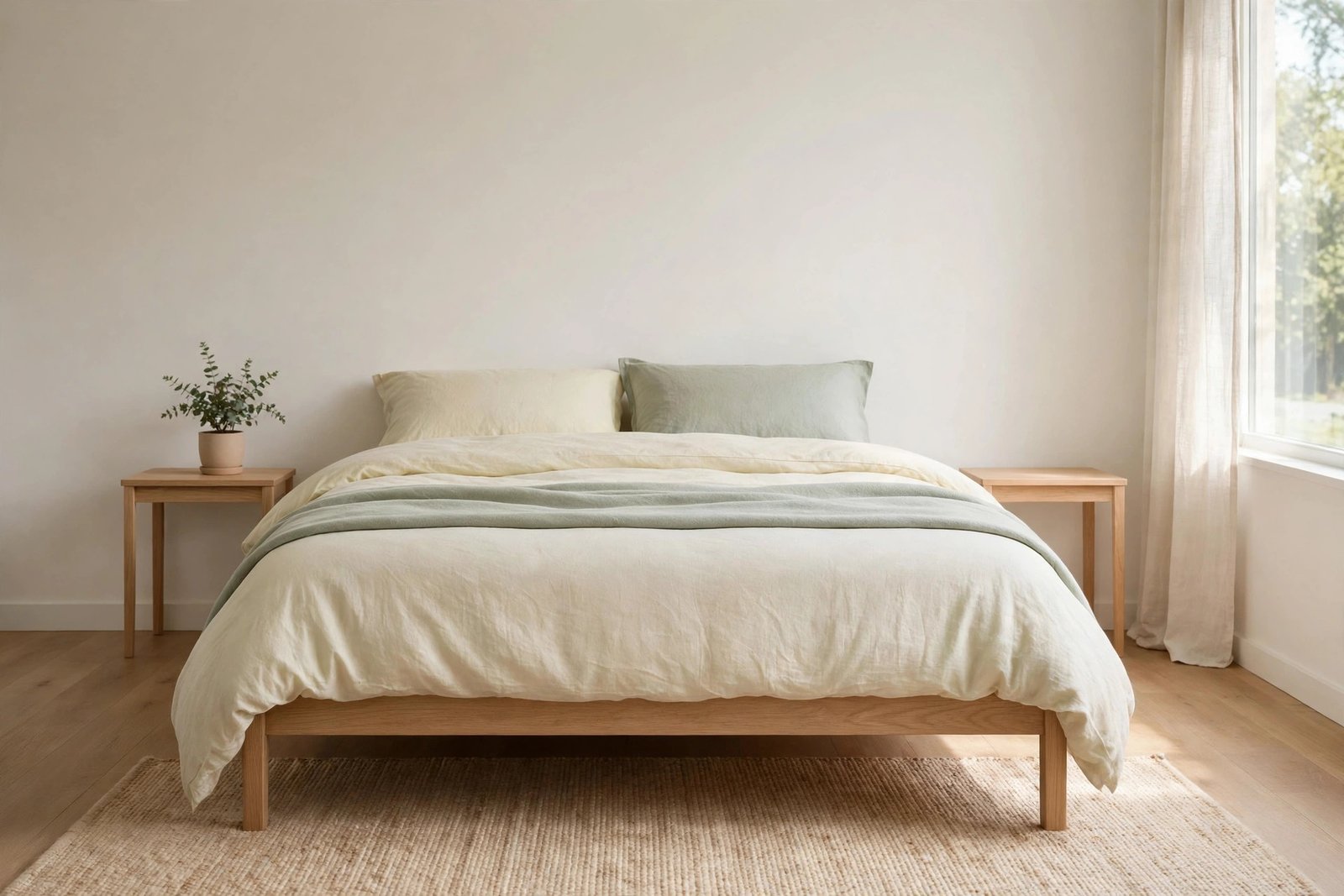
If your bedroom feels cramped with a large bed, keep the bed and fix the space around it. Aim for at least 55–60 cm of clear floor on both sides and at the foot so you can walk, make the bed and open doors without turning sideways. Centre the bed on the room’s best wall, remove or slim every other piece of furniture, swap a solid footboard for a low or open one, and move storage up the walls and under the bed instead of across the floor. Finish with light-coloured bedding and clear floor lines — a room reads as spacious when you can see across it and walk through it without detours.
Step 1: Measure the Bed’s Real Footprint — and the Gaps Around It
Start with numbers, not impressions. A double bed is roughly 140 × 190 cm, a king 150–160 × 200 cm and a super king 180 × 200 cm — before the frame, headboard and footboard add their own 5–15 cm in every direction. Measure the whole footprint as it stands, then measure what is left: the gap on each side, the gap at the foot, and the swing space in front of the wardrobe and the door. In most cramped bedrooms the audit reveals the same pattern: one side of the bed has a generous 90 cm while the other side has an unusable 25 cm, and the foot of the bed sits 30 cm from a dresser nobody can open properly.
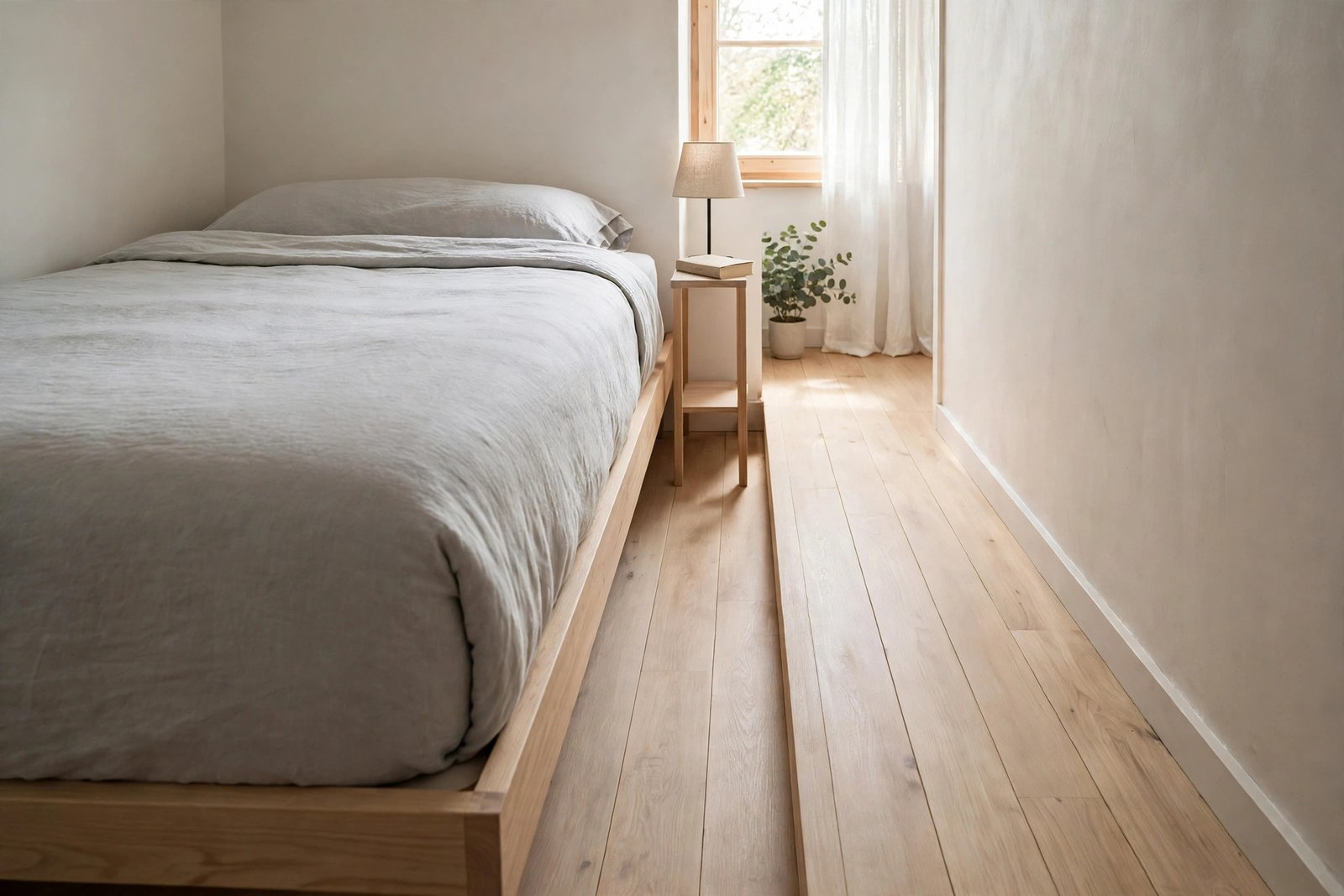
The targets to work towards are simple. 55–60 cm on a side is the minimum for walking along the bed and changing sheets comfortably; 75 cm feels properly comfortable. At the foot, 60 cm lets someone pass while another person is in bed. If your measurements come up short, do not panic — the following steps are about redistributing the centimetres you have, because a room rarely lacks space overall; it lacks space in the places where you actually move.
Step 2: Give the Bed the Right Wall and Centre It
The single most powerful fix costs nothing: move the bed so it sits centred on the best wall in the room — usually the longest wall with no door swing, window or wardrobe crossing it — with the remaining floor shared evenly on both sides. A bed pushed hard against one wall to “save space” saves nothing; it makes one side unreachable, bed-making miserable, and the room lopsided, which reads as cramped even when the floor total is fine. Centring the bed turns two uneven, unusable strips into two equal, usable ones.
Choosing the wall matters as much as centring on it. The wrong wall can undo every other fix — a bed under a draughty window, across a door swing or blocking the wardrobe will fight you every day. Our guide to bed placement mistakes to avoid works through how to pick the wall properly. The short version: headboard against a solid wall, both sides reachable, feet not jammed against storage you need to open.
Step 3: Slim Down Everything That Is Not the Bed
Once the bed is placed, audit every other object in the room with one question: does this earn floor space next to the biggest piece of furniture I own? The usual offenders are an oversized dresser that could be a tallboy (same storage, half the footprint), two large matching nightstands where slim ones — or wall shelves — would do, a bedroom chair that has become a clothes pile with legs, and a blanket box at the foot of the bed narrowing the main walkway to a shuffle.
Swap wide for tall wherever you can, and let the bed’s supporting cast shrink to match the room rather than the showroom set it was sold with. The same discipline that rescues a studio apartment’s bed placement applies here: in a small sleeping space, every centimetre of floor is shared between the bed and movement, and movement should win ties. If a piece cannot justify its footprint in daily use, it moves to another room or leaves the house — the bed keeps its size, its entourage does not.
Step 4: Use Height, Under-Bed Space and Light Finishes
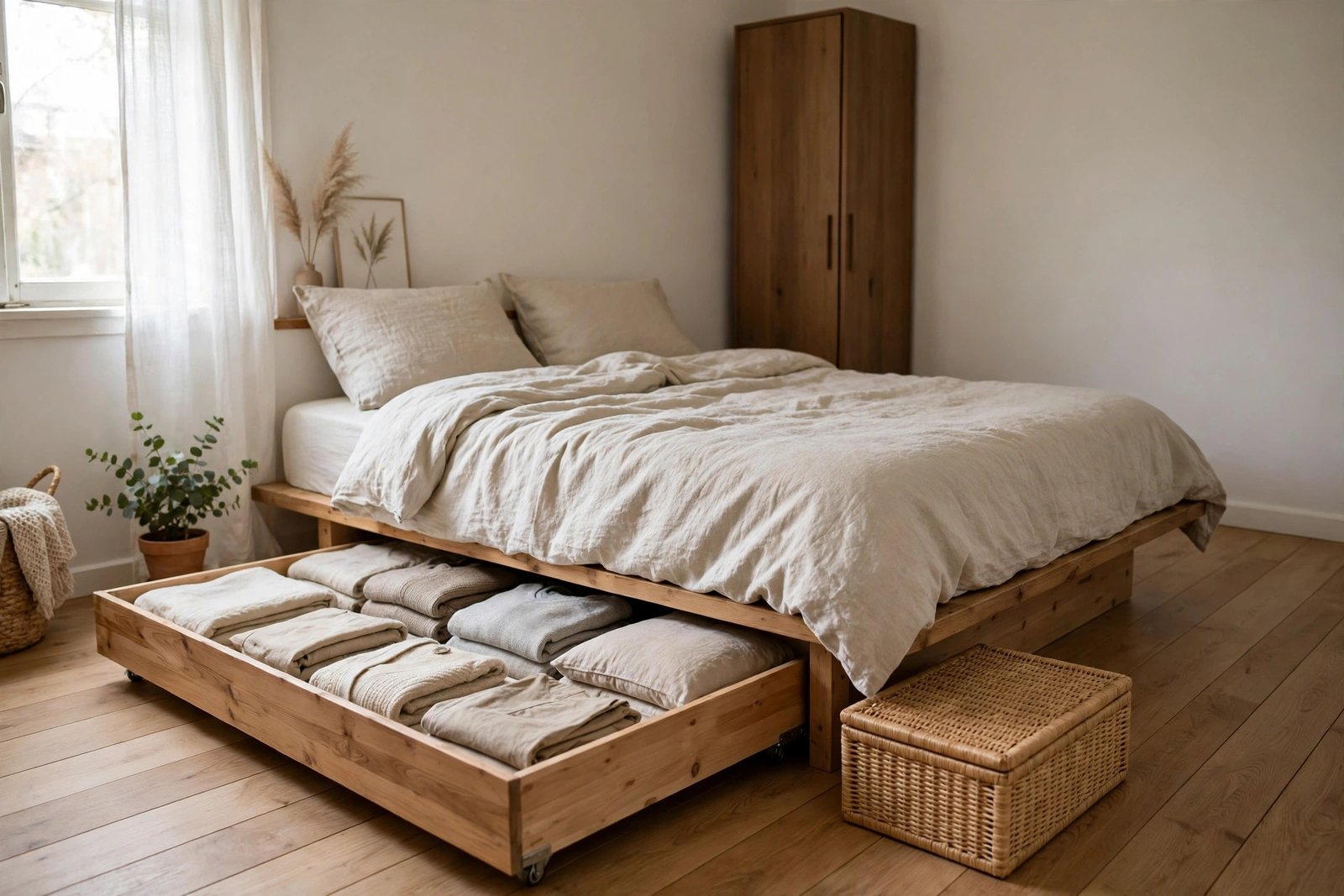
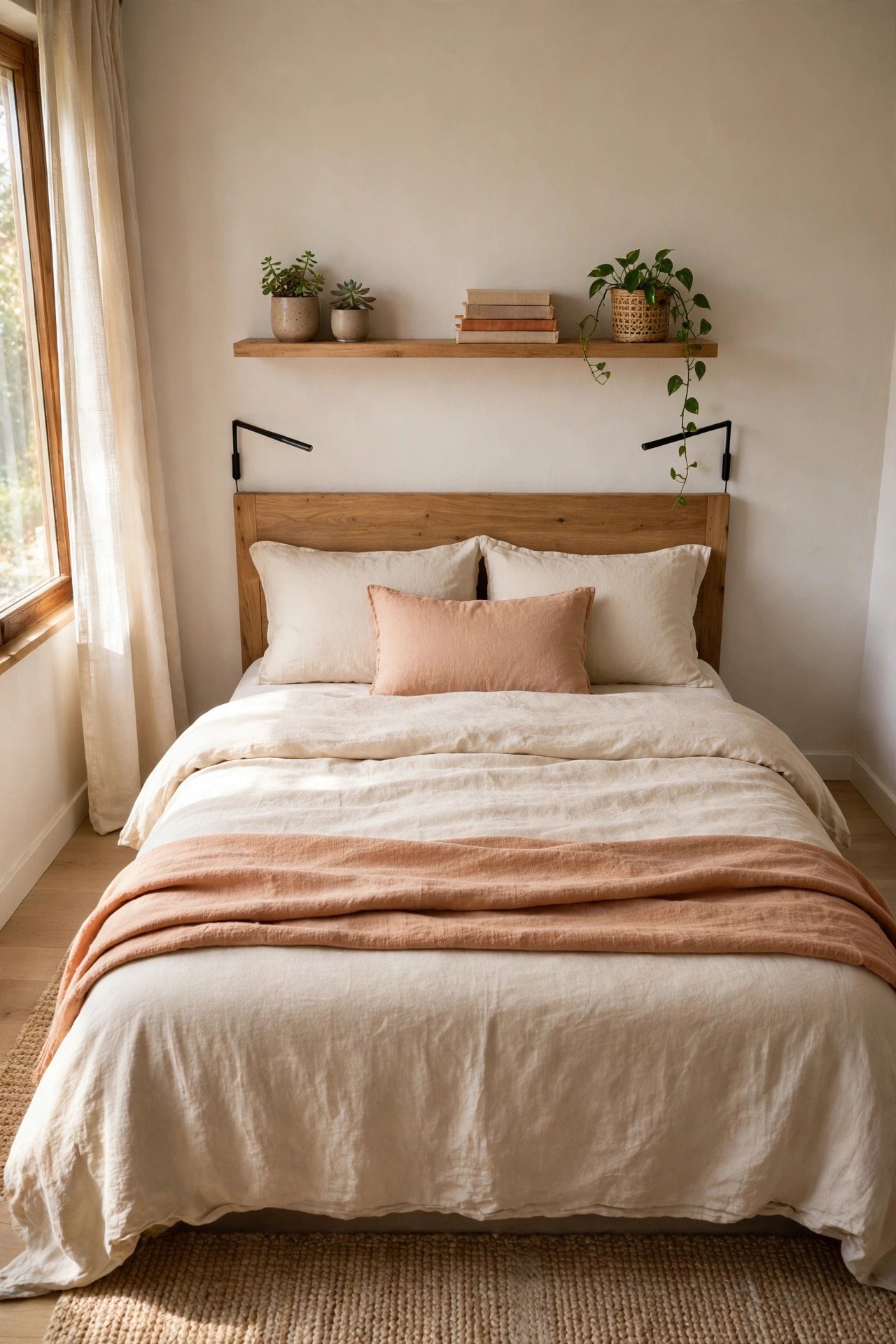
With the floor plan settled, reclaim the volume above and below it. Under the bed is the largest storage area in most small bedrooms: low lidded boxes or drawers there hold seasonal clothes, spare bedding and shoes, freeing a dresser drawer or an entire piece of furniture. Up the walls, a shelf above the headboard, hooks behind the door and a tall, narrow bookcase in the dead corner beside the wardrobe all store vertically on a zero floor footprint. Nothing on the floor competes with the bed; the room breathes again.
Finally, change how the room reads. A solid, tall footboard visually chops the room in half — a low frame, an open metal foot or no footboard at all lets the eye travel to the far wall, and the room instantly feels longer. Light bedding in one calm colour family (rather than a dark, busy duvet set) does the same softening job, and a rug that sits under the lower two-thirds of the bed, showing floor around it, makes the bed zone look deliberate instead of squeezed in. These are perception fixes, but perception is exactly what “feels cramped” means.
Step 5: Do a Storage Audit Before Buying Anything Smaller
If the room still feels tight after the layout fixes, resist the tape measure on a new bed for one more step: audit what the room is storing. Cramped bedrooms are usually over-stored bedrooms — drawers of clothes that are never worn, boxes of paperwork under the bed, a wardrobe half full of another season’s life. Our step-by-step space audit for an overflowing bedroom shows how to empty, sort and measure what you own before spending anything. In many rooms the audit alone frees a whole piece of furniture, and once that piece leaves, the large bed stops being a problem at all — it was never the bed; it was the bed plus everything else.
Mistakes to Avoid
- Downsizing the bed first. A smaller bed bought before the layout is fixed gives you a worse night’s sleep in a room that still feels wrong. Exhaust the free fixes first.
- Pushing the bed against a side wall. One unreachable side, miserable sheet changes and a lopsided room. Centre it and share the floor evenly.
- Keeping the matching furniture set. Showroom sets are sized for showroom rooms. Oversized nightstands and dressers are the most common cause of the squeeze.
- A tall, solid footboard in a small room. It cuts the room visually in half. Low, open or no footboard reads far more spacious.
- Storing things on the floor around the bed. Boxes, baskets and piles in the clearance zones destroy exactly the space the layout fixes created. If it lives in the room, it lives in furniture, under the bed or on the wall.
- Dark, heavy bedding and curtains closing in the bed. A large bed dressed in dark, bulky layers looks even larger. Light, simple bedding shrinks its visual weight.
Frequently Asked Questions
How much space should there be around a large bed?
Aim for 55–60 cm minimum on each side and at the foot — enough to walk normally, pull the bed out slightly for cleaning and change the sheets without climbing on the mattress. 70–80 cm feels comfortable. If one side must be tighter, make it the side used less, and never let a side drop below about 40 cm or it stops being usable at all.
Can a king-size bed work in a small bedroom?
Yes, in most rooms of roughly 3 × 3.5 m or more, provided the rest of the room is planned around it: the bed centred on the best wall, slim nightstands or wall shelves, tall rather than wide storage, and nothing stored on the floor. The rooms where a king genuinely fails are usually narrow rooms where the bed’s length, not its width, blocks the only walkway — measure both directions before deciding.
Should I remove the footboard to make the room feel bigger?
If your frame allows it, it is one of the cheapest space feelings you can buy. Removing a tall, solid footboard opens the sightline across the room and can return 8–10 cm of real length as well. Low, open or upholstered footboards are a good halfway step if you like the contained feeling of a full frame.
Which bed frame makes a small room feel biggest?
A low-profile frame with slim legs, a simple or no headboard wall-mounted instead, and open space beneath it. Visible floor under the bed and light passing beneath the frame make the footprint read smaller than it is. Divan bases and tall sleigh frames have the opposite effect — they present as one solid block of furniture.
The Bottom Line
A large bed feels cramped when the room around it is unplanned — not when the bed itself is big. Measure the clearances, centre the bed on the right wall, slim down or remove everything that shares its floor, store up the walls and under the mattress, and dress the bed lightly so the eye can travel past it. Run a storage audit before you even think about a smaller bed. Do those things and the bed becomes what it should be: the comfortable centre of a calm room, not an obstacle course you sleep in.
2 thoughts on “Bedroom Feels Cramped With a Large Bed? Layout Fixes That Free Up Space”