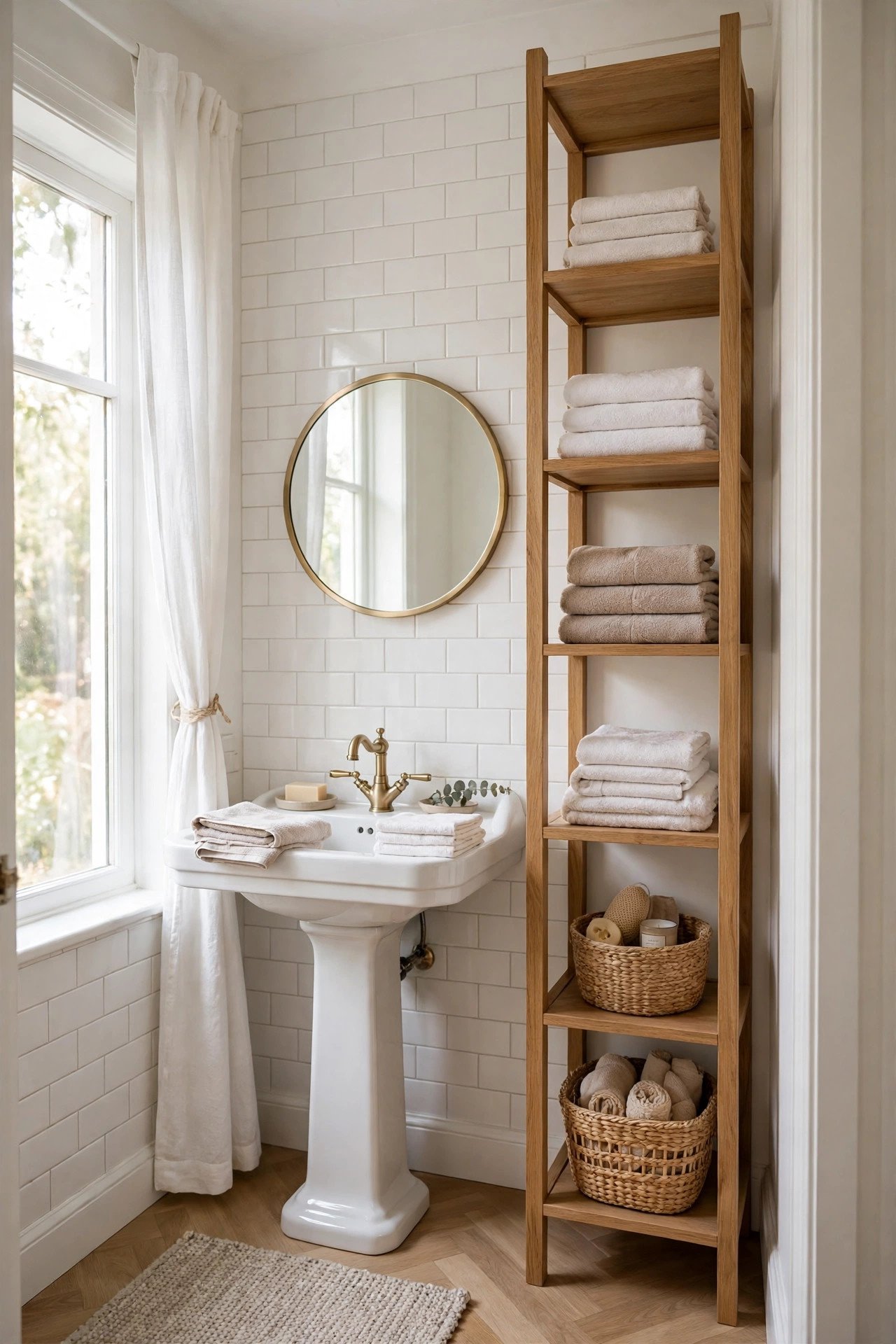
A bathroom without a cabinet is a daily negotiation. The toothpaste fights the moisturiser for the edge of the sink, towels drape over the door because there is nowhere else, and the spare shampoo lives in the shower tray, the cleaning spray under the bath, and the first-aid kit — honestly, nobody remembers where the first-aid kit is. Small bathrooms make it worse: there is no floor space for a cupboard, and the one shelf above the sink is already a crowded parking lot.
The good news is that a small bathroom rarely lacks space — it lacks a plan for the space it has. The walls above the toilet, the back of the door, the inside of the shower and the awkward gap under the sink are all storage volume waiting to be claimed. This guide works through it in order: sort what you store by how often you use it, claim the wall space in the right order, use the door and the wet zones properly, and decide what should stop living in the bathroom at all.
Quick Answer
To plan storage in a small bathroom with no cabinet, sort everything into daily, weekly and backup groups first. Daily items get the prime zone — the shelf or ledge at hand height near the sink and mirror. Then claim space in this order: shelves above the toilet for towels and backup stock, a shallow wall cabinet or ledges beside the mirror for daily items, hooks and racks on the back of the door for towels and robes, and a caddy or niche in the shower for what is used wet. Under the sink, use a stacking crate or a tension-rod shelf around the pipes. Anything used less than weekly — bulk spares, guest towels, the foot spa — should leave the bathroom entirely.
Step 1: Sort by Frequency Before You Buy a Single Shelf
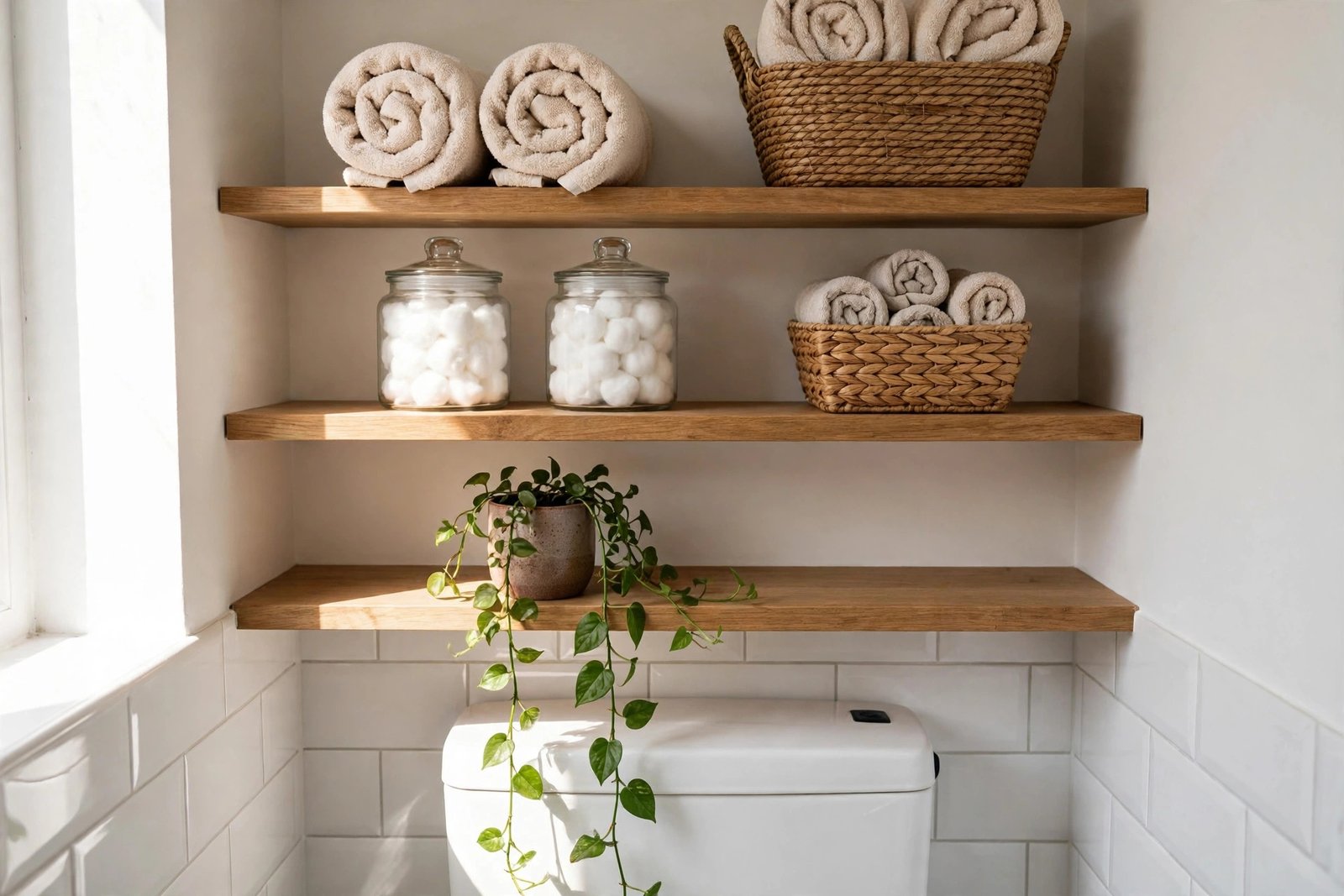
Bathroom storage fails the same way every storage project fails: shelves get bought for the collection as it stands, including the three half-empty bottles of conditioner and the hotel soaps from 2019. Empty everything out — sink area, shower, windowsill, the lot — and sort it into three groups. Daily: toothbrush and toothpaste, soap, deodorant, the skin and hair products you actually use, daily medicines. Weekly: nail kit, hair styling tools, shaving supplies, face masks. Backup and bulk: spare bottles, extra toothpaste tubes, the big pack of toilet rolls, cleaning products.
Throw out the expired and the never-used as you go — in a small bathroom, most people find a fifth of the contents are dead stock. The method is the same measure-first discipline used in our step-by-step space audit for an overflowing bedroom: count what survives the sort, because those numbers decide how much shelf you really need. In a bathroom the daily group is usually tiny — often a single tray or one short shelf — which means prime space only has to serve a short list.
Step 2: Claim the Walls — Above the Toilet First
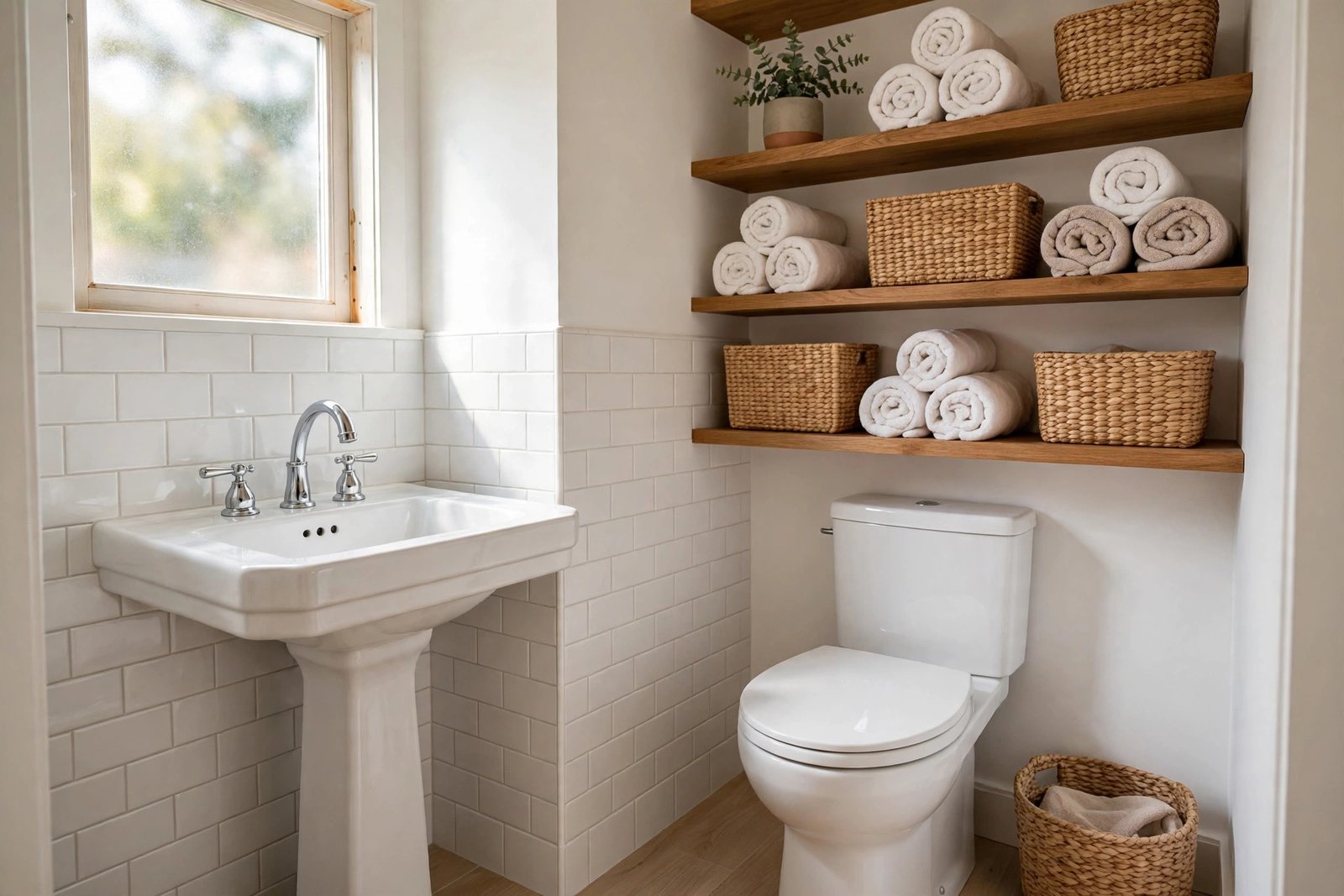
The wall above the toilet is the largest unused surface in most small bathrooms: roughly the width of the cistern and a full metre of height, sitting empty because nobody thinks of it as storage. Two or three open shelves there, or a slim over-toilet shelving unit that stands on the floor either side of the cistern, hold the towel supply and the backup group — the things you need in the room but not in your hand every morning. Rolled towels on open shelves look good and dry the room’s visual weight; keep them in one or two colours so the shelf reads as calm, not as laundry.
Beside and above the mirror is the daily zone, and it should be shallow. A slim wall cabinet (10–14 cm deep) or two short ledges hold the daily group without crowding a small room — deep shelves in a bathroom just become tunnels where small bottles hide. If you rent or cannot drill, adhesive and suction fittings have improved enormously, but test them with cheap items first and never above the bath with anything heavy or glass. The same claim-the-walls logic that plans food storage in a kitchen with no pantry applies here unchanged: vertical space first, frequency zoning always.
Step 3: The Door, the Shower and Under the Sink
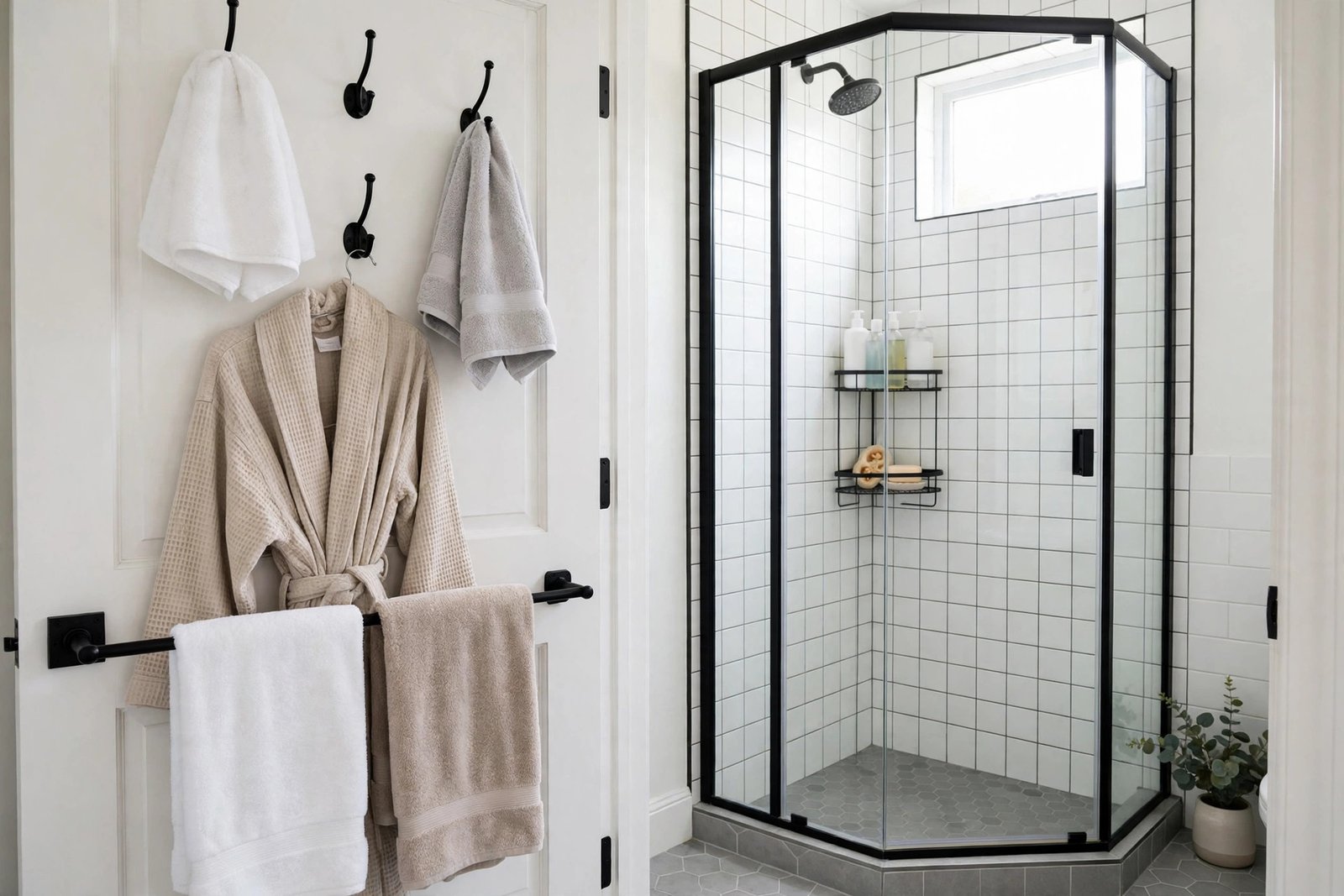
The back of the bathroom door is a full square metre that usually holds one hook, or nothing. An over-door rack or a rail of hooks takes towels, robes and the hairdryer bag — soft, flat things that do not suffer from being behind a door — and frees the wall for shelves. Check the door still opens fully against any bath or radiator before you load it.
Inside the shower, the rule is that only what is used wet lives wet. A corner caddy on a tension pole, a hanging organiser, or — if you are refitting — a tiled niche keeps shampoo, conditioner and soap off the tray floor and off the bath edge. Bottles that live in the shower but are used twice a week belong on the weekly shelf instead; shower storage is prime space too. Under the sink, work around the pipes with a small stacking crate, a U-shaped shelf that wraps the waste pipe, or a tension rod under which spray bottles hang by their triggers. Cleaning products in daily use go here; the bulk spares do not.
Step 4: Decide What Leaves the Bathroom
Every successful small-bathroom plan ends with an exile list. Bulk backup stock — the twelve-pack of toilet rolls, the spare shampoo bottles — can live in a hallway cupboard or a bedroom box and be fetched weekly. Guest towels belong with the guest bedding, not in your daily room. Medicines, in many homes, are better in a dry kitchen cabinet than in the steamiest room of the house anyway. The bathroom should hold what is used in the bathroom, at the frequency it is used — everything else is a guest.
This one-room-one-job discipline is what makes zoned storage work at larger scales too: it is the same thinking behind planning garage zones so you can find everything again — a space works when everything in it has a defined job and a defined home. In a small bathroom the payoff is calmer mornings: the daily group visible at the mirror, towels on their shelves, and a sink edge with nothing on it at all.
Mistakes to Avoid
- Buying a floor cabinet for a room with no floor. If you have to turn sideways past it, it is not storage, it is an obstacle. Walls, door and over-toilet space come first.
- Deep shelves for small bottles. Anything deeper than about 14 cm swallows small items at the back. Shallow ledges keep everything visible in one row.
- Storing everything you own in the bathroom. Bulk spares and guest supplies exile the daily group. The bathroom holds what is used in it — the rest lives elsewhere.
- Suction fittings for heavy or glass items. Adhesive and suction shelves are fine for plastic bottles and flannels. Glass jars and heavy ceramics need screws or a real shelf.
- Open shelves of mixed clutter above the sink. The daily zone is the one you look at in the mirror. Keep it to the daily group, in matching containers if you decant.
- Ignoring ventilation. Cramming every surface full of towels and boxes slows drying and invites mildew. Leave air gaps; store spares out of the room.
Frequently Asked Questions
Where do towels go in a bathroom with no cabinet?
Daily towels on hooks or a rail on the back of the door or beside the shower — where a wet towel can actually dry. The clean supply goes rolled on the over-toilet shelves. Towels stored folded in a steamy room they never dry in will smell musty; if your bathroom has no window or fan, keep only two or three clean towels in the room and the rest elsewhere.
Are over-toilet shelving units worth it?
For a no-cabinet bathroom, usually yes — they claim the single biggest dead wall in the room without using floor space or blocking anything. Choose one with the right leg width for your cistern, keep heavy items low, and leave the cistern lid reachable for repairs. Renters should pick a freestanding unit over a fixed cabinet.
How do I store things if I cannot drill into tiles?
Freestanding over-toilet units, over-door racks, tension-pole shower caddies and tension rods under the sink all work without a single hole. Modern adhesive shelves handle light loads well if the tile is cleaned with alcohol first and the adhesive cures a full day before loading. Keep anything heavy or fragile off adhesive fittings.
What should I keep at the sink if space is extremely tight?
Only the true daily group: toothbrush and toothpaste, hand soap, and the one or two products you use every single morning. A small tray that holds exactly those things is often the whole answer — it defines the zone, corrals the drips, and can be lifted for cleaning. Everything weekly lives on a shelf; everything else lives outside the room.
The Bottom Line
A bathroom with no cabinet is a wall problem, not a floor problem. Sort everything by frequency, give the daily group one shallow home at the mirror, put towels and backup stock on shelves above the toilet, hang the soft things on the back of the door, keep only wet-used items in the shower, and exile bulk stock to another room. Planned that way, even a tiny bathroom ends with a clear sink, visible products and nothing living on the bath edge — proof that the space was there all along, just unclaimed.