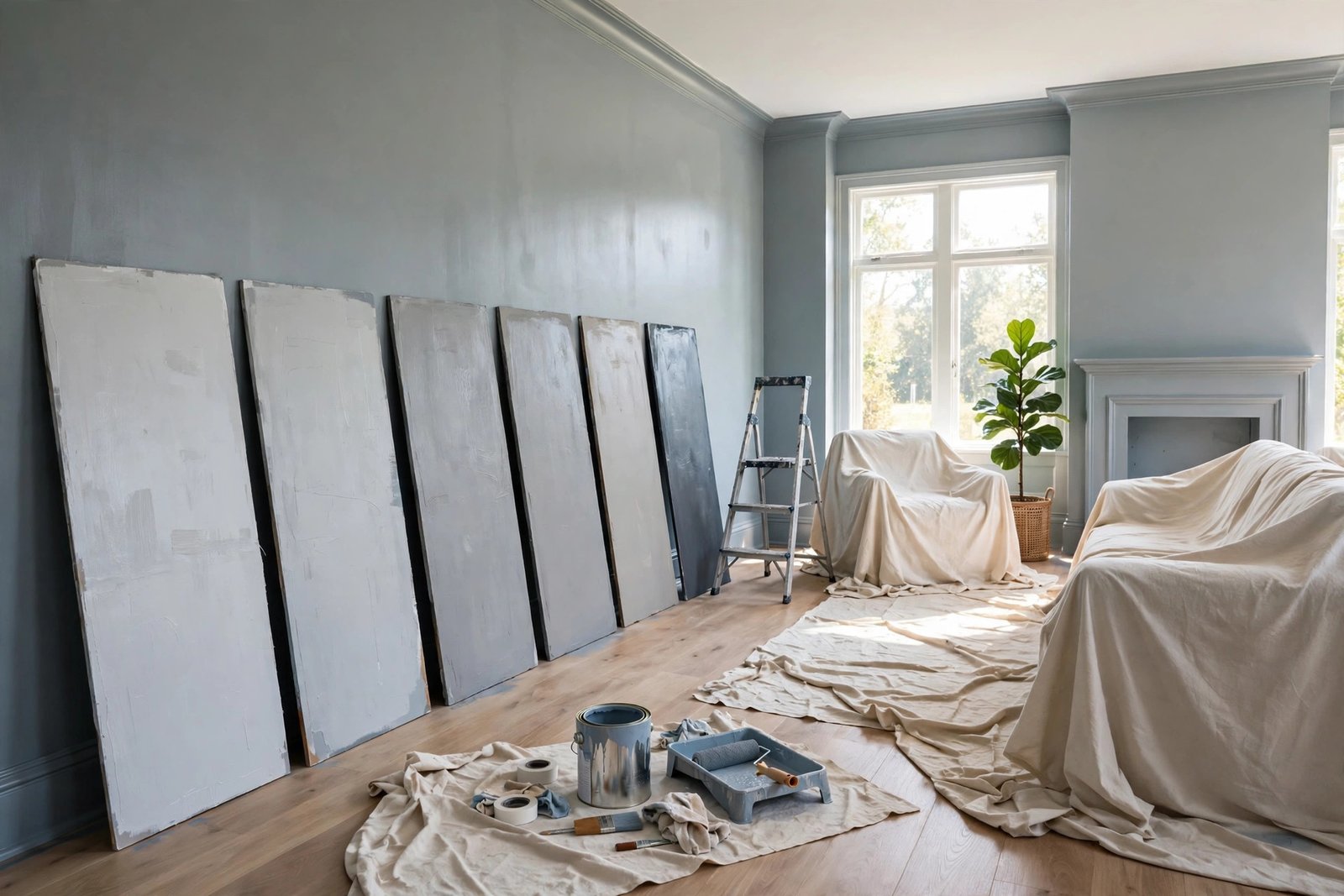
You tested the swatch, you loved it, you painted the whole room — and now the soft grey is unmistakably blue, the warm beige has turned pink, or the gentle sage has become a swamp. The colour on the wall is simply not the colour you chose. It happens in roughly half of all home painting projects, and it is rarely the paint’s fault: colour is not a fixed property of the tin, it is a conversation between the paint, your light and everything else in the room.
The good news is that most “wrong” colours can be rescued without repainting everything. This guide explains why paint shifts once it is on the wall, how to judge the colour honestly before you panic, and the fixes — from a bulb change to a one-step colour adjustment — in the order you should try them.
Quick Answer
Paint looks wrong mainly because of undertones revealed by your light, the scale effect (a full wall reads darker and stronger than a small swatch), and clashing neighbours such as flooring and bulbs. Before repainting: live with it for 48 hours and check it in morning, afternoon and evening light; change the bulbs to 2700–3000K; and try breaking the colour up with furniture and textiles. If it is still wrong, repaint with the same colour family adjusted one step — lighter, softer (more grey) or the opposite undertone — rather than starting again from a new swatch.
The Undertone Problem: Every Colour Has a Hidden Second Colour
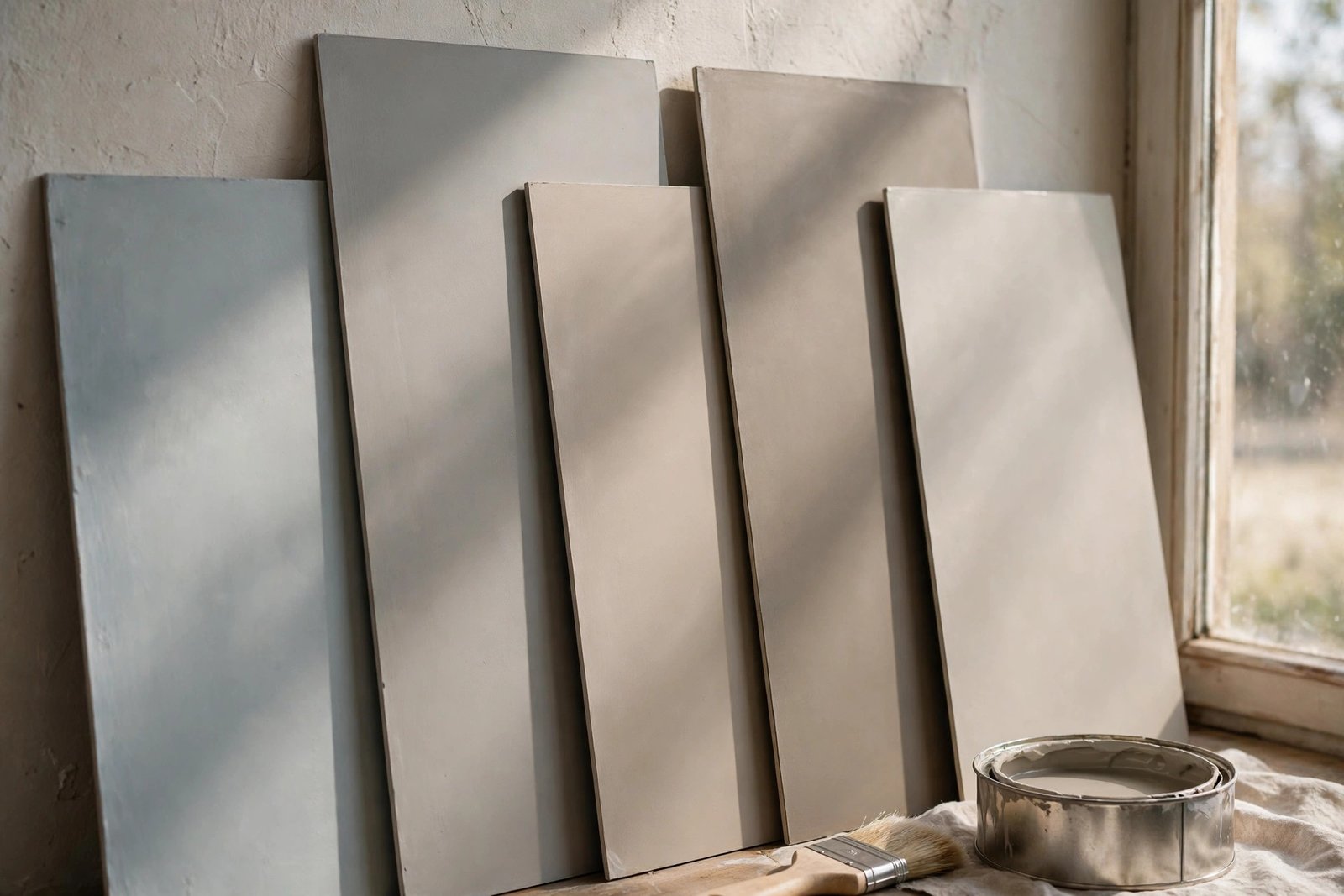
Every paint colour has a mass tone — the colour you see first — and an undertone, the quieter colour underneath that appears only in certain light. Grey paints are famous for it: a grey mixed from blue pigment looks tasteful on the swatch and unmistakably blue on four walls. Beiges lean pink, orange or yellow; whites lean blue, cream or even green. In the shop, balanced lighting hides the undertone. In your room, a north-facing window pouring in cool light will drag every hint of blue to the surface, while warm evening bulbs will expose every drop of pink or orange.
This is why the same paint can look perfect in your friend’s south-facing kitchen and wrong in your north-facing bedroom. The paint did not change — the light did. Before choosing any replacement, hold the swatch next to pure white paper: the undertone usually shows itself immediately against a true white reference.
Scale and Sheen: Why Big Always Looks Stronger
A colour on a 5 cm swatch and the same colour on a 12 m² wall are not the same experience. Across a large area, with light bouncing between walls, colour intensifies and darkens — decorators plan for a wall to read roughly one shade deeper and noticeably more saturated than the card. Corners multiply the effect, because each wall reflects its colour onto the next. If your colour is “almost right but too strong”, this is usually why, and the fix is simply the same hue one step lighter or softened with grey.
Sheen shifts colour too. The same paint in matte looks lighter and softer; in satin or gloss it looks deeper and richer, because the shiny surface returns stronger reflections. A colour tested in the shop’s matte sample can come as a surprise in an eggshell finish on a big wall. Whatever you choose, keep the finish consistent — a colour that “changes” between walls is often just two finishes catching light differently.
Judge It Properly Before You Spend Anything
Wet paint lies. Paint dries noticeably darker than it looks in the tin and on the first rolled stroke, and a single coat over an old colour is a negotiation between two colours, not the final result. Give the room two full coats, fully dry, and 48 hours. Then look at it three times: in morning light, in afternoon light, and in the evening under the bulbs you actually use. Many colours that horrify at noon are exactly right at 7 pm — and since most living rooms are used mainly in the evening, evening is the verdict that matters.
Check the room dressed, not empty. Furniture, a rug, curtains and art cover or sit against most of the wall area and change how much of the colour your eye actually takes in. And if the room also feels dark in general, the paint may be an innocent suspect — the fixes in our guide to a room that feels dark even with the lights on often “fix” the colour as a side effect, because weak, badly directed light distorts every colour it touches.
Fixes That Do Not Need a Full Repaint
Start with the bulbs. If the colour turned cold and blue, switch to warm 2700K bulbs; if it turned muddy yellow, try a neutral 3000–3500K. This five-minute change corrects a surprising share of “wrong paint” complaints, because the bulbs were the real problem all along. Next, adjust the neighbours: a pink-leaning beige calms down next to warm wood and cream textiles and flares up next to grey-blue ones. A rug and curtains in colours that agree with the undertone can pull the whole scheme into line.
If one wall is the troublemaker — the one catching window light at an angle, for instance — repainting a single wall one step lighter is cheap and often invisible as a “fix” while transforming the feel. And sometimes the elegant solution is to lean in: a colour that reads stronger than planned can work beautifully if you reduce its territory, covering more of it with tall furniture, shelving and art — the same layering instinct that creates warmth in our guide to creating cosy zones in a large living room, where wall colour is balanced by textiles and light pools rather than left to perform alone.
When to Repaint, and How to Choose the Correction
If, after 48 hours and a bulb change, the colour still bothers you in the light you use most, repaint — but correct, don’t restart. Diagnose the error in one sentence: too dark, too strong, too blue, too pink. Then adjust exactly that: too dark → same colour, one or two steps lighter. Too strong → the same hue with more grey in it (a “softened” or muted version). Wrong undertone → the neighbouring colour on the fan deck that leans the opposite way (a blue-leaning grey becomes a green- or violet-leaning grey, depending on what you want).
This time, test like a professional: paint a large board — at least 60 × 60 cm, two coats — and move it around the room through the day, leaning it against each wall and next to the floor and largest furniture. Never judge from a small patch painted over the old colour; the old colour frames it and distorts your reading. And if you are choosing colours for a small room, read our guide to small room paint colours that make it feel smaller first, so the correction does not trade a wrong colour for a shrinking one.
Mistakes to Avoid
- Judging the colour while it is wet or after one coat. Paint dries darker and the old colour shows through a single coat. Two coats, fully dry, then judge.
- Choosing the replacement under shop lighting. Fluorescent and LED shop light hides undertones. Always test at home, on a big board, across a full day.
- Testing a tiny swatch on top of the old colour. A small patch surrounded by the wrong old colour will mislead you every time.
- Ignoring the floor and big furniture. Orange-toned wood floors make blue-greys look bluer and fight with pink beiges. Your fixed elements choose the undertone, not you.
- Restarting from a completely different colour. Most errors are one step, not one universe, away from right. Correct the step and keep the scheme you planned.
- Repainting in a panic the same evening. Evening bulb light is the kindest light most colours get. Check the dreaded colour at midday before deciding it is unbearable.
Frequently Asked Questions
Why does my grey paint look blue on the wall?
Because most greys are mixed with blue pigment, and cool daylight — especially from north-facing windows — pulls that blue undertone to the surface. The cure is a grey with a warmer undertone (one that leans slightly green or violet on the fan deck) or warmer bulbs. Hold greys against pure white paper in your room’s light before buying: the blue ones reveal themselves instantly.
Why does paint always look darker on the wall than on the swatch?
Scale and bouncing light. On a full wall, light reflects back and forth between surfaces, deepening the colour, and corners intensify it further. Plan for the wall to read about one shade deeper than the card — if you love the swatch exactly as it is, buy the colour one step lighter than the swatch you loved.
How long should I wait before deciding the colour is wrong?
At least 48 hours with two cured coats, and you should see it in morning, afternoon and evening light, ideally with the furniture back in place. Colours also settle psychologically — a strong change from the old colour shocks on day one and feels normal by day three. If it still bothers you after that, it is genuinely wrong.
Can changing light bulbs really fix a paint colour?
Often, yes. Bulbs set the light the paint reflects back to your eyes, so swapping harsh 5000K bulbs for warm 2700K ones can turn a cold, blue-looking wall back into the soft grey you chose. It is the cheapest possible fix — always try it before buying more paint.
The Bottom Line
Paint rarely comes out of the tin wrong; it comes out of the light wrong. Undertones, scale, sheen and the colours around it rewrite what you chose — so judge the finished room patiently, fix the light first, soften the neighbours, and only then repaint, adjusting the original colour by one deliberate step. That sequence turns most painting disasters into a single extra tin and a lesson learned, instead of a second full project.

1 thought on “Paint Colour Looks Wrong After Painting? Why It Happens and How to Fix It”