
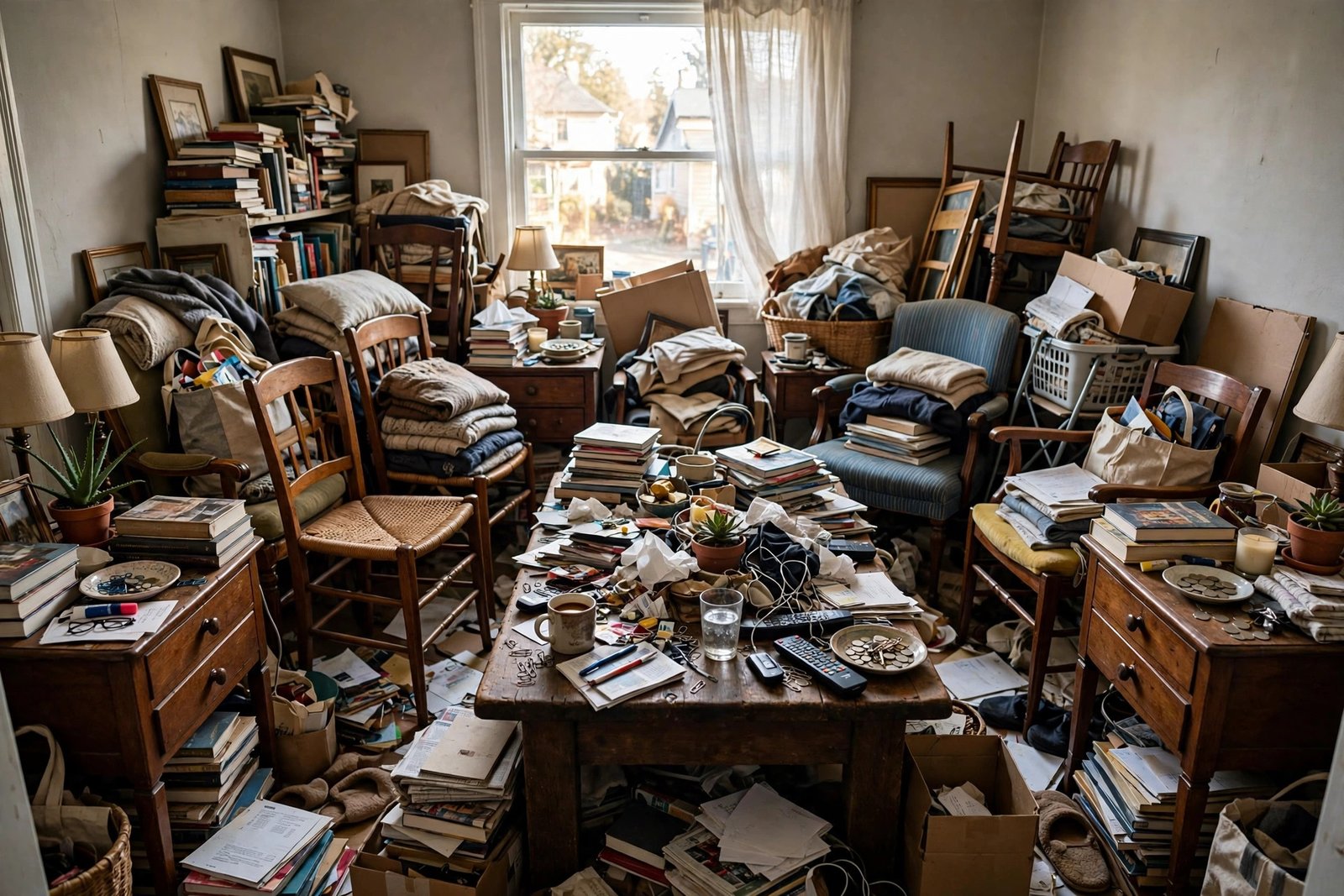
You walk into your living room and there is nowhere for your eyes to rest. A sofa, two armchairs, a coffee table, two side tables, a TV stand, a bookcase, a floor lamp, a plant stand and a storage ottoman — each piece is fine on its own, but together they leave you edging sideways between the furniture just to cross the room. The problem is rarely the room. It is the count.
Small living rooms fail by accumulation, not by design. Pieces arrive one at a time — a bargain chair, a hand-me-down table, a lamp that had nowhere else to go — and nobody ever removes anything. This guide gives you a clear removal order: what goes first, what goes second, and how to decide about the pieces you are unsure of, so the room can breathe again without buying a single replacement.
Quick Answer
When a small living room has too much furniture, remove in this order: first, duplicates (the second side table, the extra chair nobody sits in); second, dead pieces that hold clutter instead of serving a purpose; third, the one oversized piece that breaks the room’s scale — usually a too-deep sofa, a huge coffee table or a wall-length TV unit. Keep one seat per person who lives there plus one guest seat, one surface within reach of each seat, and a clear walkway of about 75–90 cm. Everything beyond that is a candidate for removal.
Step 1: Count Seats and Surfaces — the Room’s Real Budget
Before removing anything, do a quick audit. A small living room honestly needs: seating for the people who live in the home, plus one extra seat for a guest; one reachable surface per seat (a coffee table or a single side table can serve two seats); and storage for the few things that genuinely live in the room, usually the TV equipment and some books. Anything past that budget is not serving the room — it is stored in it.
Walk around and name each piece’s job out loud. “This chair is where guests sit.” “This table holds the lamp.” If you cannot name a job the piece does every week, it is not furniture any more — it is inventory. Write the list down; seeing eleven pieces named on paper makes the excess obvious in a way that looking at the room never does, because your eyes have long since learned to skip over the clutter.
Step 2: Remove the Duplicates First
Duplicates are the easiest wins because removing them costs you nothing in function. Two side tables where one would do. A pair of matching armchairs when only one is ever used. A coffee table and a storage ottoman and a side table all crowding the same sofa. A second bookcase when the first is half empty. Pick one of each pair, keep the better one, and let the other go.
This is also where the coffee table earns a hard look. In a crowded room, the coffee table is often the single biggest space-eater relative to its usefulness — and if yours is oversized, replacing the removal with a smaller footprint piece changes the whole room. Our guide on how to place a coffee table with the correct sizes and distances shows the proportions that actually fit a small seating group, so you can judge whether yours is a keeper or the main culprit.
Step 3: Remove the Dead Pieces — Furniture That Only Holds Clutter
Every crowded room has them: the chair that exists to hold laundry, the corner unit that displays things nobody looks at, the plant stand that makes the plant impossible to water. Dead pieces are dangerous because they attract more clutter — a flat surface in a small room becomes a landing strip within a day.
The test is simple: empty the piece completely and live with it empty for a week. If nothing in daily life reaches for it, it leaves. You will often find that removing one dead piece also removes the clutter that lived on it, because the clutter had no home of its own either. The room gains twice: the floor space and the visual quiet.
Step 4: Confront the Oversized Piece
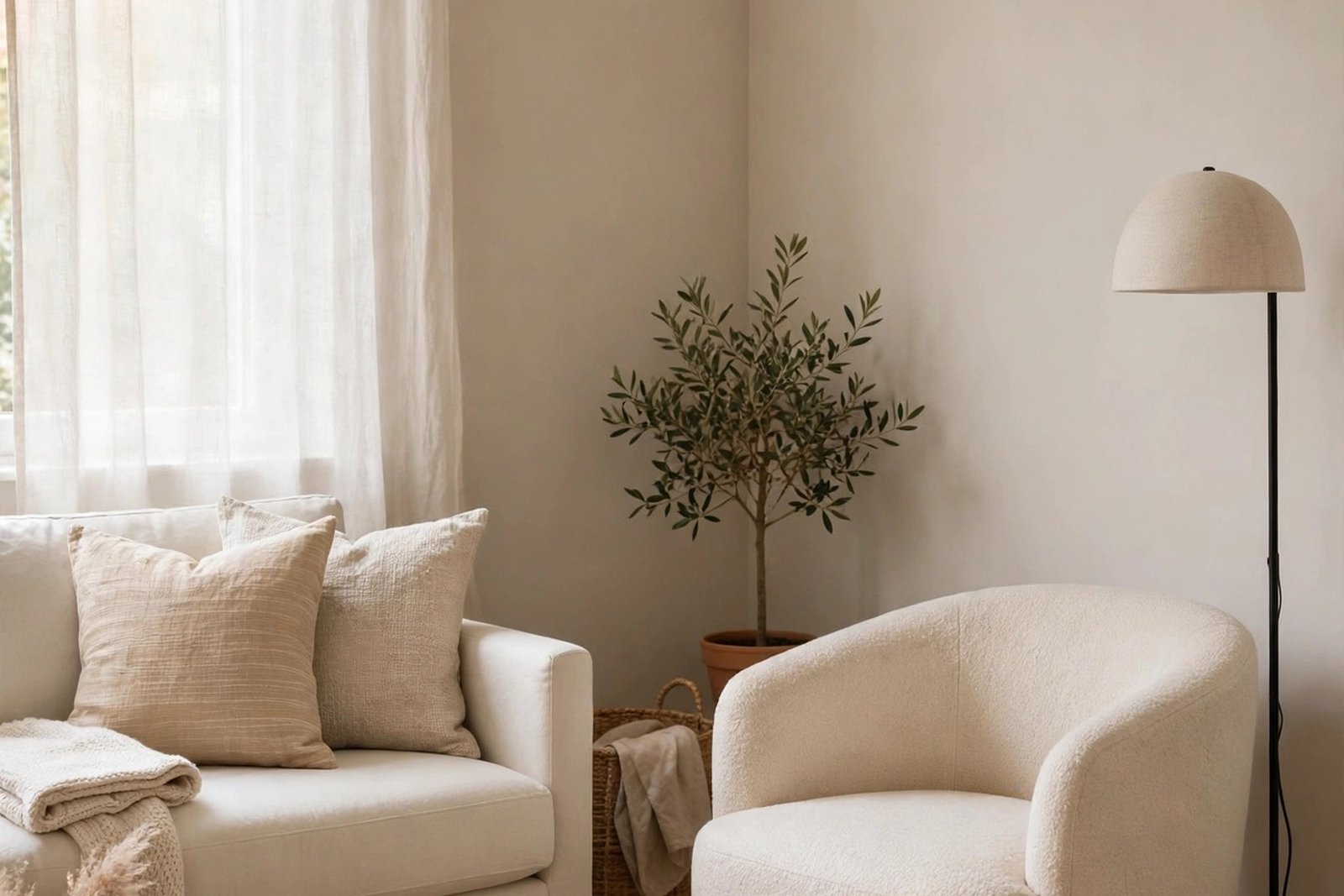
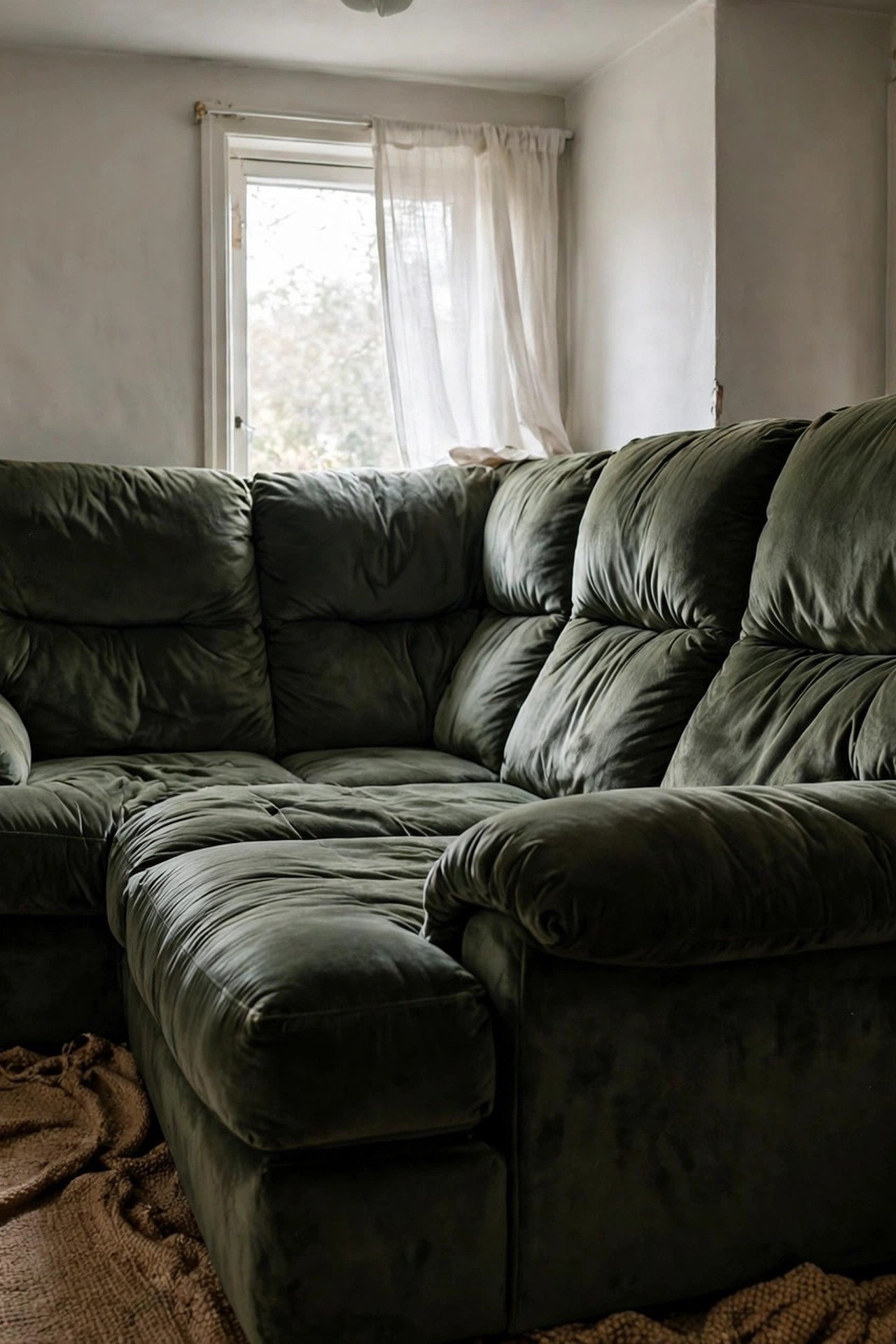
Almost every small living room has one piece that is simply the wrong size: a deep three-seater sofa in a room that needed a loveseat, a wall-length entertainment unit, or an enormous recliner. This piece is harder to remove because it is usually the most expensive thing in the room — and the most used. But scale errors cannot be arranged away. While it stays, every other piece squeezes around it.
Be honest about how it performs. If the sofa is too deep, nobody sits back comfortably anyway. If the recliner blocks the walkway, it is costing the room its circulation — and the walkway matters more than any single seat, as our guide to fixing a living room walkway blocked by furniture explains: a room you cannot cross freely feels small no matter how it is decorated. Selling one oversized piece and buying the right size second-hand often costs little and returns a third of the room.
Step 5: Rebuild the Layout With What Remains
Removal is only half the job; the remaining pieces need a layout that proves less is more. Pull the seating into one group around a single focal point, keep facing seats within about 2.5 metres of each other, and give the group one surface in the middle rather than three around the edges. Whether the sofa belongs against the wall or floated into the room depends on your depth — our guide to sofa against the wall or floating runs the measurements.
Then defend the empty space. The newly cleared corner will try to refill itself within a month; that pull is normal. Decide what the space is for — breathing room is a legitimate purpose — and let nothing land there “temporarily”. A small room with a few pieces arranged well always feels larger and calmer than a room where every wall is occupied.
Mistakes to Avoid
- Removing the useful pieces and keeping the pretty ones. Sentiment keeps the display cabinet and removes the chair people actually sit in. Function decides the order, always.
- Removing nothing but rearranging everything. Shuffling eleven pieces around a small room produces the same crowded room in a new order. Count first, then arrange.
- Keeping “guest” furniture for rare occasions. Four spare seats for guests who visit twice a year cost you floor space 363 days a year. Borrow or fold for the exception.
- Replacing removed pieces with storage furniture. A bigger unit to “organise” the clutter just gives the clutter a nicer container. Remove first; store what survives.
- Taking out the lighting. People remove a lamp to save space and the room goes flat and gloomy. Slim floor lamps earn their footprint — light makes small rooms feel bigger.
- Deciding everything in one emotional afternoon. Use the one-week empty test for doubtful pieces. Hasty removals get reversed; tested ones stick.
Frequently Asked Questions
How many pieces of furniture should a small living room have?
There is no magic number, but a useful budget is: one seat per resident plus one guest seat, one shared surface within reach of the seating, one storage piece, and lighting. For most small rooms that lands around six to eight pieces. If you count eleven or more, the room is over budget.
What should I remove first from a crowded living room?
Duplicates — the second side table, the unused matching chair. They cost nothing in function and free space immediately. After duplicates, remove dead pieces that only hold clutter, and only then judge the one oversized piece that breaks the room’s scale.
Should I remove the coffee table from a small living room?
Only if it is oversized for the seating group or blocks the walkway. A correctly sized coffee table — roughly two-thirds the length of the sofa, 40–45 cm from its edge — earns its place. If yours fails both tests, swap it for two small side tables or a slim nesting set instead of going without entirely.
How do I decide about a piece I am unsure of?
Move it out of the room for one week — into a bedroom, a hallway, or storage. If nothing in daily life misses it, the decision is made. The test works because it separates the fear of missing a piece from the reality of using it.
The Bottom Line
A small living room with too much furniture does not need a bigger room or a new suite; it needs an honest count and a removal order. Duplicates first, dead pieces second, the oversized culprit third — then one calm layout for what remains and the discipline to let empty space stay empty. Do it in that order and the room you already own turns out to have been there all along, hidden under its own inventory.
3 thoughts on “Small Living Room With Too Much Furniture: What to Remove First”