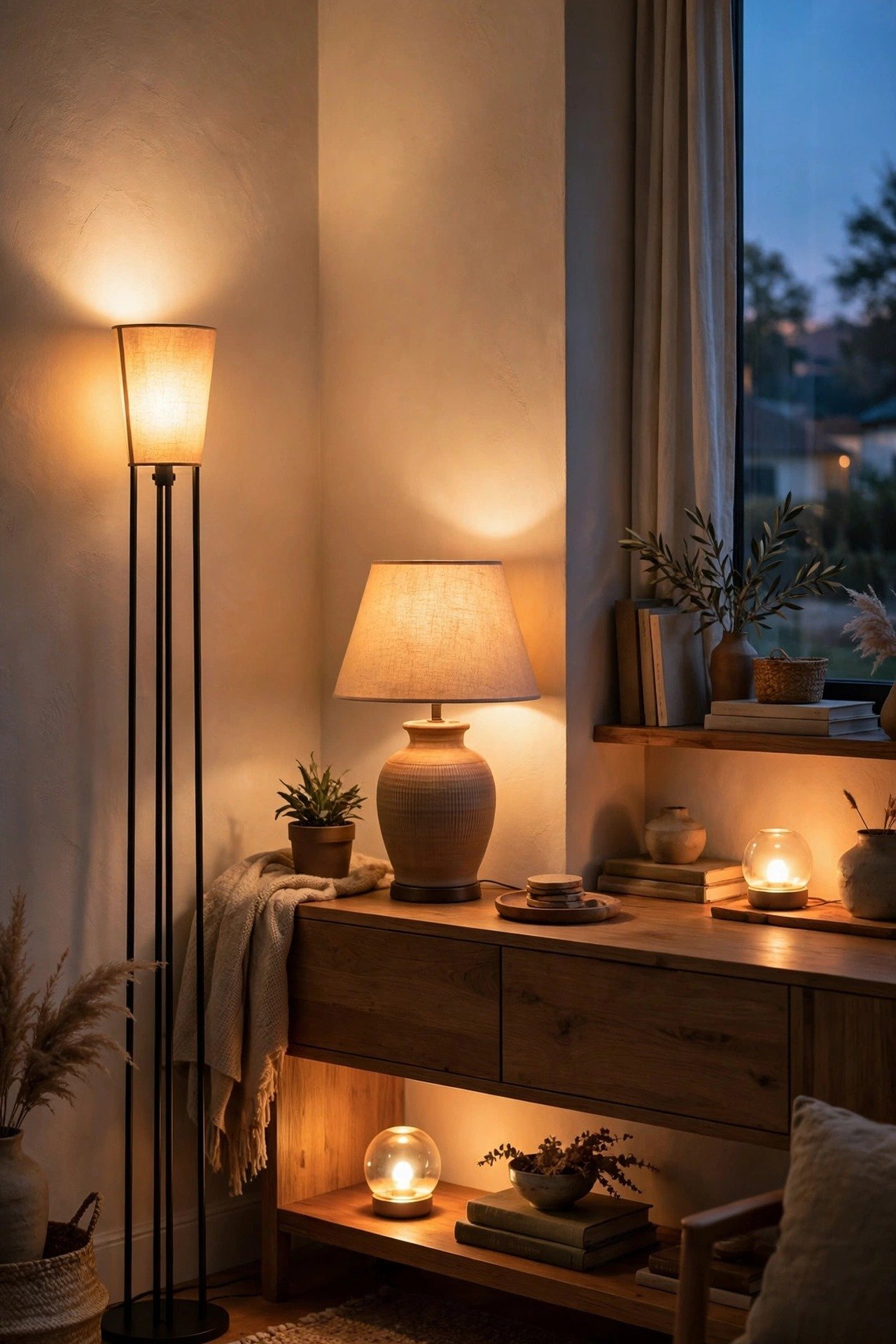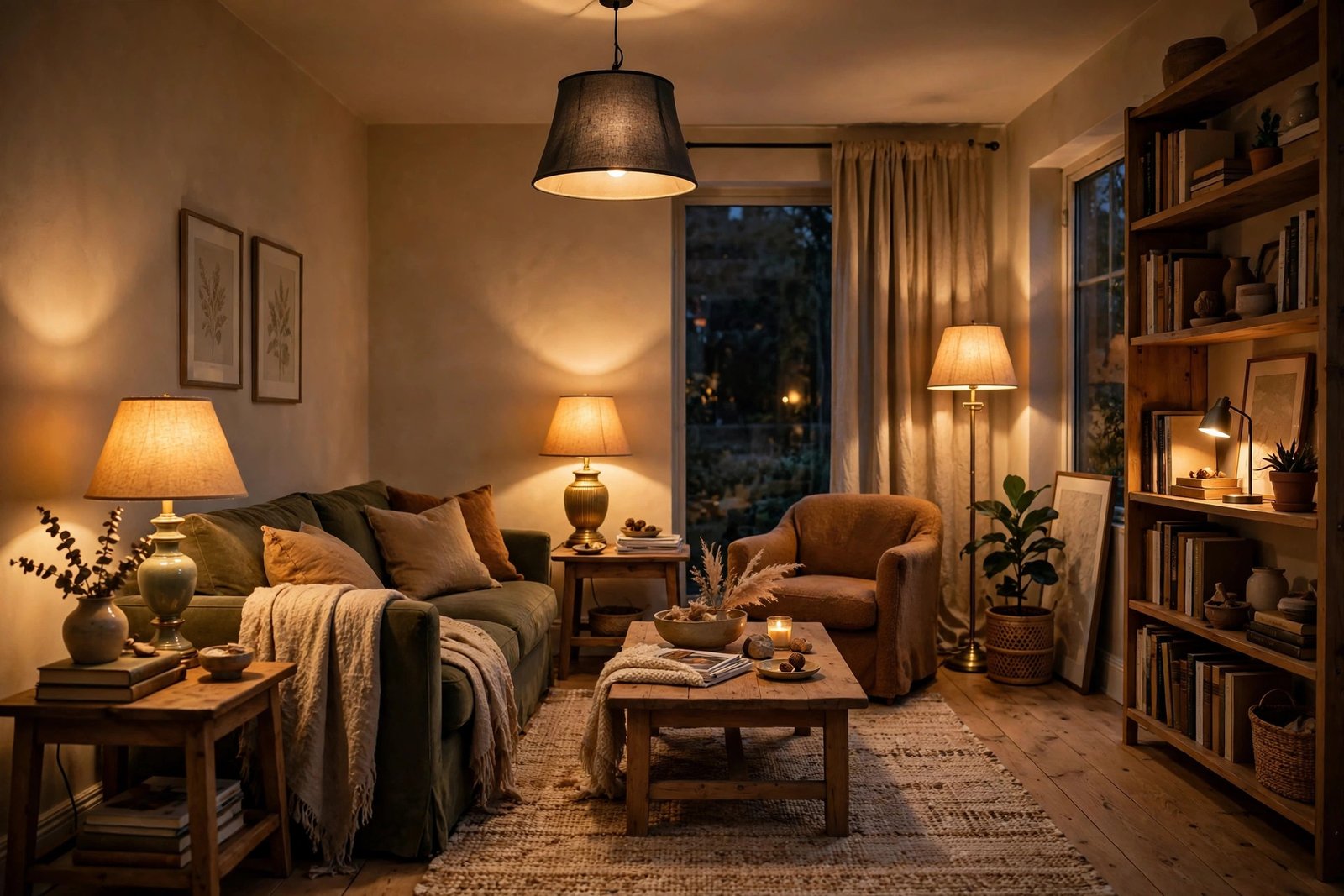
Ask ten people how many lights a living room needs and you will get ten different answers — because most living rooms were never planned at all. They have whatever the builder fitted in the ceiling, plus a lamp or two bought years apart. The result is predictable: a room that is bright in the middle and dead in the corners, where reading strains your eyes, faces look tired on video calls, and the evening mood is whatever the ceiling light says it is.
The good news is that lighting follows a countable logic. A living room does not need “more light” in the abstract — it needs the right number of light sources, doing three different jobs, placed where life in the room actually happens. This guide gives you the simple counting method designers use, layer by layer, so you can audit your own room in five minutes and know exactly which light is missing.
Quick Answer
Most living rooms work best with five to eight separate light sources: one or two ambient sources for general glow, two or three task lights where you read, work or do hobbies, and two or three accent lights that create warm pools and highlight the room’s features. Aim for a total of roughly 2,000–4,000 lumens in an average room, spread across those sources rather than blasted from one fitting, all at 2700K, and put the ambient layer on a dimmer if you can. If your room currently has only a ceiling light, you are missing roughly two-thirds of its lighting.
Layer 1: Ambient Light — the Base Glow (1–2 Sources)
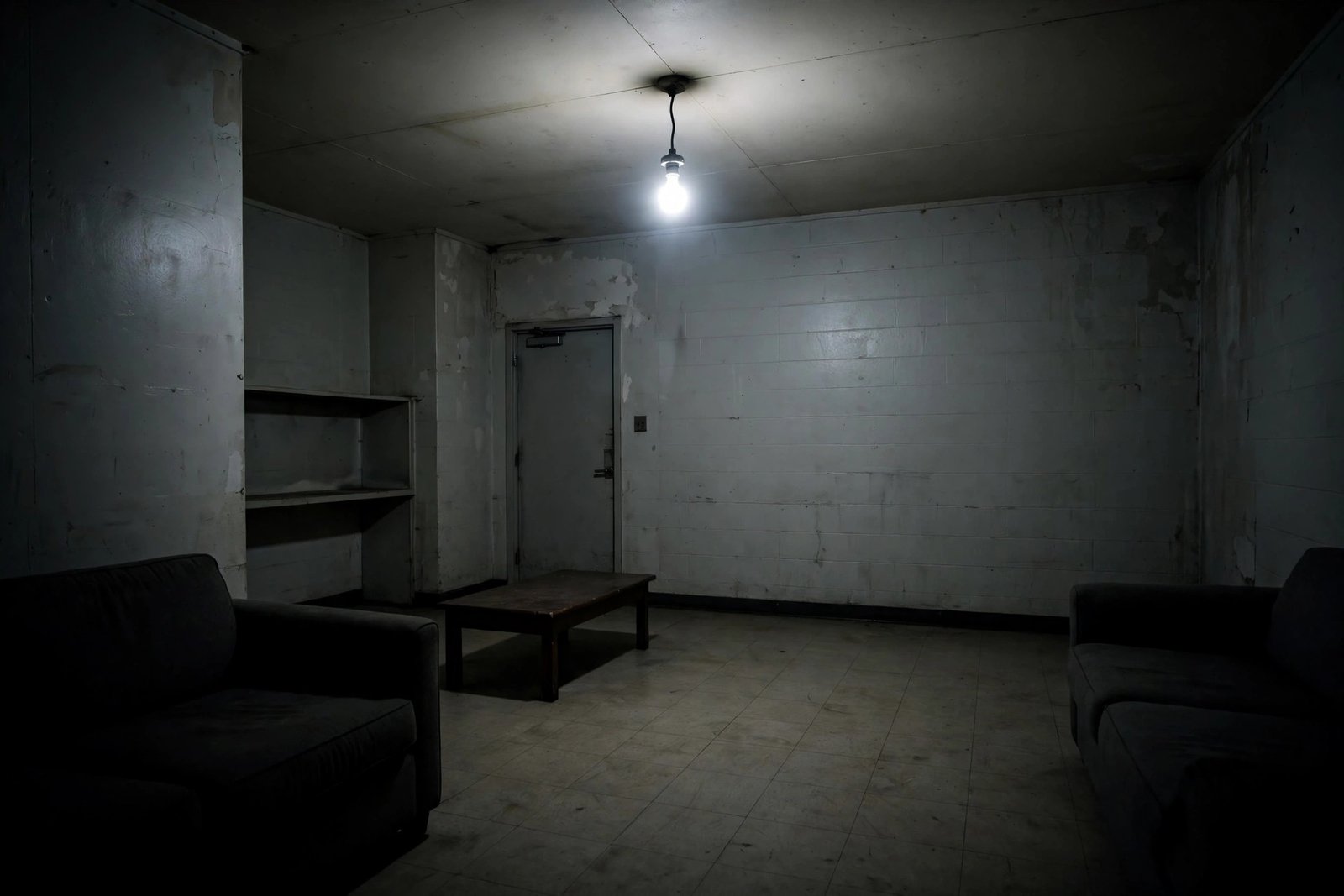
Ambient light is the room’s background brightness — the light that lets you walk through safely and see everything approximately. Count one main ambient source for a small or average room, two for a large or L-shaped one: a ceiling pendant with a shade that throws light up and down, a semi-flush fitting, or wall lights washing the walls. The softest ambient light is indirect — bounced off the ceiling or walls — because it arrives from everywhere and casts almost no shadows.
What ambient light should not be is the room’s only light. A single ceiling source doing every job is precisely the setup behind a living room whose lighting feels too harsh: glare above, shadow below, and everyone looking faintly unwell. Think of the ambient layer as the volume control, not the music — it sets the base level, ideally on a dimmer, and the other layers do the real work of making the room feel good.
Layer 2: Task Light — Light Where Life Happens (2–3 Sources)
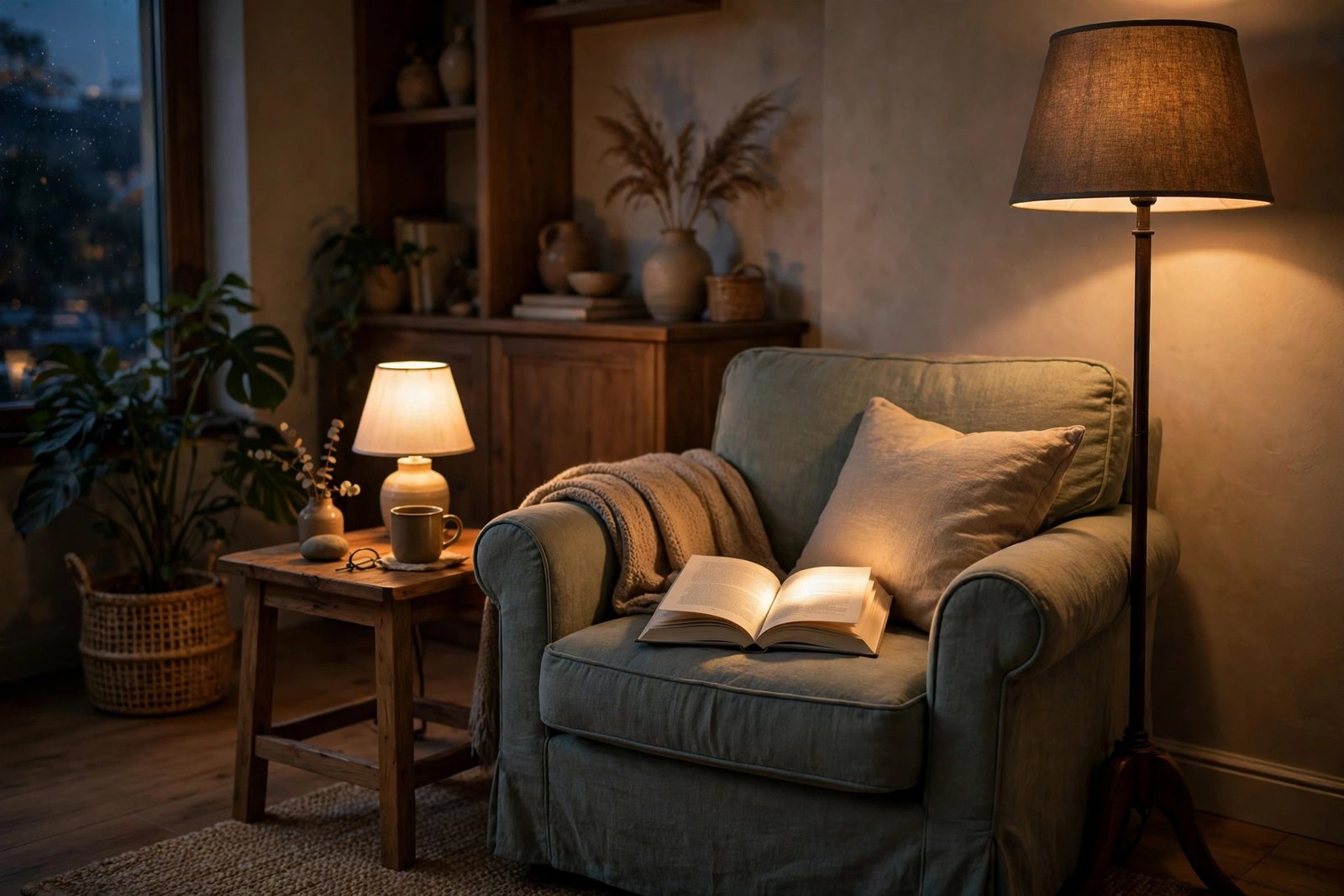
Task lights serve activities, and you count them by counting activities, not by measuring the room. Walk through your living room’s real life: a reading chair needs a lamp beside it with the shade at shoulder height when seated, throwing light onto the page. A sofa used for laptops, knitting or board games needs a lamp at one or both ends. A desk corner or craft table needs its own focused light. Most rooms land on two or three task lights; a room where nobody reads may honestly need only one.
Task lights should be the brightest lights in the room within their small pool — roughly 450–800 lumens each — because eyes working at a task need contrast between the lit page and a softer room. This is also the layer where position matters most: a reading lamp behind the wrong shoulder throws your own shadow across the book, and a lamp too high puts the bulb in your eyes. Low, close and aimed at the task, not the person — that is the rule.
Layer 3: Accent Light — the Layer That Makes It Feel Finished (2–3 Sources)
Accent light is the layer most homes skip entirely, and it is the one visitors describe as “atmosphere”. Its job is not to help you see — it is to give the eye warm, interesting places to rest: a table lamp on a sideboard, a small lamp inside or beside a bookcase, a picture light over artwork, a candle-effect lamp in a dark corner, a lit plant from below. Count two or three for an average room, placed at the room’s edges rather than its centre.
Accent light also performs a quiet rescue in rooms that feel cold despite good furniture: pools of warm light at eye level are what make white or pale walls stop reading as blank — our guide to white walls that look stark and unfinished leans on exactly this effect. If your room feels flat even with the ceiling light at full power, you do not need brightness; you need two accent lamps.
Counting Your Own Room: the Five-Minute Audit
Stand in the doorway at dusk and count sources, layer by layer. Ambient: is there a soft general glow, or one hard downlight? Task: stand at each seat where someone reads or works — is there a lamp within arm’s reach aimed at the task? Accent: look at the far corners and the walls — is there any light at all below ceiling height outside the seating group? Most rooms score something like 1 ambient, 1 task, 0 accent — three sources doing the work of seven, which is why they feel simultaneously glaring and gloomy.
Then check the total light budget. Add up the lumens printed on your bulbs: an average living room of 15–20 m² feels comfortable with around 2,000–4,000 lumens in total, divided so that no single source dominates. If your room also reads dark in the daytime corners despite decent totals, the problem is distribution and surfaces, not wattage — the same conclusion reached in our guide to a room that feels dark even with the lights on. Finally, check colour: every bulb in the room should be 2700K (3000K at most in a task lamp). Mixed temperatures undo each other and make even a correct count feel wrong.
Small Rooms and Large Rooms: How the Count Changes
Small living rooms (under ~12 m²) can stop at four or five sources: one ambient (a good uplighting floor lamp can do ambient and accent at once), one or two task lamps, and one or two accents. In a small room each lamp covers more territory, and crowding in seven fittings creates visual clutter instead of glow. Large or open-plan rooms need the top of the range and beyond — seven to nine sources — because each zone needs its own mini-version of the three layers: the seating zone, the dining zone and the reading corner each want an ambient wash, their task lights and at least one accent, or the zones furthest from the ceiling light will live in permanent twilight.
Height matters too. In a room with a low ceiling, prefer lamps and wall lights over hanging fittings, and let uplighters do ambient duty. In a tall room, a pendant can anchor the centre while lamps handle the edges. The count stays similar; only the mix of fittings changes.
Mistakes to Avoid
- Counting fittings instead of layers. Six ceiling spotlights are still one layer. If everything shines down from above, the room is under-lit in every way that matters, whatever the fitting count says.
- One brightness for everything. Task light should be locally bright, accent light deliberately dim. Bulbs of identical strength everywhere produce the flat, airport-lounge effect.
- All the lights in the middle of the room. Unlit corners shrink a room and kill its mood. Push at least two sources to the perimeter and the room visibly grows.
- Mixing colour temperatures. A 2700K lamp beside a 5000K ceiling bulb makes both look wrong and the room feel unsettled. Standardise at 2700K.
- No dimmer and no switching options. If every light is on one switch at full power, you have one mood: interrogation. Separate circuits, smart bulbs or simply lamps on their own switches give you evenings back.
- Buying lamps for how they look switched off. A beautiful lamp with a dark shade may give almost no usable light. Judge a lamp by its pool of light at night, not its silhouette at noon.
Frequently Asked Questions
How many lamps should a living room have, not counting the ceiling light?
For an average room, three to five lamps is the comfortable range: one or two task lamps by the seats where people read or work, and two or three accent lamps around the edges — on a sideboard, in a bookcase, in the far corner. A small room can manage with two or three lamps if one is a strong uplighter; a large or open-plan room may want five or six spread across its zones.
How many lumens does a living room need in total?
Roughly 2,000–4,000 lumens for a typical 15–20 m² room, spread across all its sources. The distribution matters more than the total: 3,000 lumens split between a soft ceiling light, two task lamps and two accent lamps feels generous and warm, while the same 3,000 lumens from a single fitting feels harsh in the centre and gloomy at the edges.
Is one ceiling light ever enough?
Only in the smallest rooms, and only if it is shaded, warm and dimmable — and even then, a single table lamp transforms the evening feel for very little money. A ceiling light gives ambient light only; it cannot read a book for you or make a corner glow. Treat it as one source of the five to eight the room wants, never the whole plan.
Where should the first extra lamp go if I can only add one?
In the darkest corner, at table height, with a warm bulb and a fabric shade — ideally diagonally opposite your main seat. One accent lamp in a dead corner changes the room’s perceived size and mood more than any other single addition, because it pushes the lit boundary of the room outward to its real walls. Add the reading lamp second, beside the chair that gets used most.
The Bottom Line
A living room needs five to eight light sources, not one bright one: one or two ambient for the base glow, two or three task lights where reading and working happen, and two or three accent lights warming the edges — around 2,000–4,000 lumens in total, all at 2700K, dimmable where you can. Count your room layer by layer, find the missing layer, and add to that. The right number is not a mystery; it is an audit — and most rooms are only two lamps away from feeling completely different.