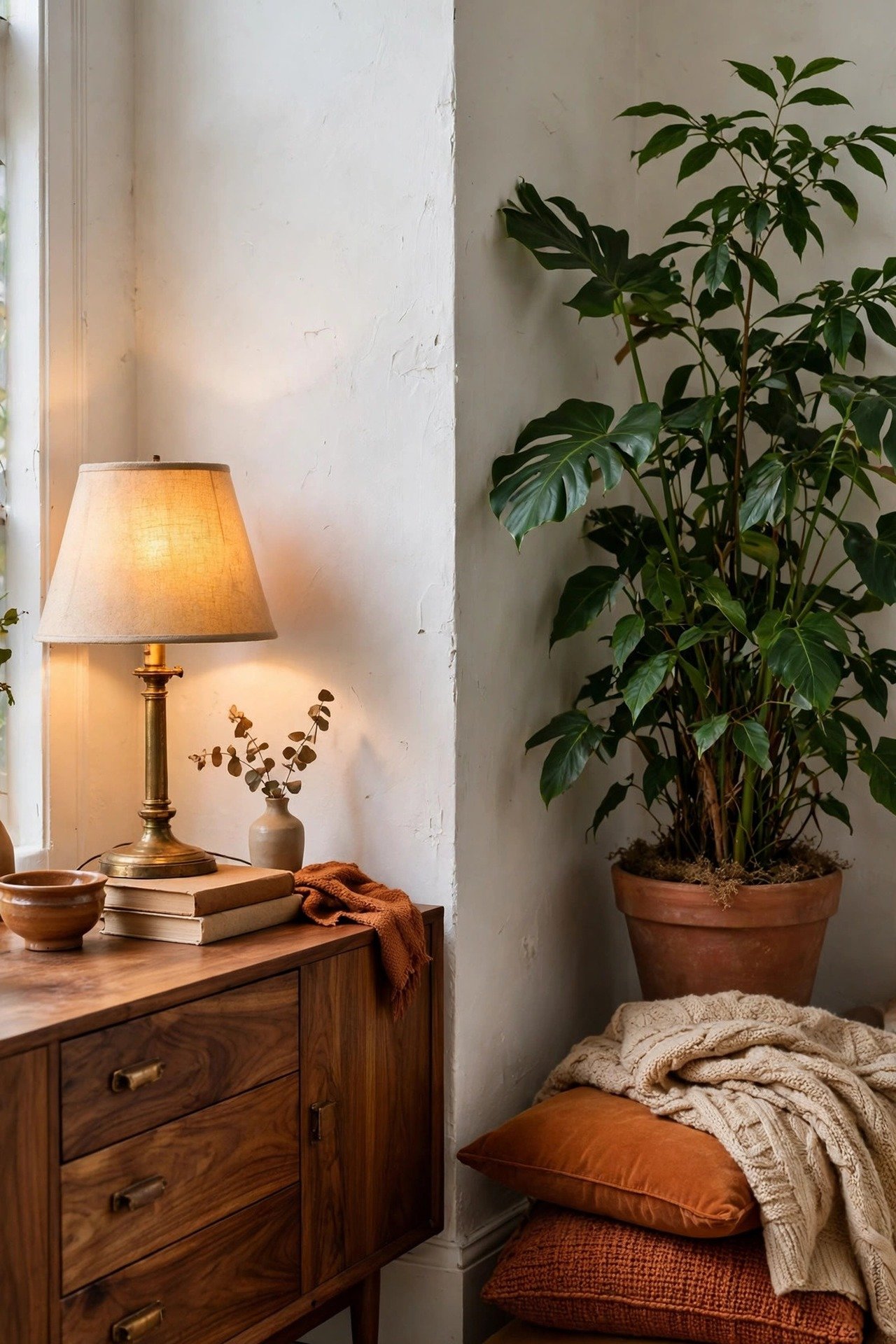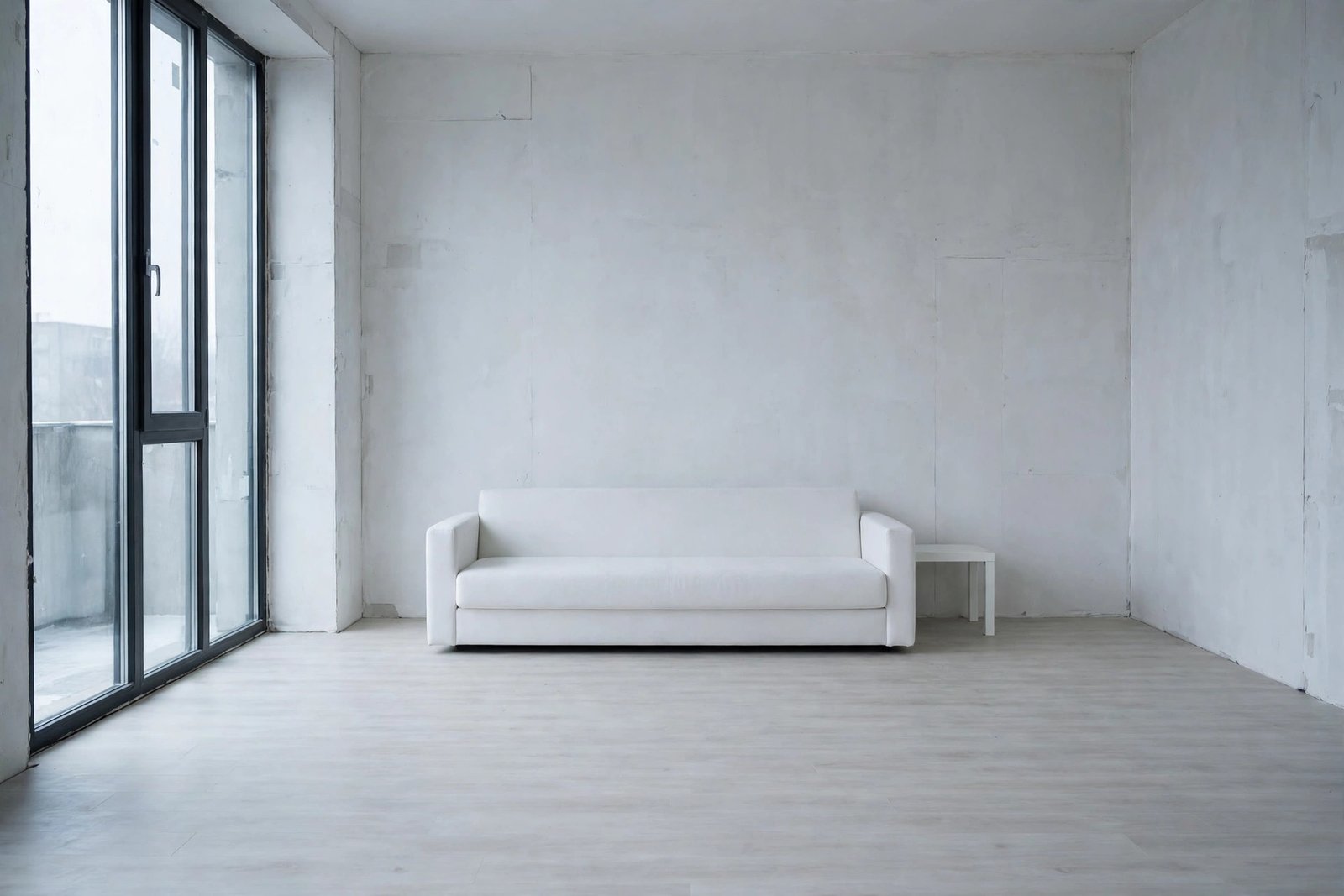
White walls are supposed to be the safe choice. They are bright, they go with everything, and estate agents love them. Yet in many homes the result is not the calm, gallery-like room from the photos — it is a space that feels cold, flat and oddly unfinished, as if the decorating never quite happened. The sofa floats against a blank backdrop, the pictures look lost, and in the evening the room takes on the feel of a waiting room or a hospital corridor.
The instinct is to reach for a paint chart, but repainting is rarely necessary. Starkness is almost never caused by the white itself; it is caused by what the white is missing — warmth next to it, texture in front of it, and light that flatters it. This guide explains why white rooms feel unfinished, and the order of fixes — textiles, wood, light and just one wall of real colour — that warm a white room up without repainting the whole thing.
Quick Answer
White walls look stark when the room around them is all cool colours, hard surfaces and blue-leaning light, with nothing warm or textured to break the white up. Warm the room by adding warm textiles first (a large rug, curtains, cushions and throws in cream, rust, mustard or warm wood tones), natural materials second (wood furniture, woven baskets, plants), and 2700K layered lighting third. If one change is still needed, paint only the largest wall — or the ceiling — a warm off-white or soft colour, and test your existing white first: if it has a blue or grey undertone, a single warm-white recoat of one wall often fixes what no accessory could.
Why White Feels Cold: Undertone, Contrast and Empty Surfaces
Start with the white itself. Very few wall whites are neutral. The popular “brilliant” and “pure” whites are mixed with a trace of blue pigment, which makes them look crisp in a sunny showroom and faintly icy under ordinary home light — the same undertone trap that explains why paint colour looks wrong after painting even when you chose carefully. A warm white, by contrast, carries a hint of yellow, cream or even pink, and reads as soft and welcoming.
The second cause is contrast — or rather, the lack of it. A finished room has layers: dark, mid and light tones that let the eye move and settle. An all-white room with pale furniture and pale flooring has only one tone, so nothing stands out and nothing anchors the space; the eye slides off every surface and the room reads as a blank box. Starkness is the feeling of a room with no shadows, no depth and no focal point.
The third cause is texture. White shows every surface exactly as it is, and most modern rooms are full of smooth, hard finishes — flat paint, laminate, glass, chrome. With no woven, rough or natural texture anywhere, white light bounces around unfiltered and the room feels clinical. The fixes below attack all three causes, in the cheapest order.
Step 1: Warm It With Textiles — the Fastest, Cheapest Fix
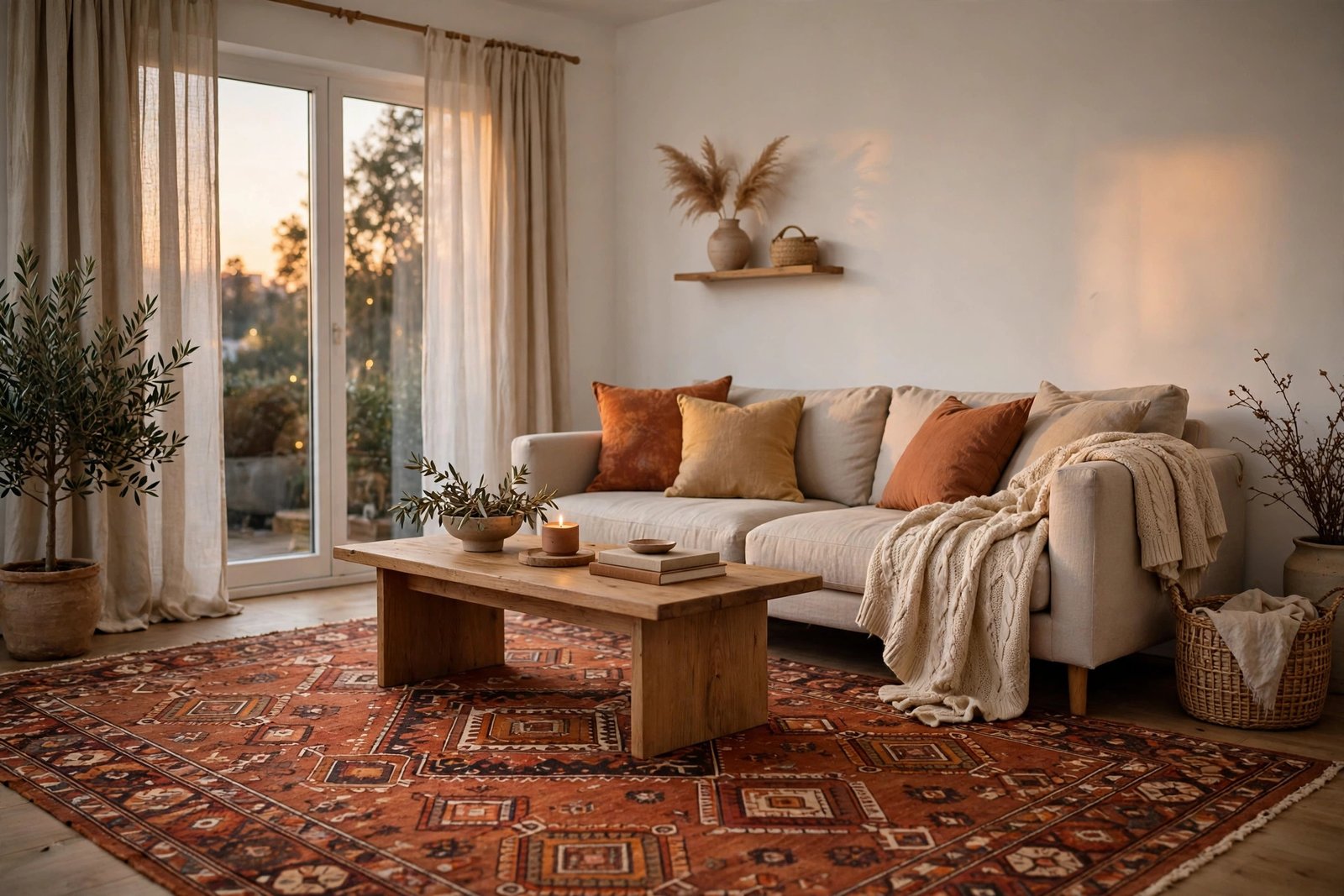
Textiles cover more visible area than any other change you can make without paint, and they can all be warm at once. Start with the floor: a large rug in a warm tone — cream with a pattern, rust, warm beige, faded terracotta — instantly removes a huge area of cold reflection and gives the white walls something warm to sit above. Go as big as the seating area allows; a small pale rug changes almost nothing.
Next, the windows. White walls beside white blinds beside a bare window is the classic unfinished look. Curtains in a warm neutral or soft colour — natural linen, warm oatmeal, sage, dusty clay — frame the window, add a tall band of soft texture, and break the white up. Then layer the seating: cushions and a throw in two or three warm colours, mixed textures (wool, linen, a knitted throw), so the sofa stops looking like a white object parked against a white wall.
The rule of thumb: the soft furnishings should carry the warmth the walls lack. If everything you add is also white or grey, you have redecorated the problem rather than solving it.
Step 2: Add Wood, Warm Metal and Living Green
After textiles, look at the hard materials. Natural wood is the single most effective warmth-bringer in a white room: a wooden coffee table, sideboard, shelving or even picture frames in mid or warm tones (oak, walnut, teak) introduce a colour that white rooms are starving for — mid-tone brown — and a grain texture that softens light. One substantial wood piece usually does more than five small accessories.
Warm metals help in smaller doses: brass, bronze or copper lamp bases, frames and handles catch warm highlights that chrome and steel refuse to give. And plants are close to magic in a white room — saturated green is a strong mid-tone colour, it is alive and irregular, and it contrasts beautifully with white without fighting it. One large plant in a woven or terracotta pot warms a corner more honestly than any ornament.
This is the same warming recipe that rescues rooms lit by cold daylight — a north-facing room that feels cold and grey is treated with warm textiles, wood and warm metals for exactly the same reason.
Step 3: Fix the Light — Stark Is Often a Lighting Problem
Stand in the room at 8 pm and look honestly. If the only light is a ceiling fitting with cool-white bulbs, the walls are being lit by the home equivalent of office fluorescent light. White is the most light-sensitive colour there is: under warm light it looks creamy and calm, under cool light it looks blue and institutional.
Switch every bulb to 2700K, and move from one overhead source to several lower ones — table lamps with fabric shades, a floor lamp in the corner, a small lamp on a shelf. Shaded lamps glow against white walls instead of glaring off them, and the pools of warm light create the shadows and depth the room was missing. Knowing how many lights a living room actually needs helps here: most white rooms are not too bright, they are lit from one wrong place at one wrong colour.
Step 4: If You Paint Anything, Paint One Wall — or the Ceiling
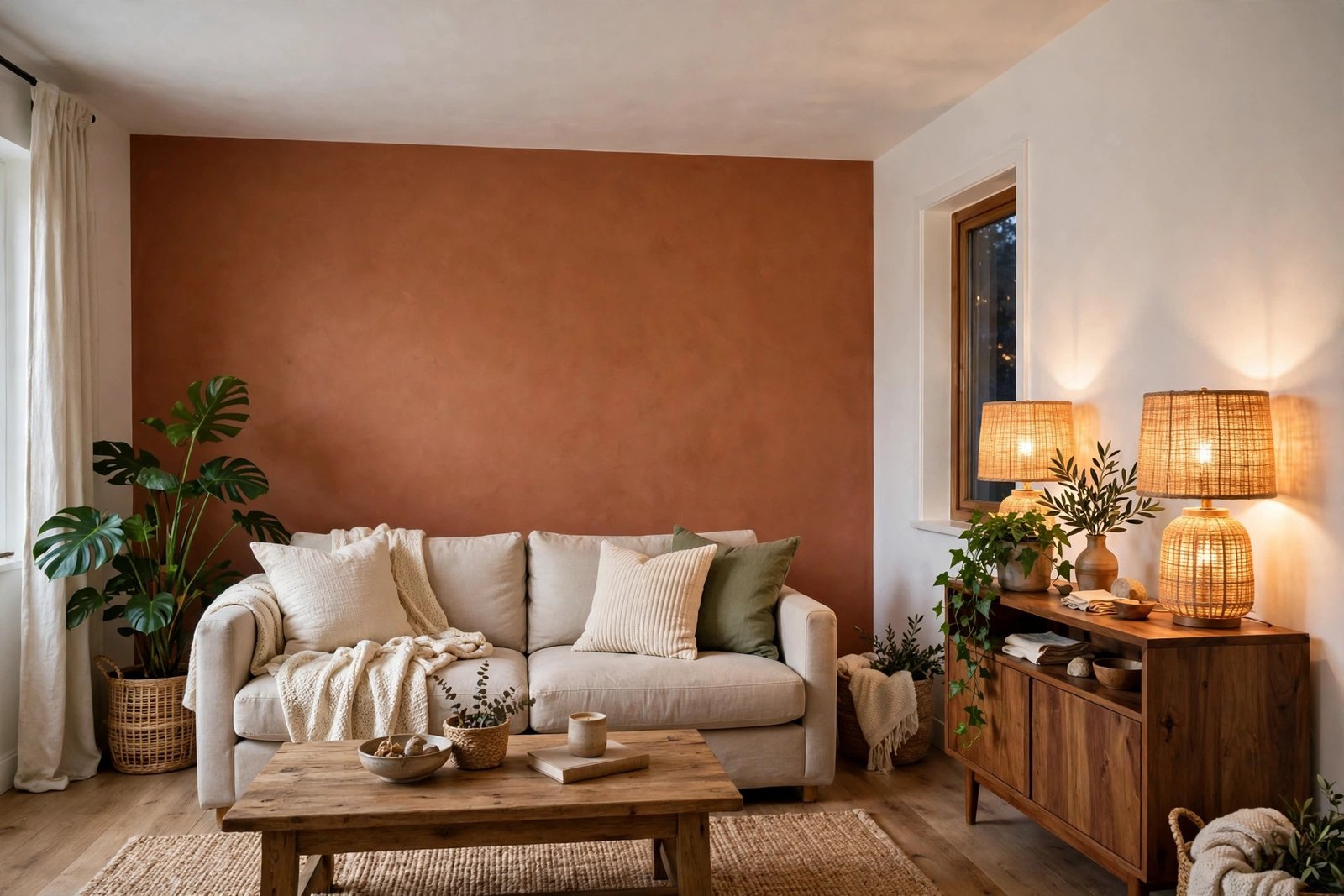
Sometimes the textiles and light do their work and the room is 90 percent there — but one huge, bare, blue-white wall still dominates. Then a partial repaint is the honest fix — a one-wall job, not a whole-room project. The best candidate is the largest unbroken wall, usually behind the sofa: paint it a warm colour with enough depth to anchor the room — soft clay, warm sage, muted terracotta, a deep warm greige — and the remaining white walls stop looking unfinished because the room now has a clear focal wall they support.
The subtler option is to repaint that one wall in a warm white — the same brightness as the existing white but with a cream undertone. Visitors will not notice a colour change; they will simply feel the room relax. And the trick almost nobody tries: paint the ceiling a warm off-white or very soft colour. A warm ceiling lowers the glare from above and tints all the light bouncing down into the room, warming every white wall beneath it without touching them.
Mistakes to Avoid
- Adding more white and grey accessories. A white throw on a white sofa against a white wall deepens the problem. Every addition should bring warmth, colour or texture.
- Cool-white bulbs “to keep it bright”. Brightness is not the issue; colour temperature is. 4000K+ light on white paint is the hospital look, bottled.
- Tiny, scattered décor instead of one big move. A dozen small white ornaments add clutter, not warmth. One large rug or one wood sideboard changes the room; knick-knacks do not.
- High-gloss white everywhere. Glossy white reflects glare and shows every shadow harshly. Matte and eggshell finishes on walls, and matte textiles against them, soften the same colour dramatically.
- A feature wall in a cool colour. A grey-blue or icy accent wall drags the whole scheme colder. If you paint one wall, it must lean warm.
- Giving up and repainting everything in a panic. Whole-room colour is the last resort, not the first. Work through textiles, materials and light first — most white rooms are two steps from warm, not one repaint away.
Frequently Asked Questions
Why do my white walls look blue or grey?
Because most “pure” whites contain blue or grey pigment, and your light — especially north-facing daylight or cool bulbs — amplifies that cool undertone while suppressing any warmth. Warm bulbs and warm textiles counteract it day to day; a warm-white recoat removes it permanently.
What colours go with white walls to make a room feel warm?
Warm mid-tones: natural wood browns, cream, rust, terracotta, mustard, warm sage and dusty clay. The pattern to copy is one large warm area (rug or curtains), one natural material (wood), and warm green from a plant. Avoid pairing white mainly with grey and chrome — that is the cold combination that creates the problem.
Should I paint one wall a different colour in a white room?
Often, yes — it is the most effective single paint move. Choose the largest wall, usually behind the sofa, and use a warm, muted colour. The coloured wall becomes the room’s anchor, and the white walls around it read as intentional and bright instead of unfinished. Keep the colour warm; a cool accent wall makes the rest of the white look colder by comparison.
Can curtains and a rug really fix a stark room?
In most cases they do the majority of the work, because together they can cover a third or more of the room’s visible surfaces with warm colour and soft texture. Add warm bulbs and one wood piece and the transformation is usually complete. The rooms that still feel stark after all that are the ones whose white has a genuinely blue undertone — and those need the one-wall warm-white recoat, not more accessories.
The Bottom Line
White walls are rarely the real problem; a room with nothing warm, textured or mid-toned to set against them is. Warm the textiles first, bring in wood, warm metal and a plant, fix the light to 2700K and layer it low — and only then, if one wall still glares, give that single wall a warm colour or a warm-white recoat. The white you already have will do the rest: bright, clean and finally finished.