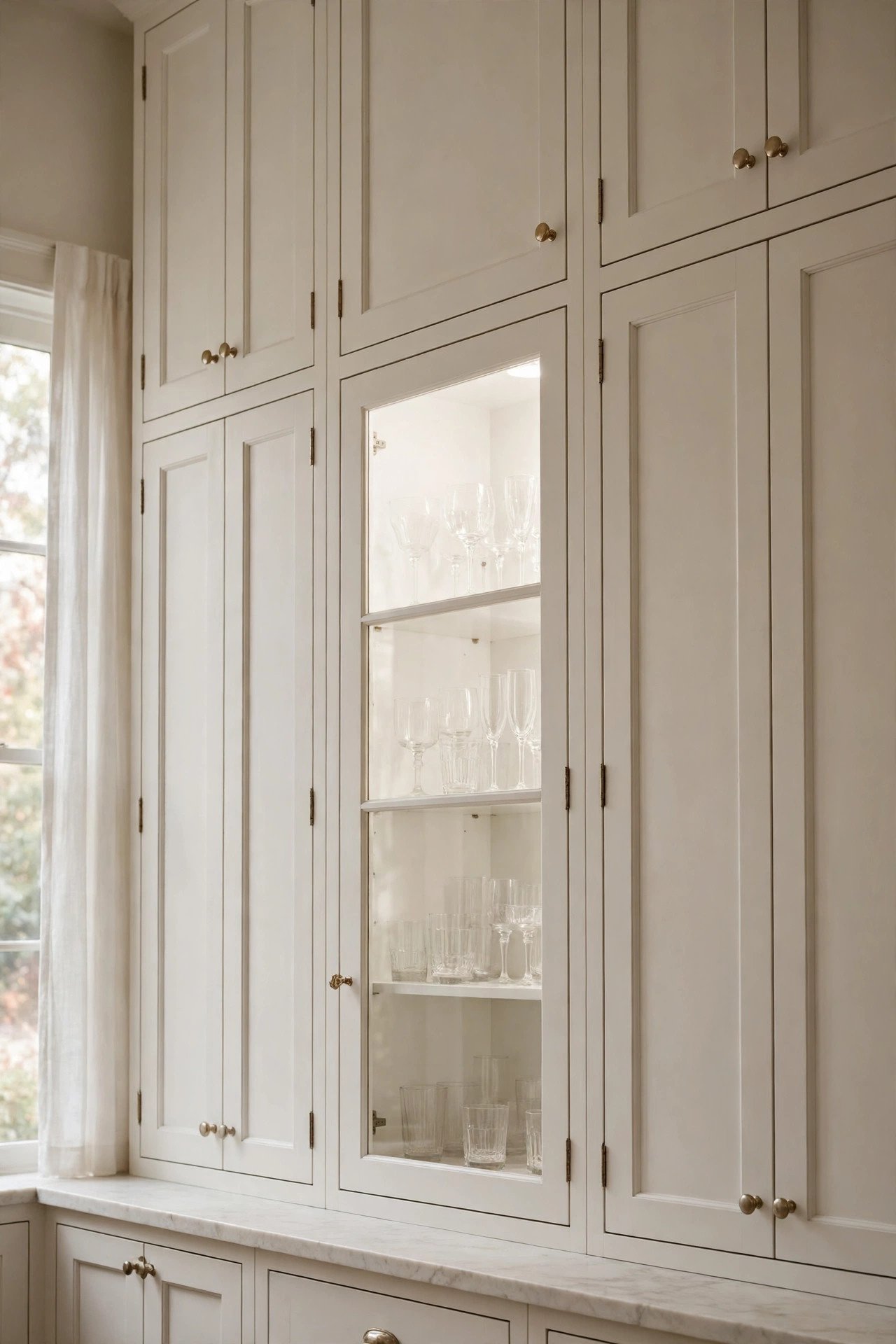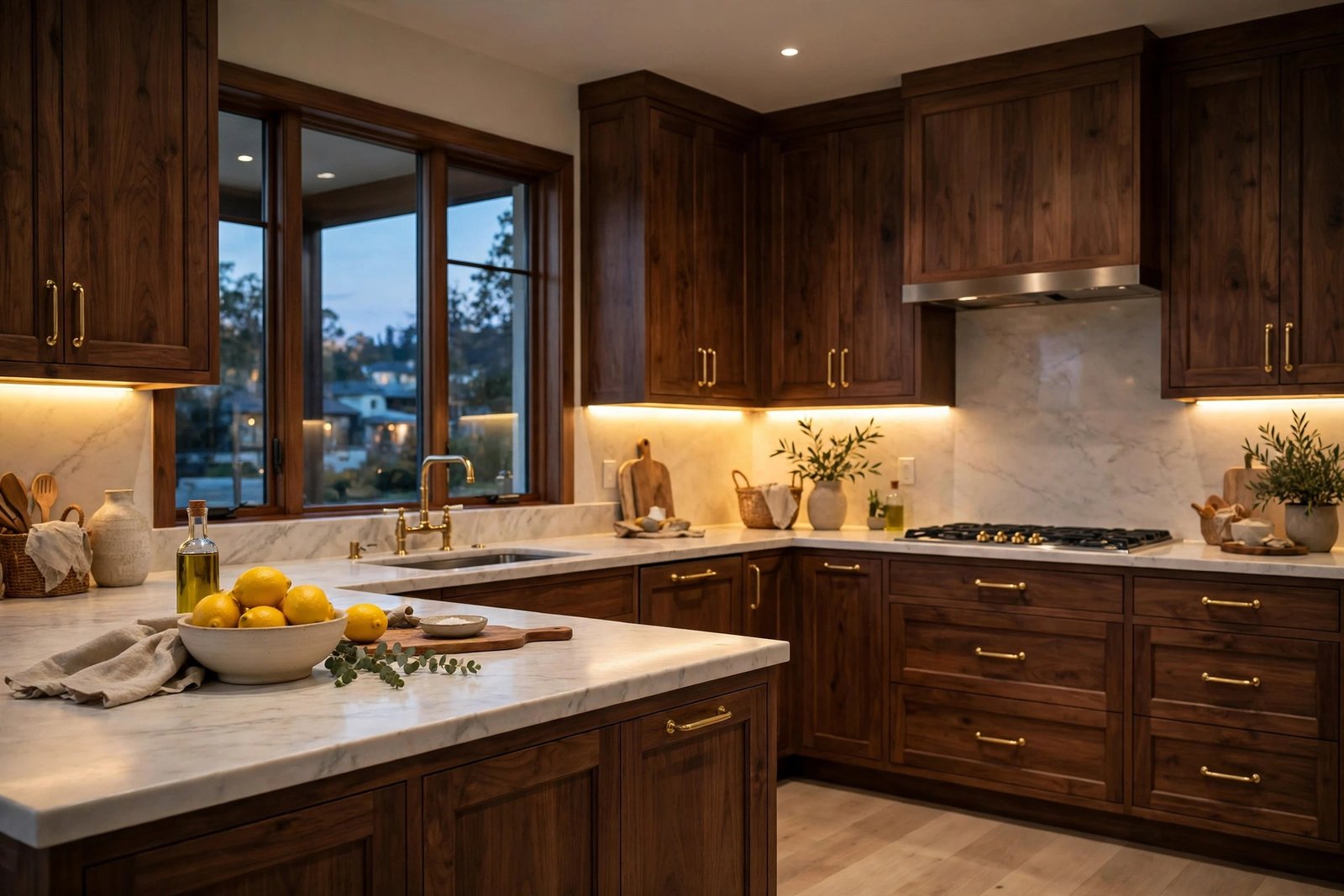
Some kitchens have two problems that are secretly one problem. The cabinets are dark — deep wood stain or a heavy colour that swallows the light — so the room feels gloomy at midday and the inside of every cupboard is a cave. And the cabinets are high: the top shelves hold a fondue set and a Christmas platter you need a chair to reach, while the daily mugs and bowls fight over the two shelves you can actually use. Dark makes the kitchen feel smaller; too high makes its storage smaller. Often they arrive together, because tall, dark wall cabinets dominate a room twice — visually and functionally.
Neither problem requires new cabinets. Darkness is mostly finish and light, and both can change in a weekend. Height is mostly organisation — what lives on which shelf — plus a few clever fittings that bring high storage within reach. This guide works through the diagnosis first, then the fixes for dark cabinets, then the fixes for high ones, in the order a real household would do them.
Quick Answer
For dark cabinets: fix the light before the colour — under-cabinet and in-cabinet lighting transforms dark units for little money — then lighten what you can: paint the fronts a pale, warm colour, paint cabinet interiors white, and consider one run of glass-front or open shelving to break up the mass. For cabinets that are too high: rezone by frequency so daily items live between knee and shoulder height, the top shelf holds only seasonal items, and add help where needed — a pull-down shelf unit, a step that lives in the kitchen, and rails under the cabinets for daily tools. Daily life should never require climbing.
Why Cabinets Go Dark: Finish, Light and Shadow
Dark cabinets in a small or north-facing kitchen absorb the very light the room cannot spare. But before blaming the door colour, check the light itself: many “dark cabinet” kitchens are actually decently coloured cabinets lit by one ceiling bulb that leaves the worktop and the cabinet interiors in permanent shadow. Your own body blocks that single light exactly where you stand to work, which is why so many kitchens feel cave-like at the counters even at noon.
The order of fixes matters. First, task lighting: LED strips under the wall cabinets light the worktop directly and make dark fronts look richer rather than gloomier. Second, in-cabinet light: a battery or wired strip inside the deepest cabinets ends the torch-on-the-phone routine and reveals what the back of the shelf actually holds. Our guide to kitchen lighting shadows on the counter covers placement and colour temperature in detail. Only after the light is fixed should you judge the finish — kitchens frequently decide to keep cabinets they were about to paint once they can finally see them properly.
Lighten the Cabinets Themselves — Without Replacing Them
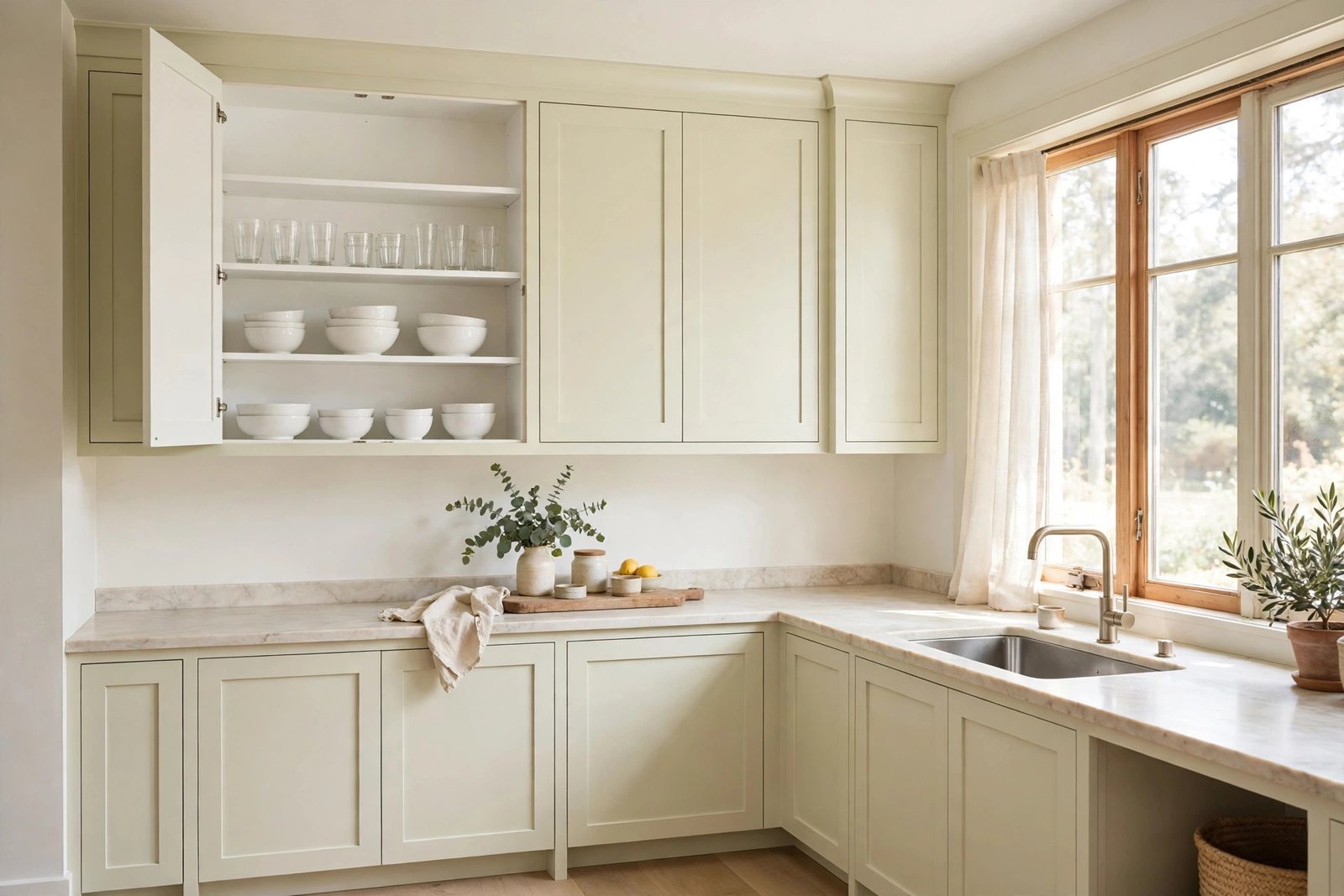
If the finish is still the problem after lighting, paint is the honest fix: cabinet paint in a pale, warm white or a soft sage transforms dark units in a weekend of cleaning, sanding, priming and two coats. The interior trick is cheaper and almost as effective — painting cabinet interiors white or lining shelves with pale liner makes contents visible at a glance and bounces light out of the box every time a door opens.
Where a full repaint is too much (or not allowed), lighten the composition around the cabinets instead. A paler worktop or splashback against dark units creates contrast that reads as brightness; light walls do the same. Converting one short run of wall cabinets to open shelves or a glass-front door breaks up a heavy bank of dark doors and displays the nice glasses instead of hiding them. And swap the hardware: long, light-metal handles give the eye a bright horizontal rhythm across dark fronts and genuinely help older hands open doors.
Too High: Rezone Shelves by Frequency First
Now the height problem, and its cheapest fix is a rearrangement. Measure your comfortable reach — for most adults, shelves between about knee height and 15 cm above shoulder height are usable without stretching or steps. Everything used daily belongs inside that band: mugs, glasses, plates, the everyday pans and ingredients. Everything above it should be seasonal or rare: the big platter, the preserving jars, the fondue set, spare glasses for parties.
Most high-cabinet kitchens have this exactly backwards — the good glasses at altitude, the daily mugs wherever they landed. The rezone is the same frequency logic used to plan storage in a small kitchen with no pantry: prime space is earned by frequency, and the reachable band of your wall cabinets is prime. While you rezone, be honest about duplicates and dead stock — high shelves are where expired spices and the third colander retire, and evicting them frees the middle shelves for things that matter.
Bring High Storage Down: Fittings That Actually Work
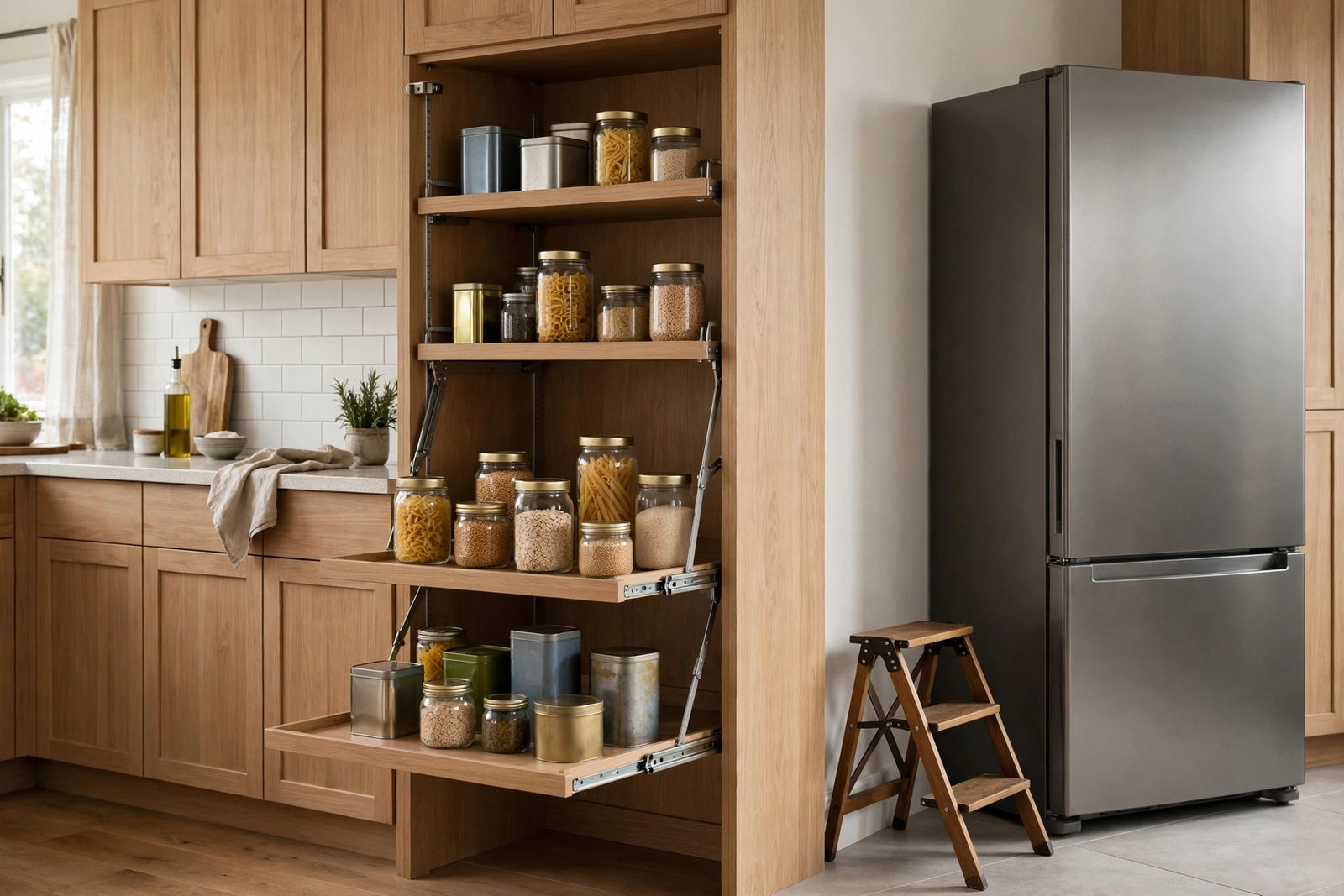
When the top shelf must hold things you use more than twice a year, fittings can bring it within reach. Pull-down shelf units mount inside a wall cabinet and swing the whole shelf down and out to counter height with gas-strut assistance — the single best retrofit for high cabinets, worth it for the one cabinet that holds daily items above your reach. Pull-out steps hidden in the plinth (the kick space under the base cabinets) give safe, stored-in-place height without a stool wandering the kitchen.
Simpler help works too: a sturdy folding step that lives in the kitchen — hung on a hook or slotted beside the fridge — rather than in another room, because a step you have to fetch is a step you will skip in favour of climbing on the worktop, which nobody should ever do. Under-cabinet rails and hooks pull daily tools down to reachable height, and door-mounted racks inside tall cabinets put spices and wraps on the door at mid-height instead of lost on a high shelf. The same access thinking applies at floor level, where the deepest base cabinets — above all the corner ones — hide their contents just as effectively; our guide to corner kitchen cabinets wasting space shows how to bring those within reach too. If you are planning a refit, shallower wall cabinets (30–35 cm deep) mounted a touch lower, with the tall storage concentrated in one full-height unit with pull-outs, beat a whole wall of identical high boxes.
Mistakes to Avoid
- Painting dark cabinets before fixing the light. Pale paint under one dim ceiling bulb still looks grey and shadowy. Light the room first; half the time the repaint becomes optional.
- Storing daily items on the top shelf “because they fit”. Fit is not the test — frequency is. Daily things belong in the reachable band, even if the top shelf must hold less, or nothing, for a while.
- Climbing on worktops and chairs. The predictable end of high storage with no step in the room. If a shelf needs climbing to reach, its contents are in the wrong place or the shelf needs a pull-down.
- Glass doors on every cabinet. One glass run lightens a kitchen; a whole wall of glass fronts displays every mismatched mug you own and reads as clutter, not brightness.
- Ceiling-height cabinets with no plan for the top boxes. Extra-high cabinets are fine for seasonal storage, but buying them and then filling the tops with daily overflow creates the problem at purchase time.
- Dark interiors nobody can see into. A dark box hides its contents and encourages duplicates. Pale interiors or shelf liners and a strip light cost little and change how the cabinet works daily.
Frequently Asked Questions
What is the best colour to lighten dark kitchen cabinets?
A warm off-white or a pale, soft colour — light sage, pale stone, warm cream — works better in most kitchens than a blue-toned brilliant white, which can look stark against warm floors and worktops. Keep the sheen satin or eggshell: it reflects light softly and hides wear better than matt or gloss. Whatever you choose, test it after your lighting is fixed, because light changes how every colour reads.
Are pull-down shelf units worth the money?
For one or two cabinets that hold daily items above comfortable reach, yes — they convert wasted altitude into daily storage and end climbing. They are less worth it for rarely used storage, where a step and honest labelling do the job for a tenth of the price. Fit them where frequency justifies them, not across the whole kitchen.
How high should wall cabinets be?
The workable standard is a gap of about 45–60 cm between worktop and the underside of the wall cabinets, with the cabinet’s top shelf ideally no higher than you can reach with a small step — roughly 200–210 cm in most rooms. Taller runs are fine for seasonal storage only. Whatever the height, the reachable band between knee and shoulder should hold everything you use daily.
Can renters fix dark or high cabinets without permanent changes?
Mostly, yes. Battery-powered LED strips under and inside cabinets fix the darkness reversibly; pale shelf liner brightens interiors; the frequency rezone costs nothing; and a folding step that parks beside the fridge solves height without touching a screw. Painting usually needs the landlord’s permission, but light, liner and layout are all fully reversible and deliver most of the improvement.
The Bottom Line
Dark and high are the two cabinet mistakes that make a kitchen work against its cook — one steals the light, the other steals the storage. Fix the lighting first, lighten finishes and interiors where they still fight you, and rezone every shelf by frequency so daily life happens between knee and shoulder height. Add a pull-down or an honest kitchen step for the altitude that remains, and the same cabinets start working for you instead of looming at you.