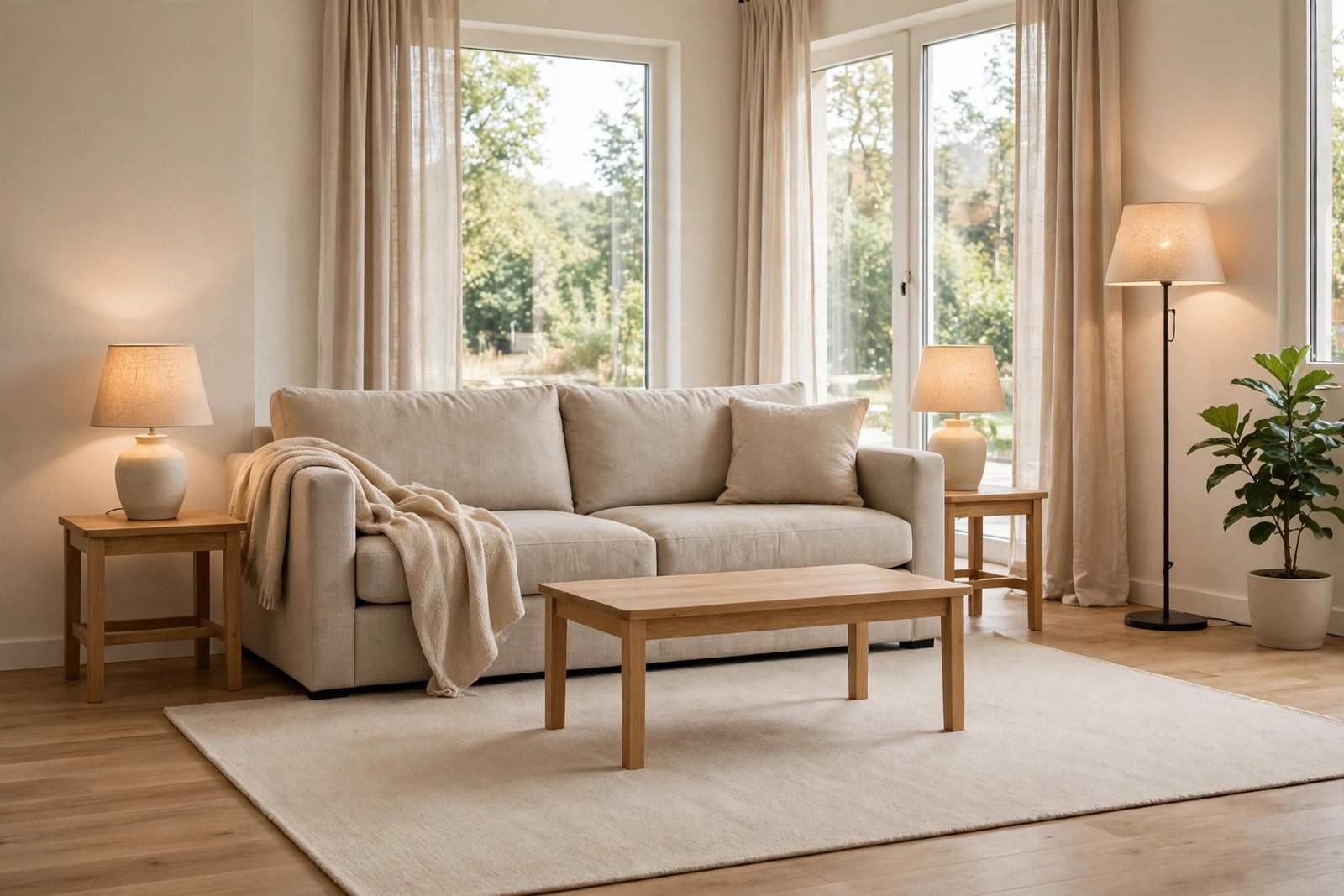
A living room renovation has a way of eating money in the wrong places. The budget goes on a statement coffee table, fashionable cushions and a designer lamp — while the sofa sags after two years, the floor scratches if you look at it, and the room is still lit by one dim ceiling bulb. Six months later the room looks tired again, and nobody can quite say why, because everything in it was new.
The problem is not the size of the budget. It is the order of priorities. Some living room items are touched, sat on, walked on and leaned against every single day for a decade or more; those items repay quality every day they are used. Others are decoration — important for the finished look, but cheap to buy and even cheaper to change when tastes move on. This guide sorts the two groups honestly, so a modest budget lands where it actually shows.
Quick Answer
Spend on the sofa and main seating, the flooring, and layered lighting — the three things your body and eyes use for hours every day. Save on paint, cushions and throws, side tables, wall art and small decor, which are cheap to buy, easy to swap, and date the fastest. A useful rule: if an item is heavy, fixed, or painful to replace, buy the best version you can afford; if it can be carried out of the room in one trip, buy it cheaply and replace it when you tire of it.
The Rule Behind Every Choice
Before any single purchase, run it through three questions. How many hours a day will this be used? A sofa carries the whole household for evenings, weekends, naps and guests; a side table holds a mug. How hard is it to replace later? Flooring goes under everything else, so changing it means emptying the room; a cushion cover changes in a minute. Does cheapness fail visibly? A cheap sofa fails in public — sagging cushions and worn fabric announce themselves. A cheap picture frame fails in private, if anyone notices at all.
This is the same sequencing logic as our whole-house guide to renovating on a tight budget and what to fix first: function and the big, hard-to-change surfaces first, decoration last and cheap. In a living room, that logic concentrates into three spends and a long list of saves.
Spend 1: The Sofa and Main Seating
The sofa is the hardest-working object in the home, and the one where quality is easiest to feel and hardest to fake. Spend on the frame and the fillings, not on the fashion of the fabric: a solid frame, springs or high-resilience foam that bounce back when you stand up, and cushions that keep their shape. Sit on it properly before buying — for minutes, not seconds — and check that the seat depth suits the people who will actually use it.
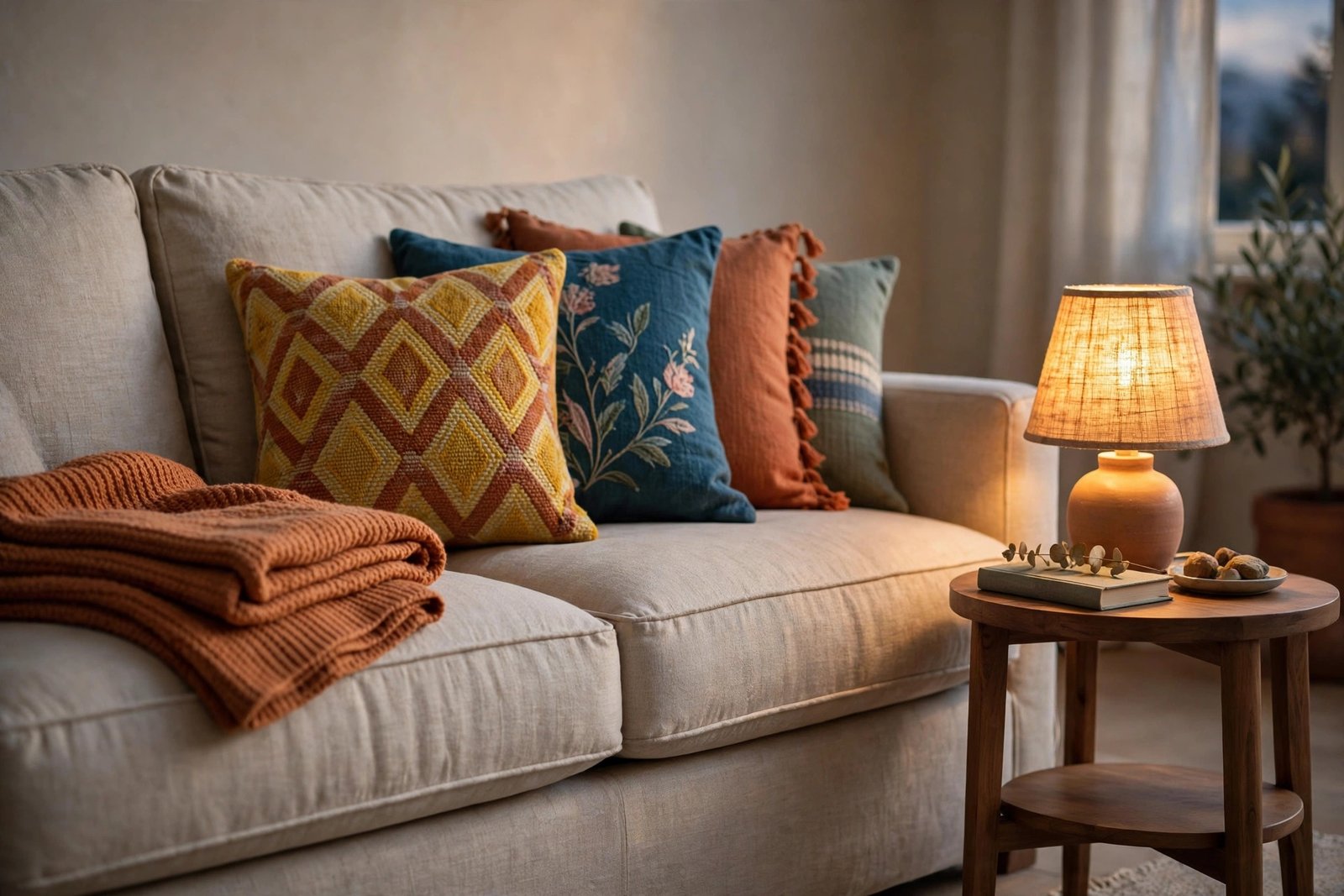
Choose a plain, hard-wearing fabric in a mid-tone colour and get your colour and pattern from cushions instead. A neutral sofa bought well can serve through three complete changes of decor around it; a bold patterned sofa bought cheaply dictates the room and dates it at the same time. If the budget is truly tight, a good second-hand sofa from a quality maker, professionally cleaned, often beats a new budget sofa on both comfort and lifespan.
Spend 2: The Floor
Flooring is the room’s largest surface and its most disruptive replacement — everything else has to move out — so it is the classic buy-once item. Spend on a decent wear layer, honest underlay and proper fitting, in a material that suits how the room is really used: something water-tolerant and forgiving near doors and kitchens, warmth and quiet where people sit barefoot.
Save within the floor budget by keeping the choice simple: one material, no borders or patterns that add fitting time, and standard plank or roll sizes that minimise waste. The expensive mistake is not the material itself but relaying a failed floor — thin, cheap surfaces in a busy living room wear through in a few years and cost a second full fitting.
Spend 3: Layered Lighting
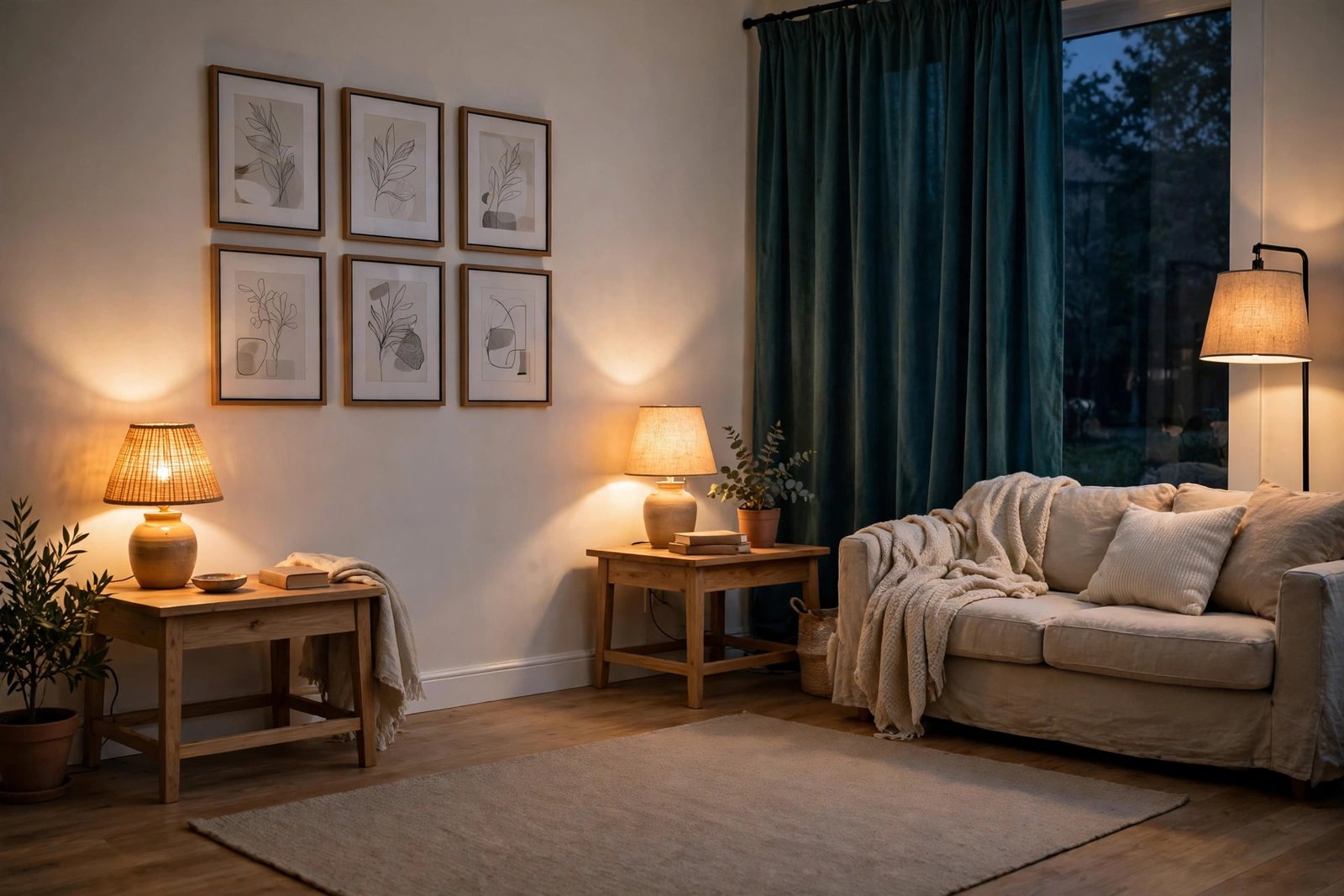
Light is the cheapest of the three spends and the one people feel most. One ceiling light flattens everything; spend instead on layers — a decent main light, at least two lamps at sitting height for the evening, and light aimed at the corners where the room otherwise dies. Quality here means good bulbs of one warm colour temperature, solid lamp bases that do not wobble, and dimmers where the wiring allows, because a dimmer turns one fitting into several moods for very little money.
Do not spend this money on one spectacular statement fitting while the corners stay black. Three modest light sources beat one dramatic one every evening of the year.
Save 1: Paint, Cushions and Textiles
Paint is the best value in decorating, so there is no reason to buy the most expensive version: a good mid-range paint in a colour you have tested properly will look identical to a premium one on the wall. And if you are tempted by one fashionable wall, read our verdict on whether an accent wall is worth it before spending — often a painted wall plus cheap textiles does the job.
Cushions, throws and curtains in trend colours are exactly where to be cheap on purpose. They carry the room’s fashion, they are the first things to date, and replacing them in three years is a small, enjoyable spend rather than a renovation. Buy covers rather than whole cushions where you can, and keep the expensive neutral base (sofa, floor, walls) calm underneath.
Save 2: Tables, Storage and Decor
Side tables, coffee tables, shelving and the TV unit are mostly static boxes: they do not move, sag or get sat on, so simple, sturdy and inexpensive serves perfectly well. Second-hand solid wood often outperforms new flat-pack here for the same money. The same applies to wall art and decor — prints in decent frames, grouped well, give the effect of expensive art for a fraction of the cost, and they can move rooms and houses with you.
Lampshades, plant pots, candles and ornaments are pure styling: buy them last, buy them cheap, and let them be the things you change when the room needs a lift instead of a renovation.
How the Budget Usually Splits
As a rough pattern — not a rule — seating and flooring together commonly take half or more of a living room budget, lighting takes a modest share, and everything else divides what remains. If your draft budget shows decor and small furniture taking more than the sofa and floor combined, the priorities are upside down, and the room will show it within two years. Our round-up of renovation mistakes that waste money is mostly a catalogue of this one error repeated in different rooms.
Mistakes to Avoid
Buying the decor first. Cushions and lamps bought before the sofa and floor exist will dictate — and usually clash with — the big decisions. Big items first, styling last.
Splitting the budget evenly. Equal shares feel fair and work badly. The sofa deserves several times the coffee table’s budget because it works several times harder.
Saving on the sofa to afford a bigger TV unit. You sit on the sofa every day; the unit just stands there. Comfort beats storage furniture in any honest ranking.
Choosing fashionable versions of permanent things. A trendy floor or sofa fabric cannot be swapped when the trend passes. Keep fashion in the cheap layers only.
Forgetting the cost of fitting and finishing. Underlay, delivery, lamp bulbs, curtain poles — the small extras around a big purchase regularly surprise people. Budget for the complete job.
Frequently Asked Questions
What should I buy first in a living room renovation?
The floor, then the sofa, then the lighting — in that order, because each one constrains the next. The floor goes under everything, the sofa is the largest piece of furniture and sets the room’s layout, and lighting is planned around where the seating actually sits.
Is an expensive sofa really worth it?
If you use the room daily, yes — cost per year of comfort strongly favours a well-made sofa over two cheap ones. The frame and fillings are what you are paying for; if money is short, a quality second-hand sofa usually beats a new budget model.
Where do people most often overspend in a living room?
On visible styling bought too early — statement furniture pieces, designer lamps and decor sets that consume the budget before the sofa, floor and lighting are funded. Those items are the easiest to buy cheaply and change later, so overspending there buys the least lasting value.
Can I renovate a living room in stages?
Yes, and it is often the smartest route: floor and lighting in stage one, the best sofa you can afford in stage two, cheap textiles and decor to finish. Because the expensive layers come first and the cheap layers last, a staged room looks finished at every step rather than half-done.
The Bottom Line
A living room budget works when it follows daily life: money into the sofa you sit on, the floor you walk on and the light you live by — and cheerful cheapness everywhere else. Paint, cushions, tables and art are the room’s clothing, meant to be changed; seating, flooring and lighting are its bones, meant to last. Spend on the bones, save on the clothing, and the room will still look good when the fashion layers are on their third replacement.
1 thought on “Where to Spend and Where to Save in a Living Room Renovation”