
Most renters assume the answer to any change is no: no paint, no shelves, no nothing — so they live for years in a home that feels temporary, waiting for a place of their own before they are allowed to like where they live. In practice, landlords are rarely against improvements. They are against damage, surprises and bills. A change that is reversible, that leaves the property equal or better, and that is agreed in writing before it happens stands a very good chance of a yes.
This guide sorts the common upgrades into what landlords usually allow, what they often allow when asked properly, and what is almost always refused — plus how to ask in a way that makes yes easy, and how to protect your deposit while you do it.
Quick Answer
Landlords are most likely to allow fully reversible changes: bulbs and lampshades, rugs and curtains, removable hooks and strips, freestanding storage, and plug-in lighting. With written permission, many also allow painting in an agreed neutral colour, hanging shelves or pictures with proper fixings, and swapping light fittings or handles if the originals are kept. Almost always refused: new tiles or flooring, moved plumbing or electrics, structural changes, and anything done without asking. Get every yes in writing, photograph the property before and after, and keep every original fitting in a labelled box.
Step 1: Read the Lease, Then Ask in Writing
Your lease is the starting point — know exactly what it says about decoration, fixings and alterations before you ask for anything beyond it. Then ask in writing (email is fine, and ideal, because the reply is your evidence). A good request names the exact change, explains how it is done, states that it is reversible or will be restored, and offers the landlord a say — in the colour, the fitting, or the timing. “I would like to repaint the bedroom in a warm white, at my cost, and will return it to the current colour when I leave if you prefer” is a request most landlords find hard to refuse.
Never start work on a verbal nod from an agent or a previous tenant’s claim that “they don’t mind”. If it is not written down, it did not happen — and deposit disputes are decided on paper.
Usually Yes: The Reversible Upgrades
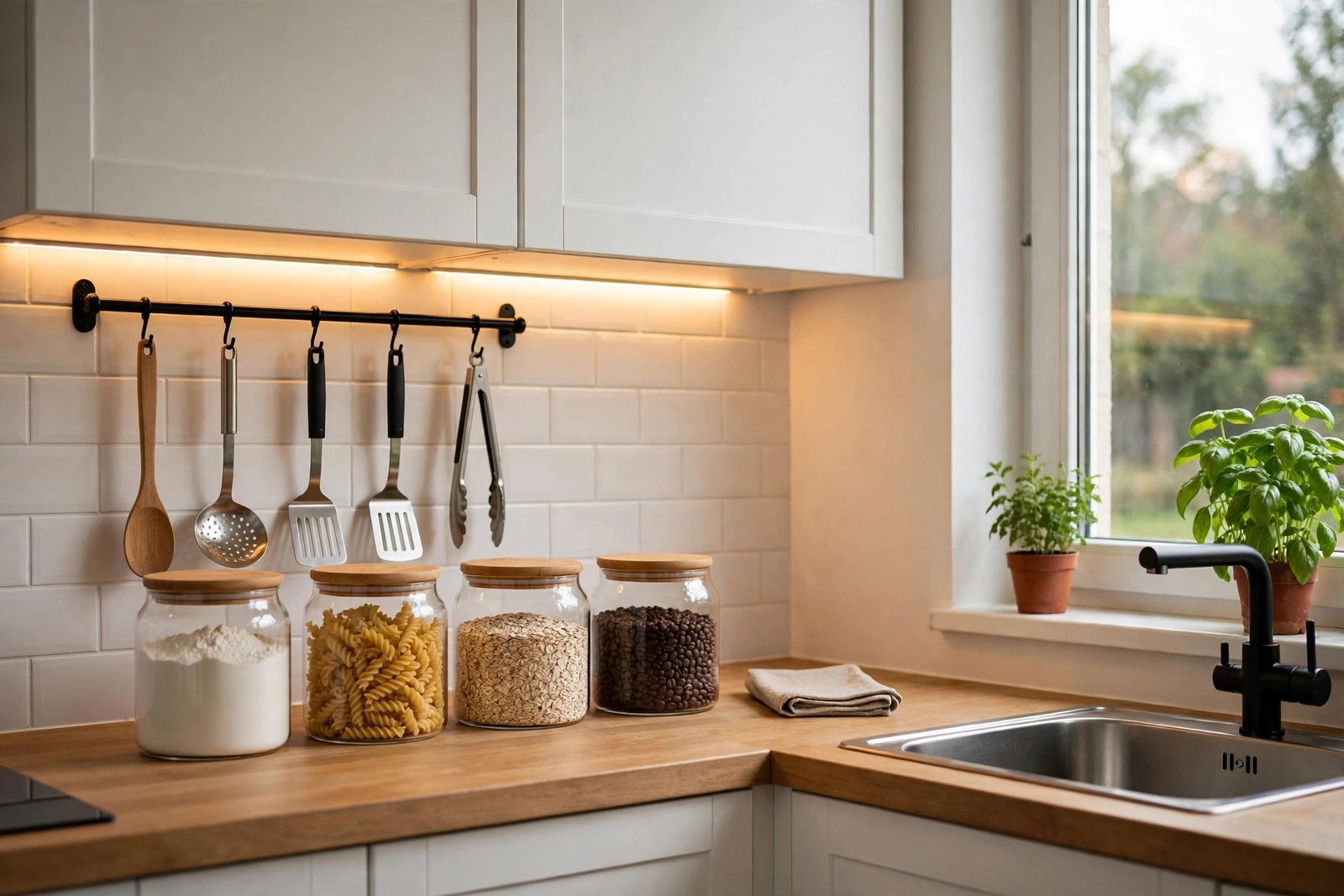
Light. Warmer, brighter bulbs, nicer lampshades and added lamps or plug-in strips change a rental’s feel more than anything else and touch nothing permanent. Our earlier guide to the fully reversible changes for a rental kitchen shows the same principle at work in the hardest room.
Surfaces that float. Rugs over tired floors, runners in hallways, curtains hung on existing rails or tension rods, and loose-lay coverings that lift out again at move-out — all cover what you dislike without altering it.
Storage that stands or hangs without screws. Freestanding shelving, over-door racks, tension rods inside cupboards, and adhesive hooks within their weight ratings. Layout itself is also yours to change: the fixes in our guide to rental apartment layout mistakes that make small spaces feel even smaller need no permission at all, because furniture placement is not an alteration.
The garden, if you have one. Tidying, planting in pots, and even planting in beds is usually welcomed — a cared-for garden is an improvement the landlord gets for free. Ask before removing anything established.
Often Yes, If You Ask Properly
Painting in an agreed colour. The single most-requested change, and commonly allowed when the colour is light and neutral and the work is neat. Some landlords agree more happily if you offer to use a decorator, or to restore the original colour at the end.
Pictures, mirrors and shelves with real fixings. Many landlords prefer a few proper holes, filled at move-out, over the damage a failed adhesive strip can do to paint. Offering exactly that — “two screws, filled and touched up when I leave” — often converts a no into a yes.
Swapping fittings and handles. Light fittings, cabinet handles, shower heads and toilet seats can usually be changed if the originals are kept safe and refitted at the end. Anything involving wiring or water should be done by a qualified tradesperson — offer this in your request; it is often the landlord’s real concern.

Almost Always No
New tiles, new flooring fixed down, moving sockets or plumbing, knocking anything through, replacing the landlord’s appliances or suite, and painting over tile, brick or woodwork. These change the property itself, affect its value and its insurance, and no well-worded email fixes that. If a change is on this list, it is not a request — it is a different home. Spend the money instead on things that move with you, and treat the deposit as untouchable: as our list of renovation mistakes that waste money notes, renters who renovate other people’s property at their own expense rarely see that money again.
Protect the Deposit While You Improve
Photograph every room before you change anything, and again when you restore it — dated photos are your evidence of both the starting condition and your careful hand-back. Keep every original handle, fitting, curtain and lampshade in one labelled box in a dry place; “we lost the original shower head” is an avoidable deduction. Keep receipts and the landlord’s written permissions together. And restore early: returning a room a fortnight before the final inspection leaves time to fix anything you missed, instead of discovering it while the inventory clerk watches.
Finally, be honest about scale. Reversible upgrades and a painted wall or two are a weekend and a modest spend. If you find yourself pricing flooring or a new bathroom for a rental, stop — that money belongs in your deposit for a home of your own.
Mistakes to Avoid
Relying on a verbal yes. Memories differ, agents change, landlords sell. Written permission or no work.
Painting first, asking later. Even a beautiful job becomes a deduction or a repaint bill if it was never agreed. The same wall, agreed in writing, costs nothing extra.
Trusting “removable” products on fragile surfaces. Adhesive strips and films can lift old paint or weak finishes. Test in a hidden spot, and keep to surfaces in good condition.
Throwing away the originals. Every swapped handle and fitting must survive the tenancy in its labelled box. Replacing a lost landlord fitting always costs more than storing it.
Spending renovation money on someone else’s asset. Cap your spend at what you can take with you or what costs little — lights, textiles, storage, paint. Big fixed upgrades are the landlord’s investment to make, not yours.
Frequently Asked Questions
Can I paint my rental walls?
Only with the landlord’s written permission — but that permission is granted more often than renters expect, especially for light, neutral colours, neat work, and an offer to restore the original colour at the end of the tenancy. Without written permission, assume painting is a deposit risk.
How do I ask my landlord for permission to make changes?
In writing, one change at a time: say exactly what you want to do, how it will be done, that it is reversible or will be restored, that it costs the landlord nothing, and where relevant that a qualified tradesperson will do regulated work. Make yes the easy answer and keep the reply.
What happens to my deposit if I make changes without asking?
The landlord can charge the cost of putting the property back as it was — repainting, filling, refitting originals — deducted from your deposit, even if your change arguably improved the place. Improvement is not a defence; permission is.
Which upgrades can I take with me when I move?
Everything freestanding or removable: lamps and bulbs, rugs, curtains, freestanding shelves and storage, adhesive-hook items, plants and most textiles. This is precisely why rental budgets should concentrate there — the improvement leaves with you and upgrades your next home too.
The Bottom Line
A rental is not a decorating life sentence. Ask in writing, choose reversible changes, offer restoration, and keep the originals — and most landlords will let you paint the wall, hang the shelves and swap the fittings, because a tenant who improves carefully is the tenant they want to keep. The line is simple: if it can be undone in a weekend and leaves the property no worse, it is probably allowed once it is agreed. If it changes the property itself, it was never yours to renovate.